
Vegetable1 recipes
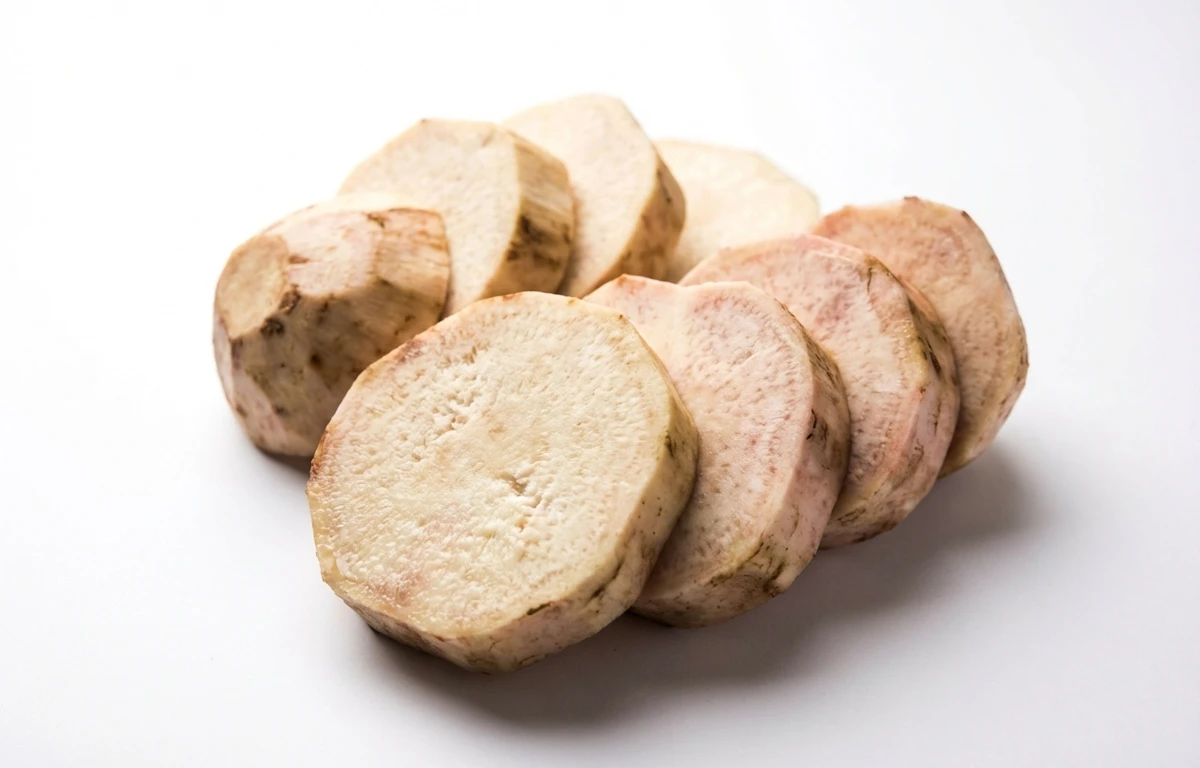
elephant yam.
VegetarianVeganGluten-freeDairy-freeNut-freePeanut-freeSoy-freeEgg-freeShellfish-freeHoney-freeAlcohol-freeHalalKosher
SERVING
CALORIES
84
PROTEIN
2.6g
CARBS
17.5g
FAT
0.14g
FIBER
4.2g
This ingredient is flagged as naturally gluten-free. Per 100 g, it provides 4.8 µg of vitamin K.
NUTRITION PROFILE · per 100 g
Everything in this ingredient.
MACRONUTRIENTS
Calories84.4kcal—
Protein2.6g5%
Carbohydrates17.5g6%
Fiber4.2g15%
Sugar1.6g3%
Total fat0.14g0%
Saturated fat0.04g0%
Trans fat0g—
Cholesterol0mg0%
Water74.4g—
MINERALS
Sodium14.3mg1%
Potassium501mg11%
Calcium46.9mg4%
Iron1.2mg7%
Magnesium33.5mg8%
Phosphorus43.1mg3%
Zinc0.26mg2%
Copper0.17mg19%
Manganese0.28mg12%
Selenium0.59µg1%
VITAMINS
Vitamin A208µg23%
Vitamin C15.2mg17%
Vitamin D1.3µg7%
Vitamin E0.34mg2%
Vitamin K4.8µg4%
Thiamin (B1)0.04mg3%
Riboflavin (B2)0.05mg4%
Niacin (B3)0.61mg4%
Pantothenic acid (B5)0.23mg5%
Vitamin B60.22mg13%
Biotin (B7)4.5µg15%
Folate (B9)20.5µg5%
%DV based on a 2,000 cal diet. Source: USDA FoodData Central. A dash in the %DV column means there’s no established Daily Value for that nutrient.
MEASUREMENT CONVERSIONS
How much is what.
1 cup160g
1 tablespoon10g
1 teaspoon3.3g
1 oz28.4g
1 lb453.6g
1 ml0.7g
1 liter676.2g
HEALTH BENEFITS
Why eat it.
- ✓A good source of potassium, an essential mineral for maintaining healthy blood pressure and heart function.
COOKING TIPS
In the kitchen.
- 1Always cook elephant yam thoroughly to break down calcium oxalate crystals, which can cause throat and skin irritation. Wear gloves while handling and peeling.
- 2Boiling the yam with a sour agent like tamarind paste or lemon juice before adding to dishes helps neutralize any remaining irritants.
- 3Its starchy, potato-like texture makes it ideal for curries, stews, fries (chips), and mashed preparations.
- 4It absorbs flavors well, making it a great base for spicy and aromatic Indian and Southeast Asian dishes.
STORAGE
Keep it fresh.
- Store whole, unpeeled elephant yam in a cool, dark, and well-ventilated place for several weeks. Do not refrigerate raw, as it can spoil the texture.
- Once cut, wrap the pieces tightly in plastic wrap or store in an airtight container in the refrigerator for up to 5 days.
FAQ
Frequently asked questions.
Is elephant yam keto-friendly?
No, elephant yam is not considered keto-friendly. With approximately 17.46g of carbohydrates per 100g, it is too high in carbs to fit into a typical ketogenic diet, which usually restricts net carbohydrate intake to a much lower amount.
How do you cook elephant yam?
Elephant yam must always be cooked thoroughly before consumption, as raw yam can cause irritation due to calcium oxalate crystals. It can be boiled, steamed, fried, or roasted. Common preparations include curries, stir-fries, and chips, often requiring pre-boiling to soften.
What does elephant yam taste like?
Cooked elephant yam has a mild, earthy, and slightly nutty flavor with a starchy, firm texture similar to potatoes or other root vegetables. Its relatively neutral taste makes it versatile for absorbing flavors from various spices and sauces.



















