
Vegetable
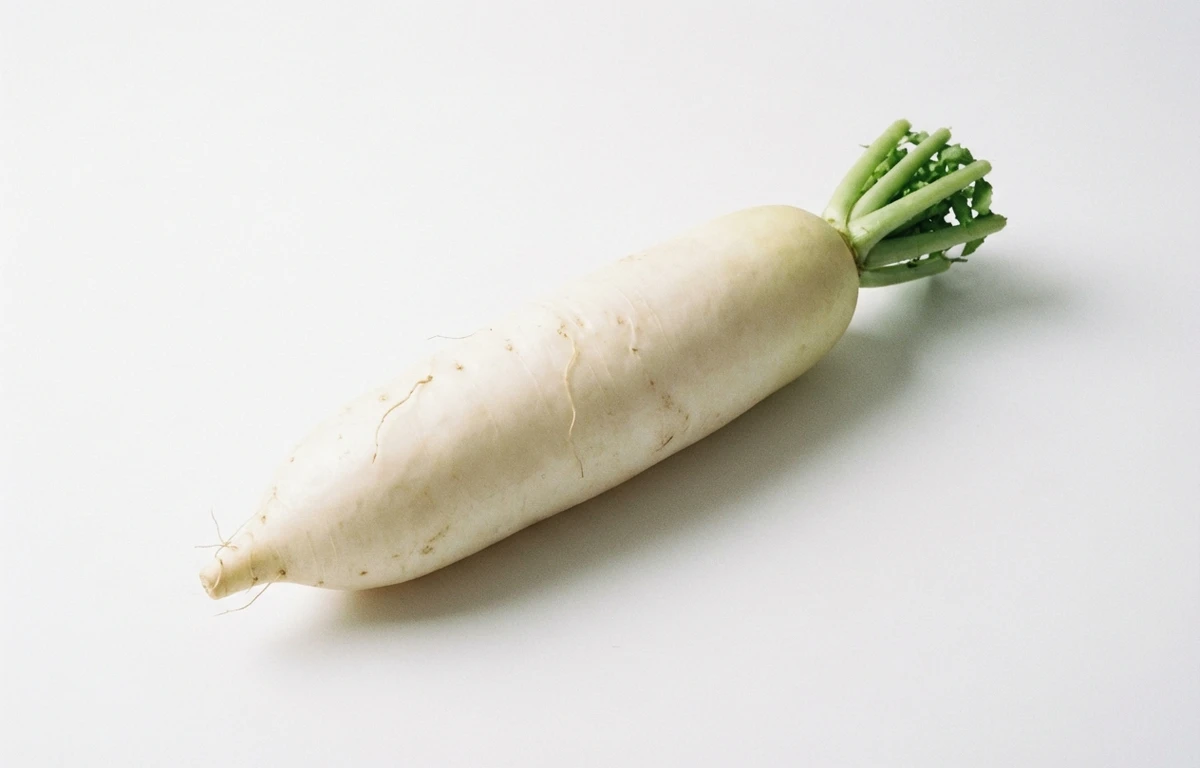
elongate white skin radish.
VegetarianVeganGluten-freeDairy-freeNut-freePeanut-freeSoy-freeEgg-freeShellfish-freeHoney-freeAlcohol-freeHalalKosher
SERVING
CALORIES
32
PROTEIN
0.77g
CARBS
6.6g
FAT
0.15g
FIBER
2.6g
This ingredient is flagged as naturally gluten-free. Per 100 g, it provides 2.5 µg of vitamin K.
NUTRITION PROFILE · per 100 g
Everything in this ingredient.
MACRONUTRIENTS
Calories32.3kcal—
Protein0.77g2%
Carbohydrates6.6g2%
Fiber2.6g9%
Sugar0.95g2%
Total fat0.15g0%
Saturated fat0.04g0%
Trans fat0g—
Cholesterol0mg0%
Water89g—
MINERALS
Sodium28.2mg1%
Potassium288mg6%
Calcium30.2mg2%
Iron0.36mg2%
Magnesium16.1mg4%
Phosphorus30.1mg2%
Zinc0.22mg2%
Copper0.03mg3%
Manganese0.10mg4%
Selenium0.10µg0%
VITAMINS
Vitamin A0µg0%
Vitamin C19.9mg22%
Vitamin D0.05µg0%
Vitamin E0.01mg0%
Vitamin K2.5µg2%
Thiamin (B1)0.02mg2%
Riboflavin (B2)0.02mg2%
Niacin (B3)0.30mg2%
Pantothenic acid (B5)0.15mg3%
Vitamin B60.07mg4%
Biotin (B7)2.5µg8%
Folate (B9)29.8µg7%
%DV based on a 2,000 cal diet. Source: USDA FoodData Central. A dash in the %DV column means there’s no established Daily Value for that nutrient.
MEASUREMENT CONVERSIONS
How much is what.
1 cup130g
1 tablespoon8.1g
1 teaspoon2.7g
1 oz28.4g
1 lb453.6g
1 ml0.6g
1 liter550g
1 piece600g
HEALTH BENEFITS
Why eat it.
- ✓Contains digestive enzymes like amylase and esterase that can aid in the breakdown of carbohydrates and fats.
- ✓A good source of potassium, which helps regulate blood pressure.
COOKING TIPS
In the kitchen.
- 1Enjoy raw by grating or thinly slicing into salads and slaws for a crisp texture and mildly peppery flavor.
- 2Simmer in soups, stews, or curries, where it will absorb flavors and become tender with a sweeter taste.
- 3Excellent for pickling, as it retains its crunch and absorbs pickling spices well.
- 4Can be stir-fried; cut into matchsticks or thin coins for quick, even cooking.
STORAGE
Keep it fresh.
- Remove the green tops if attached, as they draw moisture from the root.
- Store unwashed in the refrigerator's crisper drawer, wrapped loosely in a plastic bag, for up to two weeks.
- For longer-term storage, peel, chop, and blanch before freezing in an airtight container.
FAQ
Frequently asked questions.
What are the nutritional benefits of daikon radish?
Daikon radish is packed with nutrients. Per 100g, it contains only 32.27 calories, 0.77g protein, 6.56g carbs, and 0.15g fat. It's particularly high in Vitamin C, which boosts immunity, and contains digestive enzymes that help break down carbohydrates and fats. It's also a good source of potassium.
Is daikon radish keto-friendly?
While daikon radish contains carbohydrates (6.56g per 100g), its relatively low net carb count (due to fiber) can make it suitable for keto in moderation. It can be used as a low-carb substitute for potatoes or other root vegetables in various dishes.
Is daikon radish gluten-free and vegan?
Yes, daikon radish is naturally gluten-free and vegan. As a whole, unprocessed vegetable, it fits perfectly into both gluten-free and plant-based diets, offering a versatile and nutritious ingredient.
How do you cook daikon radish?
Daikon radish is incredibly versatile. It can be eaten raw in salads, pickled, stir-fried, roasted, or added to soups and stews. It absorbs flavors well and becomes tender when cooked, making it a great addition to many Asian and Western dishes.
What does daikon radish taste like?
Daikon radish has a mild, slightly peppery and subtly sweet flavor when raw, similar to a milder red radish but with more crispness. When cooked, its flavor mellows further, becoming sweeter and less pungent, with a tender, almost potato-like texture.
How do you store daikon radish?
To store daikon radish, first remove the leafy greens (if present) as they draw moisture from the root. Wrap the radish tightly in a damp paper towel or plastic wrap and store it in the crisper drawer of your refrigerator. It can last for 2-3 weeks this way.
Can you eat daikon radish raw?
Yes, daikon radish is excellent when eaten raw. Its crisp texture and mild, slightly pungent flavor make it a popular addition to salads, slaws, and as a garnish. Raw daikon also retains its full vitamin C content and digestive enzymes.



















