
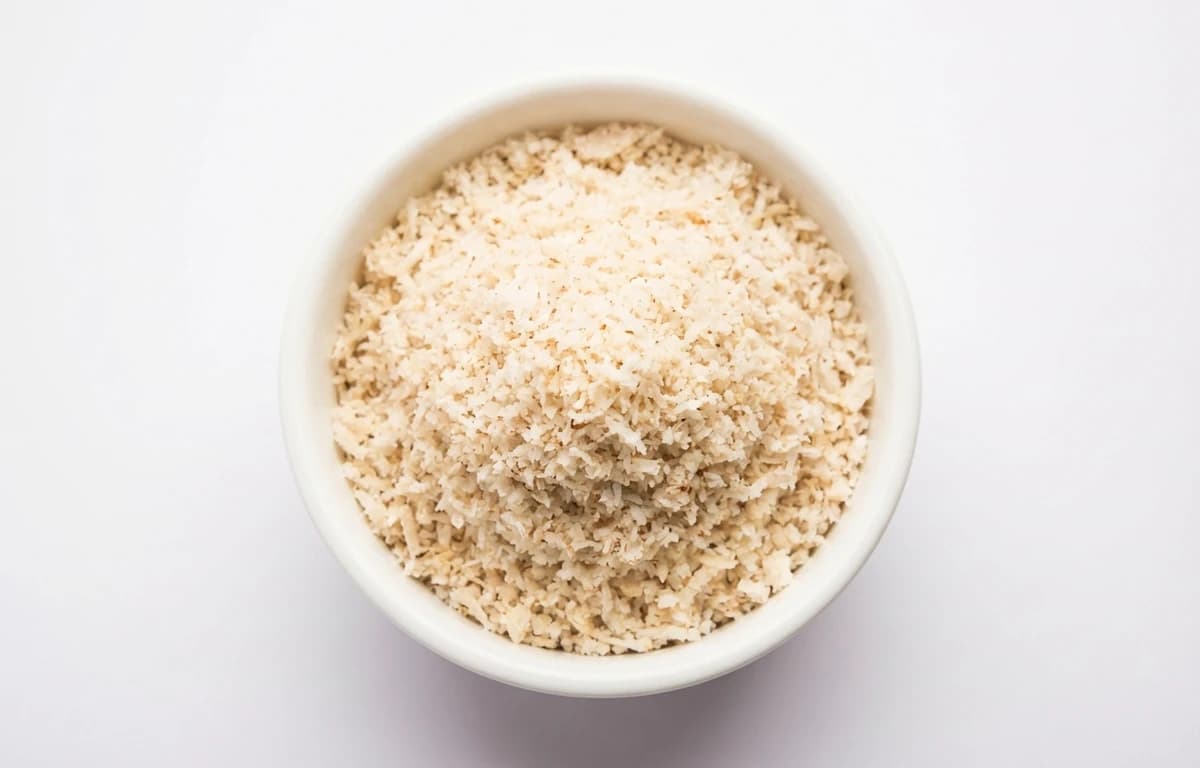
endu kobbari
Also known as:
Loading...
Also known as:
Per 100g
Nutrition data source: USDA FoodData Central
Endu kobbari (dried coconut) offers several health benefits, including being rich in dietary fiber for digestion and an excellent source of manganese for bone health. It also contains beneficial MCTs and lauric acid. However, it is very high in calories and saturated fat, so it should be consumed in moderation as part of a balanced diet.
Endu kobbari is packed with dietary fiber, aiding digestive health and promoting satiety. It's an excellent source of manganese, crucial for metabolism and antioxidant function. Additionally, it contains Medium-Chain Triglycerides (MCTs) for quick energy and lauric acid, known for its antimicrobial properties.
Per 100g, endu kobbari is quite calorie-dense, providing approximately 660 calories. It is also high in fat, containing about 64.5g of fat per 100g, much of which is saturated fat.
Yes, endu kobbari is completely vegan. It is derived solely from the coconut fruit, which is a plant-based ingredient, making it suitable for a vegan diet.
Yes, endu kobbari is naturally gluten-free. It is a single-ingredient product made from dried coconut, containing no wheat, barley, or rye, and is safe for individuals with celiac disease or gluten sensitivity.
Endu kobbari can be keto-friendly due to its high fat content (64.5g per 100g) and relatively moderate net carbs (23.7g total carbs, with significant fiber). However, portion control is crucial to stay within daily carbohydrate limits on a ketogenic diet.
Endu kobbari is widely used in Indian cuisine, especially in South India. It's often grated and added to curries, chutneys, and spice blends for a rich, nutty flavor and thickening. It's also a popular ingredient in traditional sweets and desserts.
endu kobbari is a versatile ingredient found in cuisines around the world. With 660 calories per 100g and 6.9 grams of protein, it's a nutritious addition to many dishes.
Explore more ingredients in the nut category with complete nutrition information.
View all nut →Discover 0 recipes featuring endu kobbari with step-by-step instructions.
Browse recipes →Endu kobbari has a rich, intense, and slightly sweet coconut flavor. Unlike fresh coconut, its flavor is more concentrated and nutty due to the drying process, with a firm, chewy texture when rehydrated or a crisp texture when toasted.
To maintain freshness, store endu kobbari in an airtight container in a cool, dry, and dark place, away from direct sunlight and moisture. For extended shelf life, especially in humid climates, refrigeration is recommended.
When stored properly, endu kobbari can last for several months, typically 6-12 months. Signs of spoilage include a rancid or sour smell, discoloration (yellowing or dark spots), or the presence of mold. It should be discarded if any of these signs are present.