
Loading...
Per 100g
Nutrition data source: USDA FoodData Central
Common measurement equivalents in grams
Rancid walnuts will have a sharp, bitter taste and a smell similar to paint thinner or old oil. If they smell sour or chemical-like, discard them.
Pecans are the closest substitute in terms of texture and oil content. Hazelnuts or macadamia nuts can also work depending on the recipe.
While not required, soaking walnuts for 4-6 hours can help reduce phytic acid and tannins, making them easier to digest and less bitter.
No, English walnuts have a thinner shell and a milder flavor. Black walnuts have a very hard shell and a much stronger, more earthy and pungent flavor.
Yes, walnuts freeze exceptionally well due to their low water content. Freezing is actually the best way to preserve their delicate oils.
A 100g serving of shelled halves is approximately 50 halves or about 25 whole kernels.
Despite being calorie-dense, walnuts are high in fiber and protein which promote satiety, potentially helping with appetite control when eaten in moderation.
The bitterness usually comes from the thin papery skin. Toasted walnuts often taste less bitter, or you can blanch them to remove the skins.
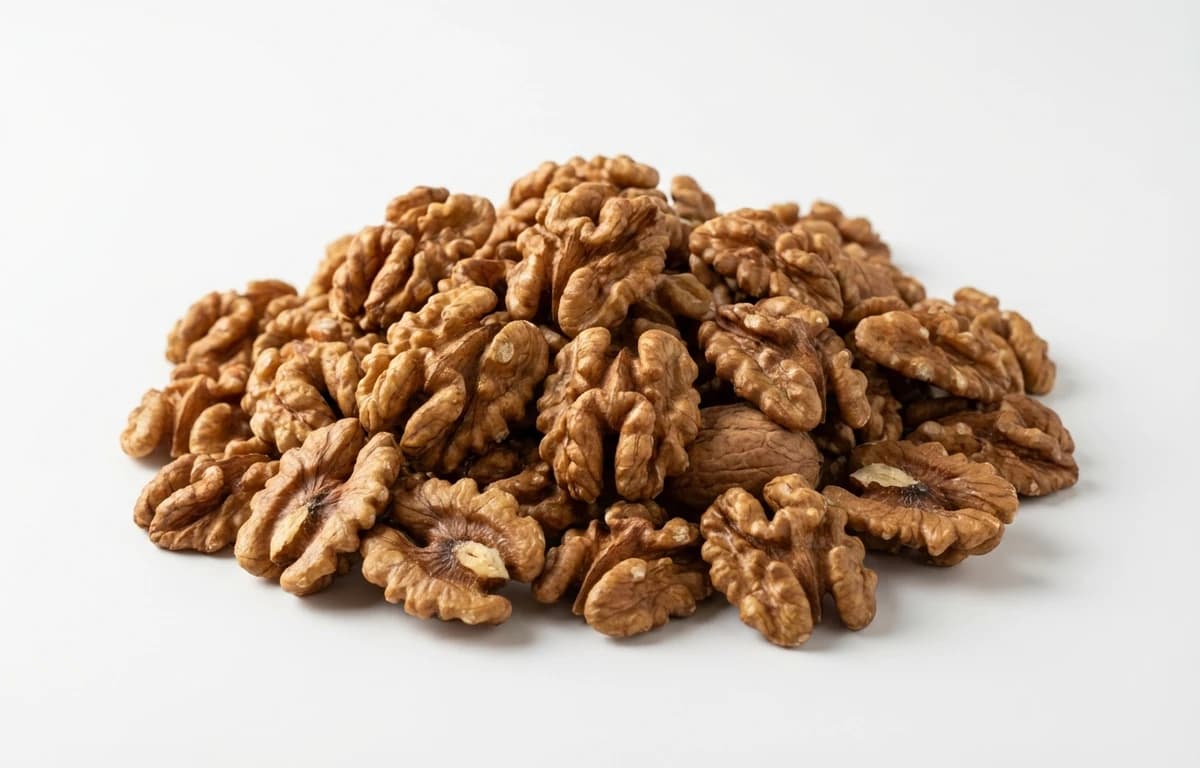
english walnut is a versatile ingredient found in cuisines around the world. With 654 calories per 100g and 15.2 grams of protein, it's a nutritious addition to many dishes.
Explore more ingredients in the nut seed category with complete nutrition information.
View all nut seed →Discover 0 recipes featuring english walnut with step-by-step instructions.
Browse recipes →