
Grain
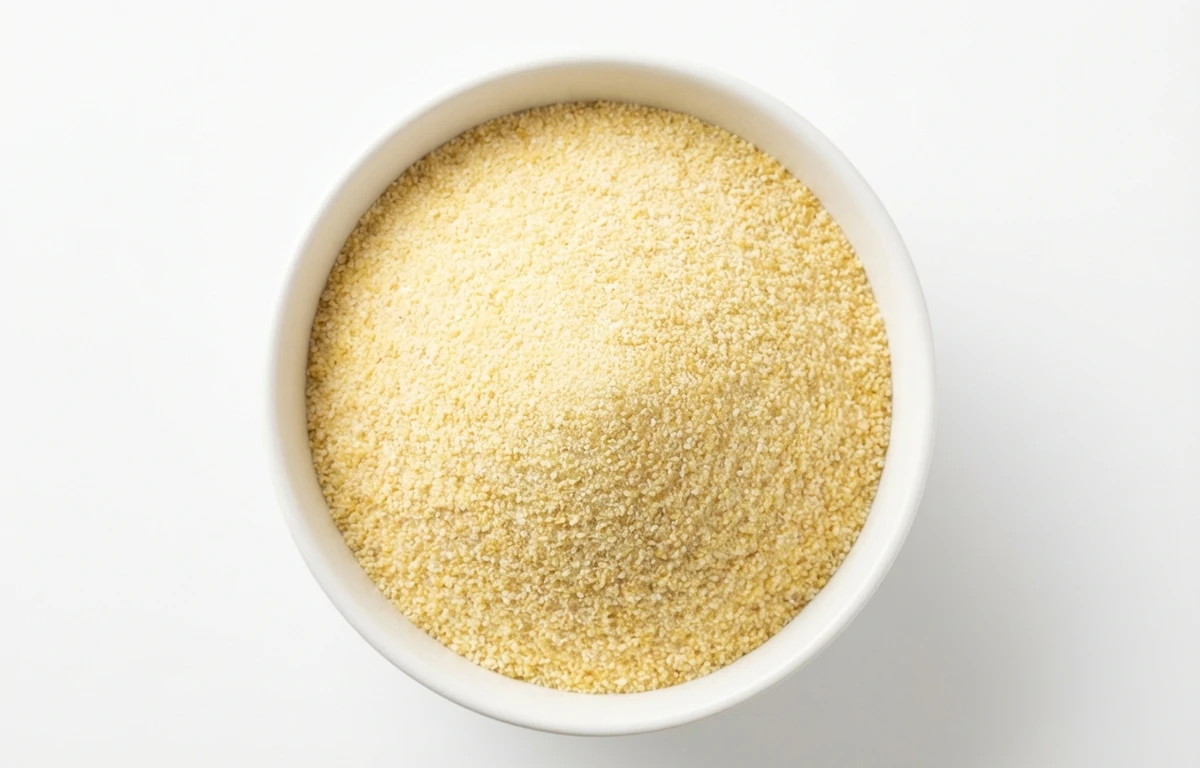
enriched semolina.
VegetarianVeganGluten-freeDairy-freeNut-freePeanut-freeSoy-freeEgg-freeShellfish-freeHoney-freeAlcohol-free
ALSO KNOWN AS
enriched ravaenriched soojienriched durum semolinaenriched farina
SERVING
CALORIES
360
PROTEIN
12.7g
CARBS
72.8g
FAT
1.1g
FIBER
3.9g
NUTRITION PROFILE · per 100 g
Everything in this ingredient.
MACRONUTRIENTS
Calories360kcal—
Protein12.7g25%
Carbohydrates72.8g26%
Fiber3.9g14%
Sugar0.10g0%
Total fat1.1g1%
Saturated fat0.15g1%
Trans fat0g—
Cholesterol0mg0%
Water12.7g—
MINERALS
Sodium1.0mg0%
Potassium186mg4%
Calcium17mg1%
Iron4.4mg24%
Magnesium47mg11%
Phosphorus136mg11%
Zinc1.1mg10%
Copper0.19mg21%
Manganese0.62mg27%
Selenium70.7µg129%
VITAMINS
Vitamin A0µg0%
Vitamin C0mg0%
Vitamin D0µg0%
Vitamin E0.10mg1%
Vitamin K0.10µg0%
Thiamin (B1)0.80mg67%
Riboflavin (B2)0.50mg38%
Niacin (B3)6.7mg42%
Pantothenic acid (B5)0.58mg12%
Vitamin B60.10mg6%
Folate (B9)190µg48%
Vitamin B120µg0%
%DV based on a 2,000 cal diet. Source: USDA FoodData Central. A dash in the %DV column means there’s no established Daily Value for that nutrient.
MEASUREMENT CONVERSIONS
How much is what.
1 cup167g
1 tablespoon10.5g
1 teaspoon3.5g
1 oz28.4g
1 lb453.6g
1 liter700g
HEALTH BENEFITS
Why eat it.
- ✓High in iron to support healthy blood oxygen levels
- ✓Rich in B-vitamins for efficient energy metabolism
- ✓Provides sustained energy through complex carbohydrates
- ✓Contains selenium which acts as a powerful antioxidant
- ✓Good source of protein for muscle maintenance
COOKING TIPS
In the kitchen.
- 1Toast the semolina lightly in a pan before boiling to enhance nutty flavor
- 2Whisk constantly while adding to boiling liquid to prevent lumps
- 3Use a 1:3 ratio of semolina to liquid for a thick porridge consistency
STORAGE
Keep it fresh.
- Store in an airtight container in a cool, dry, dark place
- Can be kept in the refrigerator or freezer to prevent rancidity
- Keep away from moisture to avoid clumping and mold growth
FAQ
Frequently asked questions.
What does 'enriched' mean for semolina?
Enriched means that nutrients lost during the milling process, such as B vitamins and iron, have been added back to the grain.
How long does enriched semolina last?
It typically lasts 6 to 12 months when stored in a cool, dry place in an airtight container.
Is enriched semolina gluten-free?
No, semolina is made from durum wheat and contains high levels of gluten.
What is the best substitute for semolina?
Depending on the recipe, you can use cornmeal, cream of wheat, or rice flour (for a gluten-free alternative).
Can I freeze enriched semolina?
Yes, freezing in an airtight bag can extend its shelf life up to one year and prevents pests.
How do I know if semolina has gone bad?
Check for a sour or musty smell, visible mold, or the presence of small insects (weevils).
What are common dishes made with enriched semolina?
It is commonly used for pasta, couscous, Indian upma, halwa, and as a dusting for pizza crusts.
Is semolina the same as flour?
It is a type of flour, but it is much coarser than standard all-purpose flour and made specifically from durum wheat.
Does enriched semolina have a high glycemic index?
It has a medium glycemic index, meaning it is digested more slowly than white bread but faster than whole grains.



















