
Grain
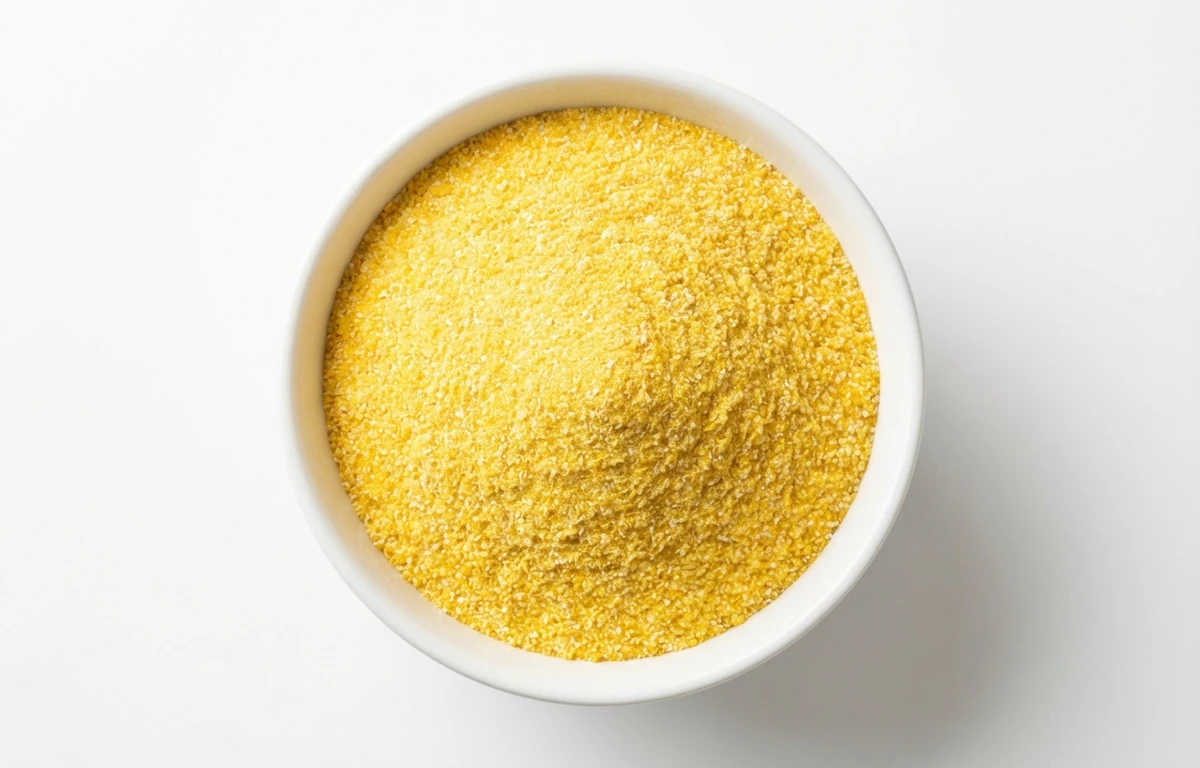
enriched yellow cornmeal.
VegetarianVeganGluten-freeDairy-freeNut-freePeanut-freeSoy-freeEgg-freeShellfish-freeHoney-freeAlcohol-free
ALSO KNOWN AS
yellow corn flour
SERVING
CALORIES
370
PROTEIN
7.1g
CARBS
79.5g
FAT
1.8g
FIBER
3.9g
NUTRITION PROFILE · per 100 g
Everything in this ingredient.
MACRONUTRIENTS
Calories370kcal—
Protein7.1g14%
Carbohydrates79.5g29%
Fiber3.9g14%
Sugar1.6g3%
Total fat1.8g2%
Saturated fat0.22g1%
Trans fat0g—
Cholesterol0mg0%
Water11.2g—
MINERALS
Sodium7.0mg0%
Potassium142mg3%
Calcium3.0mg0%
Iron4.4mg24%
Magnesium32mg8%
Phosphorus99mg8%
Zinc0.66mg6%
Copper0.08mg9%
Manganese0.17mg7%
Selenium10.5µg19%
VITAMINS
Vitamin A11µg1%
Vitamin C0mg0%
Vitamin D0µg0%
Vitamin E0.12mg1%
Vitamin K0µg0%
Thiamin (B1)0.55mg46%
Riboflavin (B2)0.38mg29%
Niacin (B3)5.0mg31%
Pantothenic acid (B5)0.24mg5%
Vitamin B60.18mg11%
Folate (B9)209µg52%
Vitamin B120µg0%
%DV based on a 2,000 cal diet. Source: USDA FoodData Central. A dash in the %DV column means there’s no established Daily Value for that nutrient.
MEASUREMENT CONVERSIONS
How much is what.
1 cup157g
1 tablespoon9.8g
1 teaspoon3.3g
1 ml0.7g
1 liter654.2g
HEALTH BENEFITS
Why eat it.
- ✓Enriched with B vitamins like niacin, thiamin, and riboflavin, which are essential for energy metabolism.
- ✓Fortified with iron, a key mineral for producing red blood cells and preventing anemia.
- ✓Provides complex carbohydrates for sustained energy release.
- ✓A source of dietary fiber, which aids in digestion and helps maintain stable blood sugar levels.
COOKING TIPS
In the kitchen.
- 1To avoid lumps when making polenta or grits, slowly whisk cornmeal into cold liquid before bringing it to a boil.
- 2Use as a coating for fried foods like chicken, fish, or green tomatoes to create a crispy, golden crust.
- 3Add to baked goods like cornbread, muffins, and pancakes for a distinct texture and slightly sweet flavor.
- 4Lightly toast dry cornmeal in a skillet before use to deepen its nutty, roasted flavor.
STORAGE
Keep it fresh.
- Store in an airtight container in a cool, dark, and dry pantry for up to one year.
- For longer-term storage, place the airtight container in the refrigerator or freezer to prevent the natural oils from becoming rancid.
FAQ
Frequently asked questions.
Is enriched yellow cornmeal healthy?
Yes, enriched yellow cornmeal can be a healthy part of a balanced diet. It provides complex carbohydrates for energy and is fortified with essential B vitamins (niacin, thiamin, riboflavin) and iron. It also contains some dietary fiber, which supports digestive health.
What are the key nutritional benefits of enriched yellow cornmeal?
Enriched yellow cornmeal is a good source of B vitamins like niacin, thiamin, and riboflavin, crucial for energy metabolism. It's also fortified with iron, which is vital for red blood cell production and preventing anemia. Additionally, it offers complex carbohydrates for sustained energy and some dietary fiber.
How many calories and carbohydrates are in enriched yellow cornmeal?
Per 100 grams, enriched yellow cornmeal contains approximately 370 calories. It is primarily a carbohydrate source, providing about 79.45 grams of carbohydrates per 100 grams, along with 7.11 grams of protein and 1.75 grams of fat.
Is enriched yellow cornmeal gluten-free?
Yes, cornmeal made from 100% corn is naturally gluten-free. However, always check the product label to ensure it hasn't been processed in facilities that also handle gluten-containing grains, which could lead to cross-contamination.
Can people with diabetes eat enriched yellow cornmeal?
Enriched yellow cornmeal is high in carbohydrates, so individuals with diabetes should consume it in moderation and monitor their portion sizes. Its fiber content can help moderate blood sugar response, but it's best to pair it with protein and healthy fats to further slow digestion and glucose absorption.
Is enriched yellow cornmeal vegan?
Yes, enriched yellow cornmeal is vegan. It is a plant-based product made solely from ground corn kernels and does not contain any animal-derived ingredients.
What is enriched yellow cornmeal commonly used for in cooking?
Enriched yellow cornmeal is a versatile ingredient used in various dishes. It's a primary component in cornbread, polenta, and grits, and is also frequently used as a breading for fried foods like fish or okra, providing a crisp texture.
How should I store enriched yellow cornmeal to keep it fresh?
Store enriched yellow cornmeal in an airtight container in a cool, dry, and dark place, such as a pantry. Proper storage helps prevent moisture absorption and keeps pests away. For extended freshness, especially in warm climates, it can be stored in the refrigerator or freezer.
What does "enriched" mean when referring to cornmeal?
"Enriched" means that certain nutrients lost during the milling process have been added back, and sometimes additional nutrients are fortified. For yellow cornmeal, this typically includes B vitamins like niacin, thiamin, and riboflavin, as well as iron, to enhance its nutritional value.
Does enriched yellow cornmeal provide dietary fiber?
Yes, enriched yellow cornmeal does provide dietary fiber, which is beneficial for digestive health and can help maintain stable blood sugar levels. While not as high in fiber as whole grains, it contributes to your daily fiber intake.



















