
Loading...
Per 100g
Nutrition data source: USDA FoodData Central
Common measurement equivalents in grams
Once opened and refrigerated, it can last for up to 1-2 years due to its high salt content and fermentation.
A mix of red miso paste and chili paste (like sambal oelek) is the closest substitute, though it lacks the specific funk of broad beans.
Usually no. Most traditional brands use wheat flour as a fermentation starter or thickener. Check labels for specific gluten-free versions.
It is a premium version from Pixian, China, known for its long fermentation time (up to 8 years) and deeper, more complex flavor.
While technically safe to eat raw, it is almost always fried in oil to mellow its raw saltiness and develop its complex umami profile.
It varies by brand. 'La Doubanjiang' is the spicy version, while regular Doubanjiang can be mild. It is generally more salty and savory than purely hot.
It is not recommended as the high salt content prevents it from freezing solid, and the texture of the beans may change negatively.
It is the 'soul' of Sichuan cuisine, essential for Mapo Tofu, Twice-Cooked Pork, and Shuizhu (water-boiled) beef.
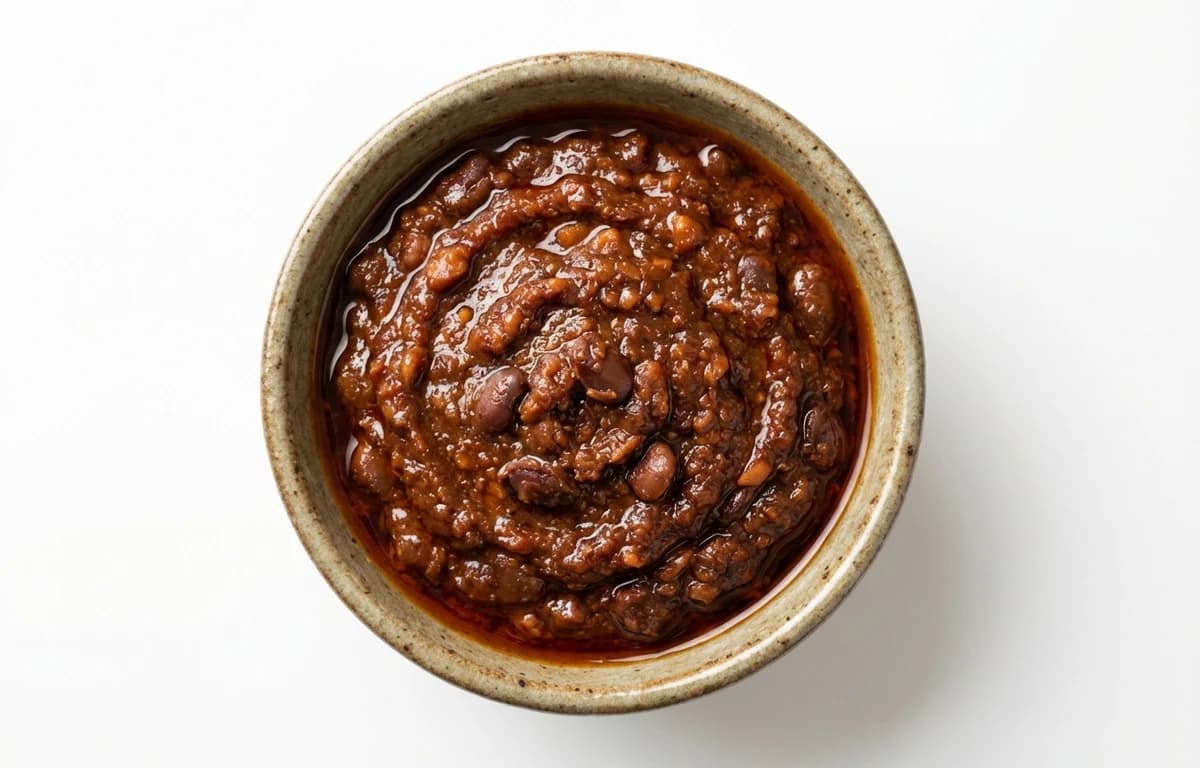
fermented broad bean paste is a versatile ingredient found in cuisines around the world. With 130 calories per 100g and 9 grams of protein, it's a nutritious addition to many dishes.
Explore more ingredients in the other category with complete nutrition information.
View all other →Discover 0 recipes featuring fermented broad bean paste with step-by-step instructions.
Browse recipes →