
Loading...
Also known as: miso, doenjang, tauco, jiang
Per 100g
Nutrition data source: USDA FoodData Central
Common measurement equivalents in grams
When kept refrigerated in an airtight container, it can last for 6 to 12 months. Its high salt content acts as a natural preservative.
Light paste (like white miso) is fermented for a shorter time and is sweeter and milder. Dark paste (like red miso or doenjang) is fermented longer and has a deeper, saltier, and more pungent flavor.
Not always. While soybeans are gluten-free, many varieties use barley, rye, or wheat as a fermentation starter (koji). Always check the label for gluten-free certification.
Yes, it can be frozen. Because of its high salt content, it usually doesn't freeze completely solid, making it easy to scoop even when frozen.
For a similar salty/umami profile, you can use soy sauce, tamari, or a mixture of tahini and salt, though the flavor profile will lack the fermented depth.
Salt is a critical component of the fermentation process; it controls the growth of bacteria and prevents the paste from spoiling during the months-long aging process.
Look for pastes with minimal ingredients (soybeans, salt, water, and a starter culture). Avoid those with added MSG, corn syrup, or artificial preservatives.
Yes, it is safe to eat raw and is frequently used in uncooked dressings, dips, and spreads.
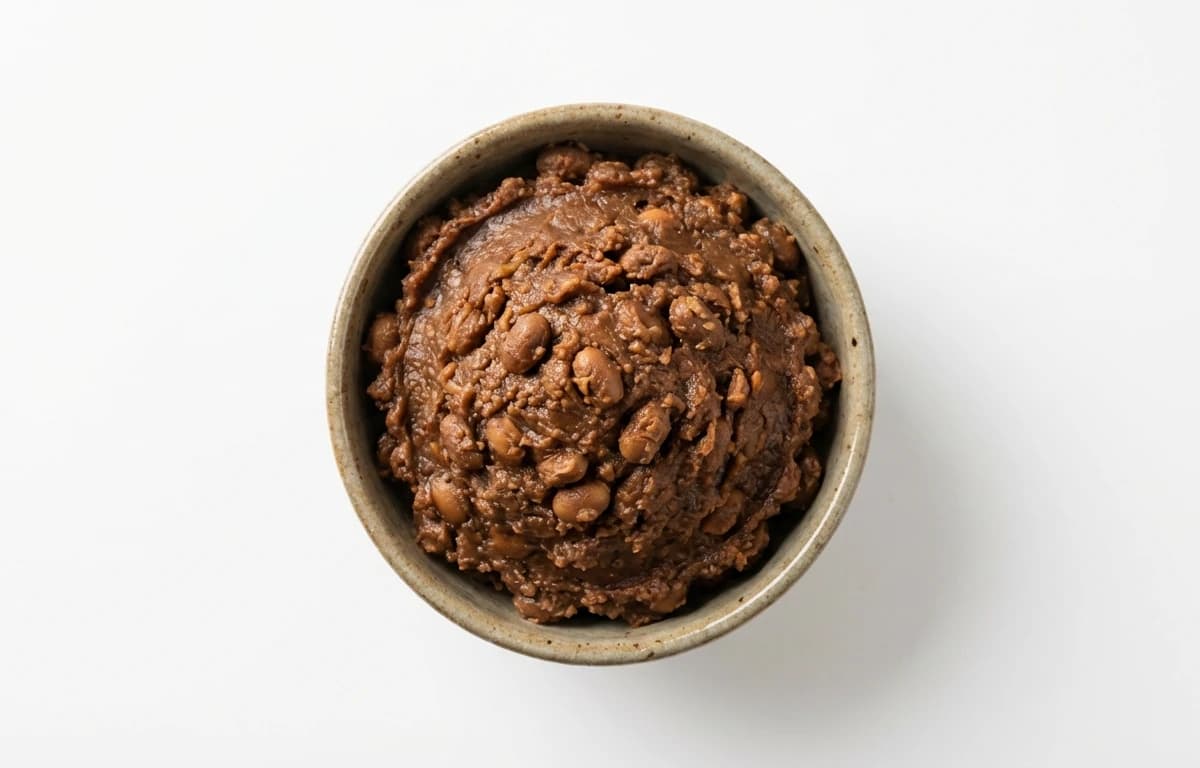
Fermented Soybean Paste is a versatile ingredient found in cuisines around the world. With 198 calories per 100g and 12.8 grams of protein, it's a nutritious addition to many dishes.
Explore more ingredients in the legume product category with complete nutrition information.
View all legume product →Discover 1 recipes featuring fermented soybean paste with step-by-step instructions.
Browse recipes →