
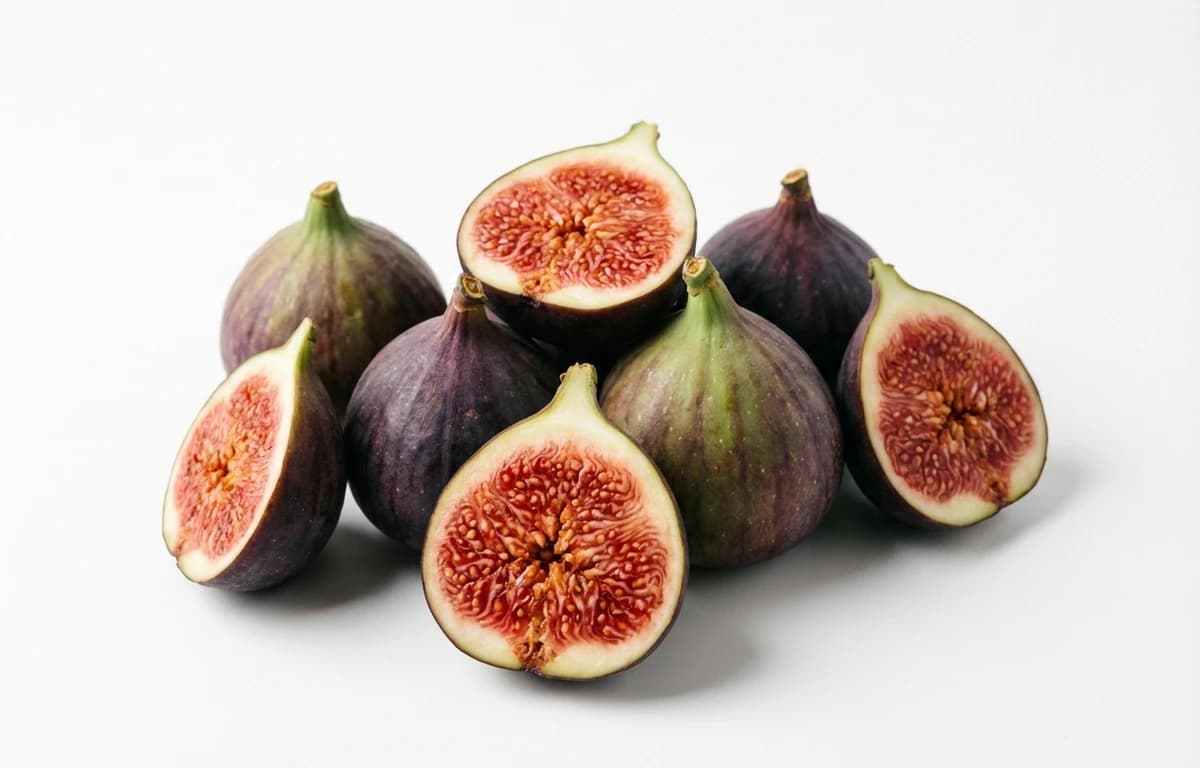
fig
Also known as:
Loading...
Also known as:
Per 100g
Nutrition data source: USDA FoodData Central
Common measurement equivalents in grams

A classic and elegant cheese board featuring a trio of cheeses—sharp cheddar, creamy brie, and tangy goat cheese. Paired with assorted crackers, fresh fruits, crunchy almonds, and sweet fig jam, it's the perfect effortless appetizer for any gathering.

Tender, melt-in-your-mouth kebabs made with spinach and paneer, with a sweet surprise of dried figs in the center. A unique and elegant appetizer perfect for parties, they offer a delightful mix of savory and sweet flavors.

Sweet and savory vegetarian kebabs made from dried figs, potatoes, and paneer. These melt-in-your-mouth patties are delicately spiced and shallow-fried to a perfect golden brown, making for an elegant Mughlai appetizer.

A delicious and healthy Indian sweet made without any refined sugar. This rich barfi gets its natural sweetness from dried figs and dates, packed with the crunch of mixed nuts. Perfect for festive occasions or as a guilt-free treat.
Yes, figs are very healthy. They are rich in dietary fiber, which aids digestion and helps prevent constipation. Figs also provide essential minerals like potassium, calcium, and magnesium, supporting bone health and blood pressure regulation. Their high antioxidant content helps combat oxidative stress.
Per 100g, fresh figs contain approximately 81.5 calories, 2.03g of protein, 16.28g of carbohydrates, and 0.37g of fat. They are particularly noted for their high fiber content, which contributes to digestive health and satiety.
Figs can be a good addition to a weight loss diet due to their high fiber content, which promotes fullness and can help reduce overall calorie intake. However, they are relatively high in natural sugars and calories compared to some other fruits, so moderation is key.
Diabetics can eat figs in moderation. While figs contain natural sugars, their high fiber content can help slow down sugar absorption, potentially aiding in blood sugar management. It's best to monitor portion sizes and consult with a healthcare professional or dietitian.
Yes, figs are naturally vegan as they are a fruit derived from a plant. They are also naturally gluten-free, making them suitable for individuals following a gluten-free diet.
Fresh figs are best enjoyed raw. Simply wash them, trim the stem, and eat the entire fruit, including the skin. They can be sliced and added to salads, yogurt, oatmeal, or cheese boards, or simply eaten as a sweet snack.
Fresh figs have a unique, sweet, and subtly earthy flavor with a soft, jam-like flesh and a slightly chewy skin. The tiny seeds inside add a pleasant crunch, contributing to their distinct texture.
fig is a versatile ingredient found in cuisines around the world. With 81.5 calories per 100g and 2.03 grams of protein, it's a nutritious addition to many dishes.
Explore more ingredients in the fruit category with complete nutrition information.
View all fruit →Fresh figs are delicate and perishable. Store them in a single layer in the refrigerator for 2-3 days. Avoid washing them until just before eating, as moisture can accelerate spoilage.
A ripe fig will be soft to the touch, slightly yielding when gently squeezed, and have a rich, deep color. It may also have a slight crack or tear in the skin and a sweet aroma. Avoid figs that are hard or have a sour smell.
Yes, the skin of a fig is entirely edible and often preferred for its texture and additional fiber. Most people enjoy eating the whole fig, but if you prefer, you can peel it, especially with thicker-skinned varieties.