
Loading...
Per 100g
Nutrition data source: USDA FoodData Central
Common measurement equivalents in grams
When stored in a cool, dry place in an airtight container, they typically last 6 to 12 months. Check for any 'off' or rancid smells before use.
Yes, breadcrumbs freeze very well. Place them in a freezer-safe bag and they will stay fresh for up to a year without clumping.
Panko breadcrumbs, crushed crackers, crushed cornflakes, or even rolled oats can work depending on the recipe.
Standard breadcrumbs are made from wheat and contain gluten. You must specifically look for 'certified gluten-free' breadcrumbs if needed.
Toast bread slices until very dry, then pulse in a food processor until they reach a fine, sandy consistency.
Fine breadcrumbs are sandy and dense, creating a solid crust. Panko is made from crustless bread and has larger, airy flakes for a lighter crunch.
Ensure you follow the 'standard breading procedure': coat in flour first, then dip in beaten egg, and finally coat in breadcrumbs.
Most plain commercial breadcrumbs are vegan, but some brands may contain milk solids, honey, or butter. Always check the ingredient label.
Yes, fine breadcrumbs are excellent for thickening soups, stews, and sauces, especially in traditional European recipes.
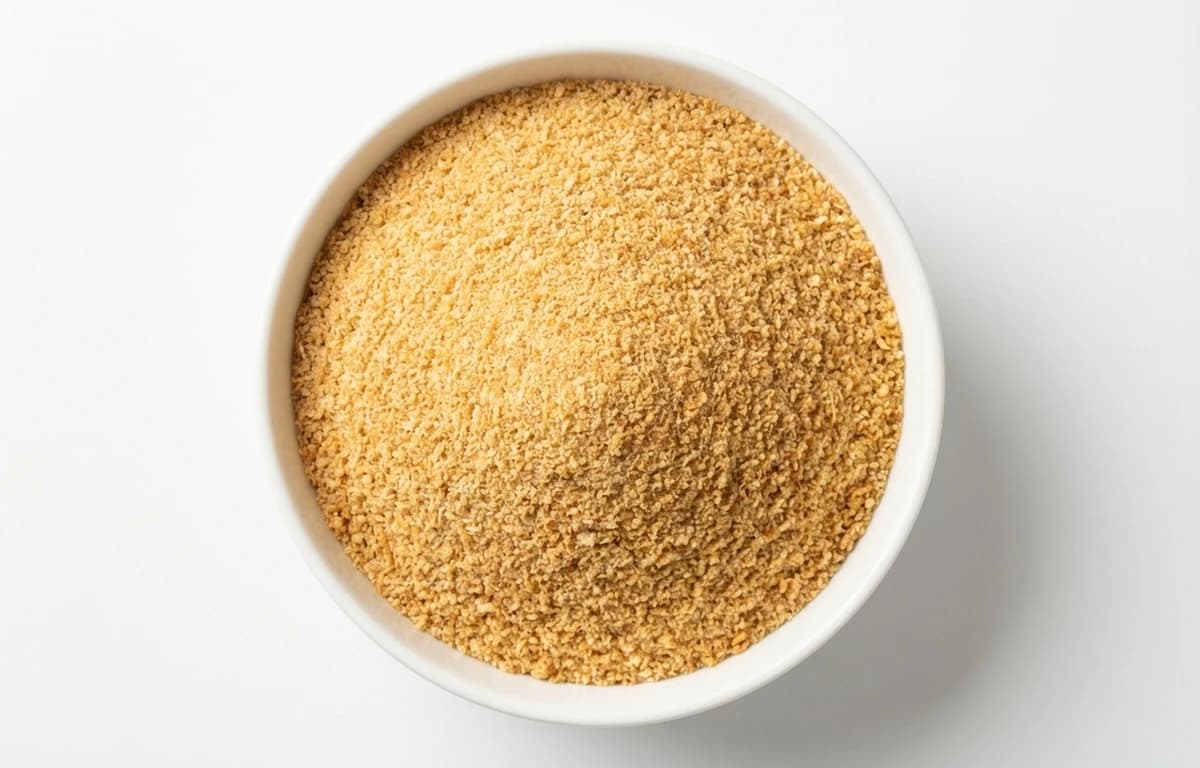
Fine Breadcrumbs is a versatile ingredient found in cuisines around the world. With 395 calories per 100g and 13.4 grams of protein, it's a nutritious addition to many dishes.
Explore more ingredients in the grain category with complete nutrition information.
View all grain →Discover 1 recipes featuring fine breadcrumbs with step-by-step instructions.
Browse recipes →