
Spice6 recipes
fine sea salt.
VegetarianVeganGluten-freeDairy-freeNut-freePeanut-freeSoy-freeEgg-freeShellfish-freeHoney-freeAlcohol-free
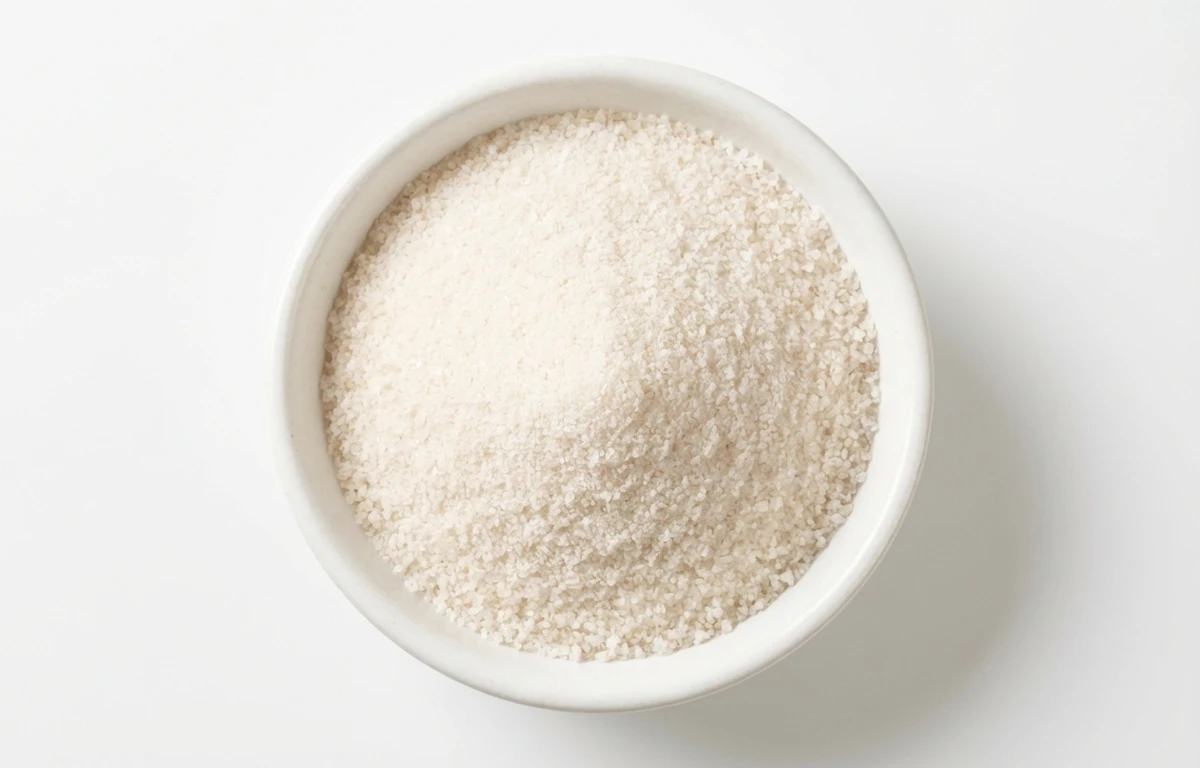
SERVING
CALORIES
0
PROTEIN
0g
CARBS
0g
FAT
0g
FIBER
0g
NUTRITION PROFILE · per 100 g
Everything in this ingredient.
MACRONUTRIENTS
Calories0kcal—
Protein0g0%
Carbohydrates0g0%
Fiber0g0%
Sugar0g0%
Total fat0g0%
Saturated fat0g0%
Trans fat0g—
Cholesterol0mg0%
Water0.20g—
MINERALS
Sodium38758mg1685%
Potassium8.0mg0%
Calcium24mg2%
Iron0.30mg2%
Magnesium1.0mg0%
Phosphorus0mg0%
Zinc0.10mg1%
Copper0.01mg1%
Manganese0.10mg4%
Selenium0.10µg0%
VITAMINS
Vitamin A0µg0%
Vitamin C0mg0%
Vitamin D0µg0%
Vitamin E0mg0%
Vitamin K0µg0%
Thiamin (B1)0mg0%
Riboflavin (B2)0mg0%
Niacin (B3)0mg0%
Pantothenic acid (B5)0mg0%
Vitamin B60mg0%
Folate (B9)0µg0%
Vitamin B120µg0%
%DV based on a 2,000 cal diet. Source: USDA FoodData Central. A dash in the %DV column means there’s no established Daily Value for that nutrient.
MEASUREMENT CONVERSIONS
How much is what.
1 cup288g
1 tablespoon18g
1 teaspoon6g
1 oz28.4g
1 lb453.6g
1 ml1.2g
1 liter1200g
HEALTH BENEFITS
Why eat it.
- ✓Essential for maintaining electrolyte balance
- ✓Supports healthy nerve transmission
- ✓Helps regulate fluid balance in the body
- ✓Contains trace minerals like calcium and potassium
- ✓Assists in muscle contraction and relaxation
COOKING TIPS
In the kitchen.
- 1Dissolves quickly, making it ideal for baking and sauces
- 2Use as a finishing salt for a delicate, even distribution of flavor
- 3Measure by weight when possible, as fine salt is denser than coarse salt
STORAGE
Keep it fresh.
- Store in a cool, dry place away from moisture
- Keep in an airtight container to prevent clumping
- Avoid storing directly above the stove where steam can enter
FAQ
Frequently asked questions.
How long does fine sea salt last?
Salt is a natural preservative and has an indefinite shelf life if kept dry and free of contaminants.
Can I substitute table salt for fine sea salt?
Yes, they are similar in texture. However, table salt often contains iodine and anti-caking agents, while sea salt may have trace minerals.
What is the best way to store salt to prevent clumping?
Store it in an airtight glass or ceramic jar. Adding a few grains of dry rice to the shaker can help absorb excess moisture.
Is fine sea salt healthier than table salt?
Nutritionally, they both contain similar amounts of sodium. Sea salt is less processed and contains trace minerals, but it is not significantly 'healthier'.
How do I substitute fine sea salt for coarse sea salt?
Fine salt is denser. Generally, use about 3/4 teaspoon of fine salt for every 1 teaspoon of coarse salt.
Why is fine sea salt preferred for baking?
Its small crystal size allows it to dissolve and distribute evenly throughout doughs and batters.
Does fine sea salt contain iodine?
Most sea salts are not iodized unless specifically labeled. If you rely on salt for iodine, check the packaging.
Can fine sea salt be used for finishing dishes?
Yes, it provides a quick burst of salinity that dissolves easily on the tongue, though flaky salts are often preferred for texture.
RECIPES
Cook with fine sea salt.
6 recipes · sorted by what’s quick



















