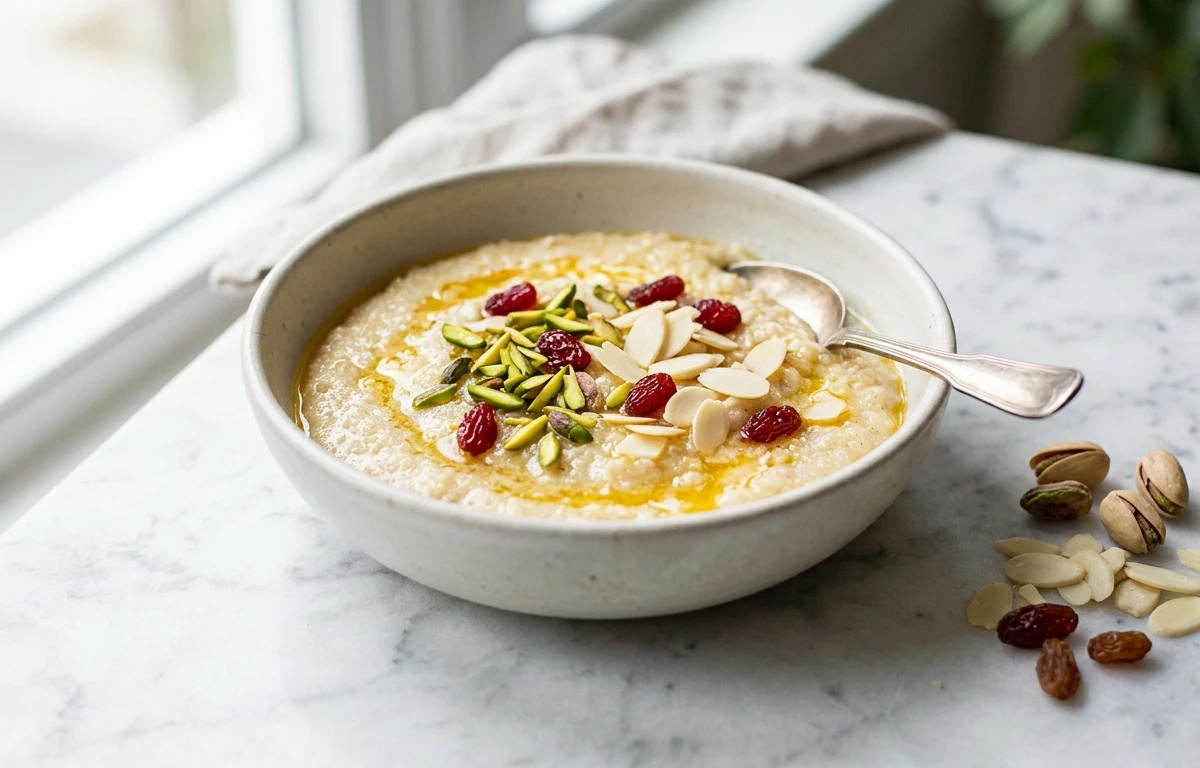
Grain6 recipes
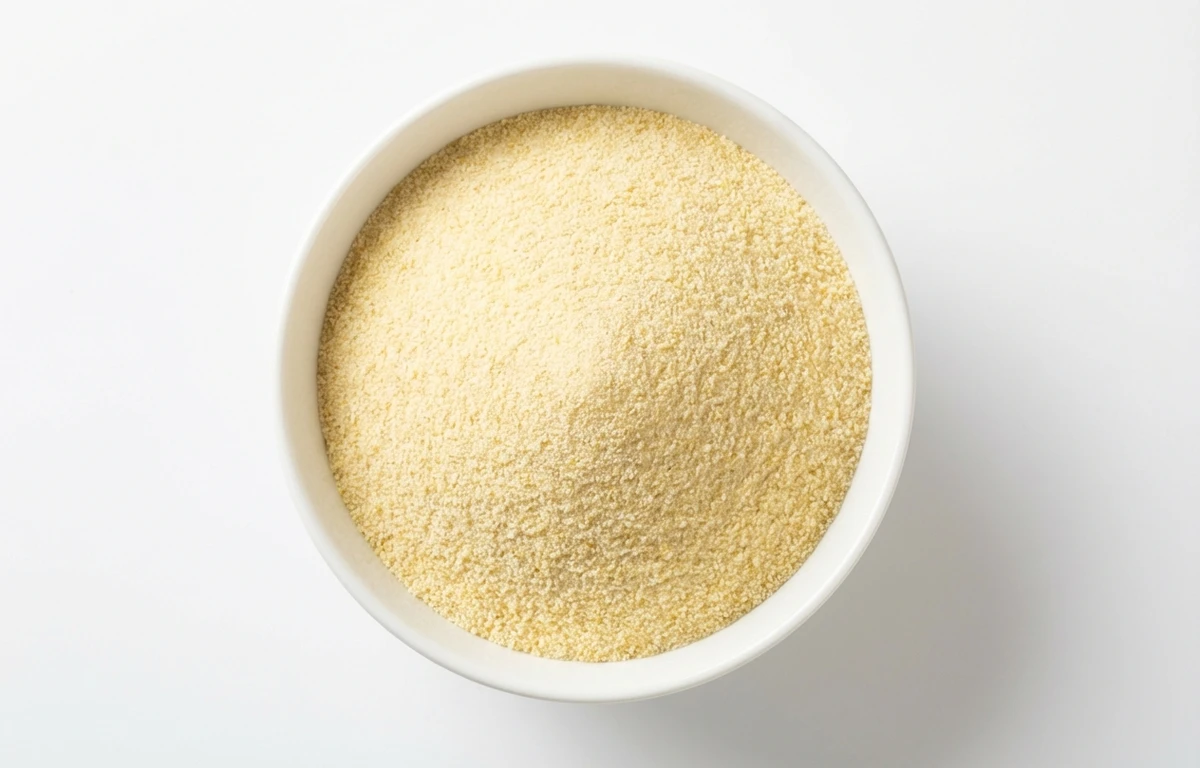
fine semolina.
VegetarianVeganGluten-freeDairy-freeNut-freePeanut-freeSoy-freeEgg-freeShellfish-freeHoney-freeAlcohol-free
ALSO KNOWN AS
chiroti ravasoojiravasemolina flour
SERVING
CALORIES
360
PROTEIN
12.7g
CARBS
72.8g
FAT
1.1g
FIBER
3.9g
NUTRITION PROFILE · per 100 g
Everything in this ingredient.
MACRONUTRIENTS
Calories360kcal—
Protein12.7g25%
Carbohydrates72.8g26%
Fiber3.9g14%
Sugar0.10g0%
Total fat1.1g1%
Saturated fat0.15g1%
Trans fat0g—
Cholesterol0mg0%
Water12.7g—
MINERALS
Sodium1.0mg0%
Potassium186mg4%
Calcium17mg1%
Iron1.2mg7%
Magnesium47mg11%
Phosphorus136mg11%
Zinc1.1mg10%
Copper0.19mg21%
Manganese0.62mg27%
Selenium70.6µg128%
VITAMINS
Vitamin A0µg0%
Vitamin C0mg0%
Vitamin D0µg0%
Vitamin E0.06mg0%
Vitamin K0.10µg0%
Thiamin (B1)0.28mg23%
Riboflavin (B2)0.08mg6%
Niacin (B3)3.3mg21%
Pantothenic acid (B5)0.58mg12%
Vitamin B60.10mg6%
Folate (B9)72µg18%
Vitamin B120µg0%
%DV based on a 2,000 cal diet. Source: USDA FoodData Central. A dash in the %DV column means there’s no established Daily Value for that nutrient.
MEASUREMENT CONVERSIONS
How much is what.
1 cup167g
1 tablespoon10.5g
1 teaspoon3.5g
1 ml0.7g
1 liter700g
HEALTH BENEFITS
Why eat it.
- ✓Rich in iron and folate, which are essential for red blood cell production and preventing anemia.
- ✓Good source of selenium, a powerful antioxidant that helps protect against cell damage and supports thyroid health.
- ✓High in protein and fiber compared to all-purpose flour, promoting satiety and aiding in weight management.
- ✓Provides B vitamins, such as thiamine and folate, which are crucial for converting food into energy.
COOKING TIPS
In the kitchen.
- 1To prevent lumps when making porridge or puddings, add semolina to the liquid gradually while whisking constantly.
- 2Lightly toasting fine semolina in a dry pan before cooking enhances its nutty flavor, a common technique in dishes like Upma or Sooji Halwa.
- 3Its high gluten content makes it ideal for creating fresh pasta with a firm, 'al dente' texture.
- 4Use as a coating for fried foods to achieve an extra crispy crust, or dust baking surfaces to prevent dough from sticking.
STORAGE
Keep it fresh.
- Store in a cool, dark, and dry place in an airtight container to prevent moisture and pest infestation. It can last for up to a year in a pantry.
- For longer-term storage, place the airtight container in the refrigerator or freezer to maintain freshness and prevent the natural oils from going rancid.
FAQ
Frequently asked questions.
Is fine semolina healthy?
Yes, fine semolina offers several health benefits. It's a good source of iron and folate, crucial for red blood cell production, and provides selenium, a powerful antioxidant. Its protein and fiber content can also promote satiety, and it contains B vitamins essential for energy metabolism.
How much protein and calories are in fine semolina?
Per 100 grams, fine semolina contains approximately 360 calories and 12.7 grams of protein. It is also rich in carbohydrates, providing about 72.8 grams per 100g, with a low fat content of 1.1 grams.
Is fine semolina good for weight loss?
Fine semolina can be part of a weight-loss diet when consumed in moderation. Its higher protein and fiber content compared to all-purpose flour can help you feel fuller for longer, potentially reducing overall calorie intake. However, it is calorie-dense, so portion control is key.
Is fine semolina gluten-free?
No, fine semolina is not gluten-free. It is made from durum wheat, which naturally contains gluten. Individuals with celiac disease or gluten sensitivity should avoid fine semolina.
Can diabetics eat fine semolina?
Diabetics can consume fine semolina in moderation, but careful portion control is essential due to its high carbohydrate content. It has a moderate to high glycemic index, so pairing it with fiber-rich vegetables and lean proteins can help manage blood sugar response. Always consult with a healthcare professional or dietitian.
What is fine semolina commonly used for?
Fine semolina is incredibly versatile. It's widely used for making traditional pasta, couscous, and gnocchi. It's also a popular ingredient in many desserts like halva, cakes, and puddings, and can be used to make porridges or as a coating for fried foods.
How do you cook with fine semolina?
Fine semolina can be cooked in various ways. For porridges, it's typically simmered with milk or water until thickened. For baking, it's incorporated into doughs or batters. When making pasta, it's mixed with water and sometimes eggs to form a firm dough that is then rolled and cut.
How should I store fine semolina?
To maintain its freshness, fine semolina should be stored in an airtight container in a cool, dry, and dark place. Proper storage helps prevent moisture absorption and keeps pests away. Stored correctly, it can last for several months.
What is the difference between fine semolina and coarse semolina?
The primary difference lies in their grind size. Fine semolina has a much finer texture, similar to all-purpose flour but still slightly granular. Coarse semolina has a larger, grittier texture. This difference dictates their best uses, with fine semolina often preferred for smooth desserts and some pastas, while coarse is great for heartier dishes and dusting.
Is fine semolina suitable for making pasta?
Yes, fine semolina is excellent for making fresh pasta, especially when combined with '00' flour or used on its own for a firmer texture. Its high protein content (gluten) contributes to the elasticity and chewiness desired in pasta, giving it a superior bite and ability to hold shape.
RECIPES
Cook with fine semolina.
6 recipes · sorted by what’s quick