
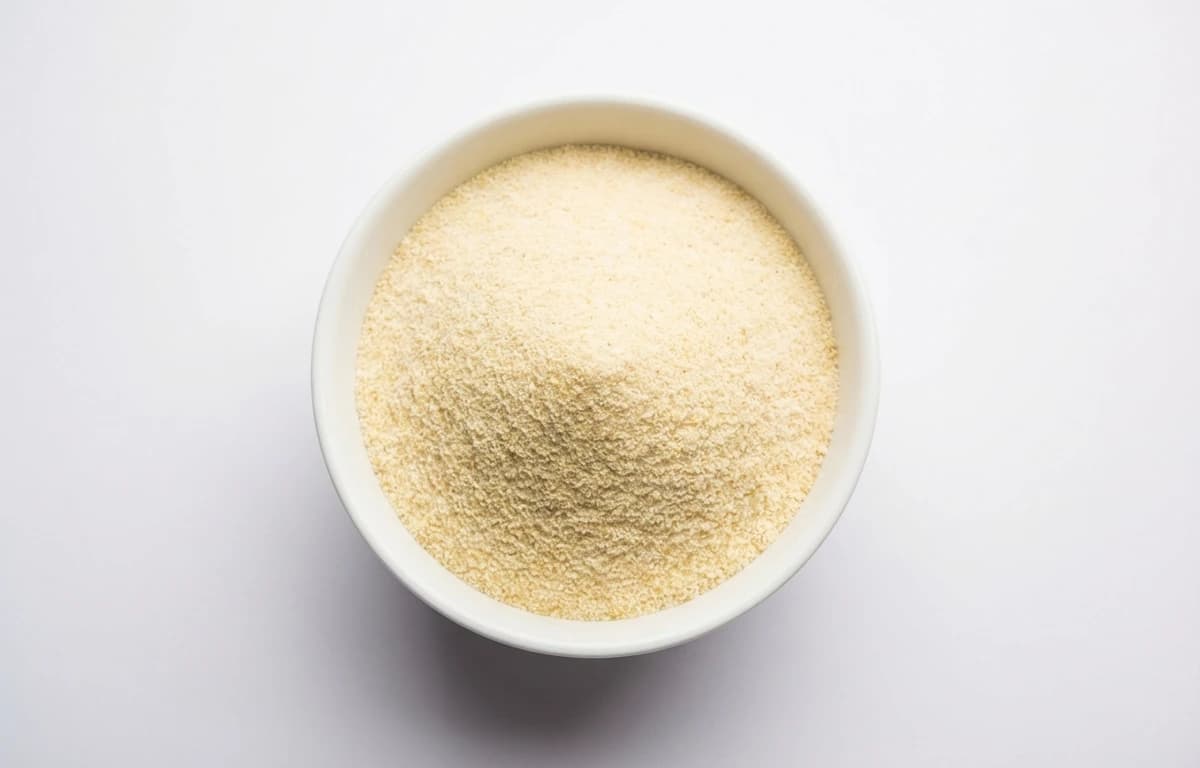
Fine Suji
Also known as:
Loading...
Also known as:
Per 100g
Nutrition data source: USDA FoodData Central
Common measurement equivalents in grams
Yes, fine suji is a nutritious grain that provides a significant amount of energy through carbohydrates and plant-based protein. It is rich in B vitamins, iron, and magnesium, which support metabolism and bone health. However, as it is a refined wheat product, it should be consumed as part of a balanced diet.
Every 100g of fine suji contains approximately 360 calories and 12.68g of protein. It is also high in carbohydrates (72.83g) and very low in fat (1.05g), making it a dense energy source for active individuals.
No, fine suji is not gluten-free. It is made from durum wheat, which naturally contains gluten, making it unsuitable for individuals with celiac disease or gluten sensitivity.
Fine suji can be part of a weight loss diet because its protein content helps with satiety, but portion control is key due to its high calorie and carb density. To make it more weight-loss friendly, cook it with plenty of fiber-rich vegetables.
Yes, fine suji is 100% vegan as it is a plant-based product derived entirely from wheat. It is an excellent source of plant protein for those following a vegan or vegetarian lifestyle.
Diabetics should consume fine suji in moderation because it has a high carbohydrate content and a moderate-to-high glycemic index. It is best paired with high-fiber ingredients and proteins to help prevent rapid blood sugar spikes.
The primary difference is the granule size; fine suji is ground more thoroughly and is ideal for smooth batters, puddings, and delicate sweets. Coarse suji has larger grains and is better suited for dishes like upma or idli where a distinct, grainy texture is preferred.
Fine Suji is a versatile ingredient found in cuisines around the world. With 360 calories per 100g and 12.68 grams of protein, it's a nutritious addition to many dishes.
Explore more ingredients in the grain category with complete nutrition information.
View all grain →Fine suji is often dry-roasted first to enhance its nutty flavor and prevent clumping. It can then be boiled with water or milk for porridge, mixed into batters for pancakes, or used as a coating for fried foods to add crispness.
Store fine suji in an airtight container in a cool, dry place to protect it from moisture and pests. For extended shelf life, you can dry-roast the suji before storing it or keep the container in the refrigerator.
No, fine suji is not keto-friendly. With over 72g of carbohydrates per 100g, it is too high in carbs for a standard ketogenic diet, which typically limits daily carb intake to under 50g.