
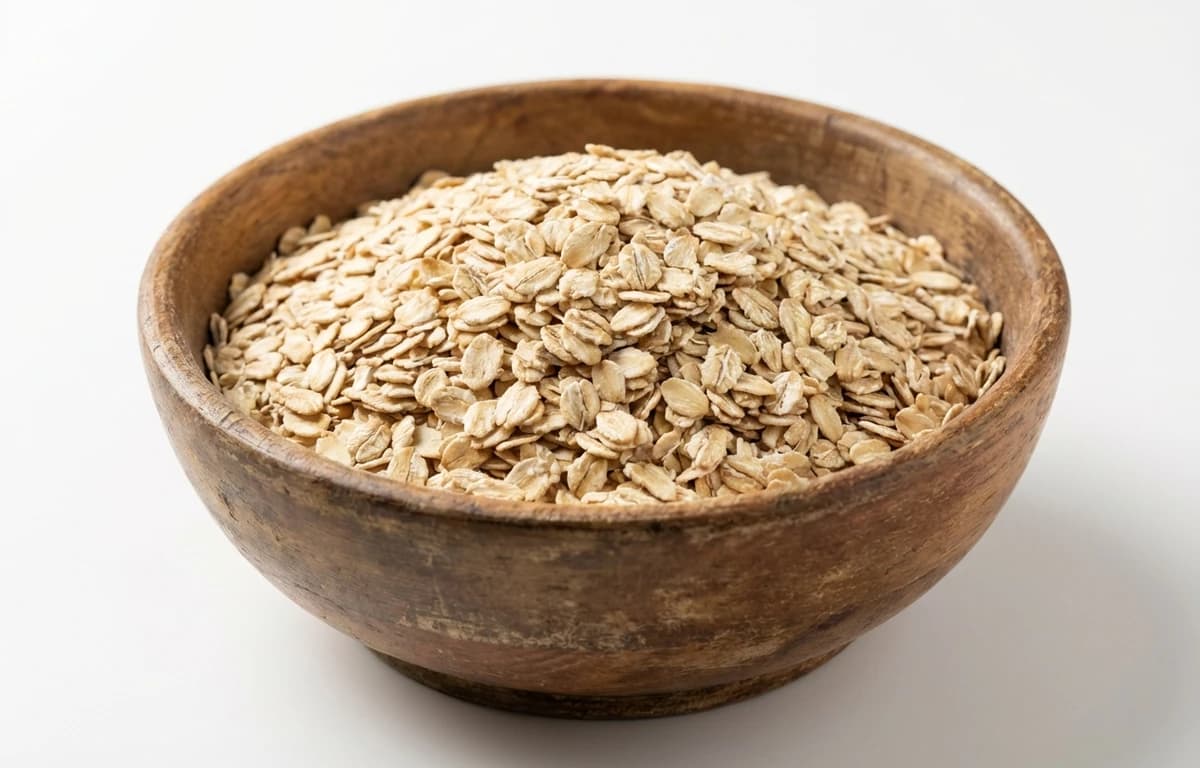
flaked oats
Also known as: rolled oats, old fashioned oats, oat flakes, jaee ke phool, avena en hojuelas
Loading...
Also known as: rolled oats, old fashioned oats, oat flakes, jaee ke phool, avena en hojuelas
Per 100g
Nutrition data source: USDA FoodData Central
Common measurement equivalents in grams
When stored in an airtight container in a cool, dry place, flaked oats typically last for 12 to 24 months.
While oats are naturally gluten-free, they are often processed in facilities that handle wheat. Look for 'certified gluten-free' labels if you have celiac disease.
Flaked (rolled) oats are steamed and flattened but kept whole, while instant oats are pre-cooked and cut smaller for faster preparation.
Yes, they are safe to eat raw as they are heat-treated during processing, but soaking them (like in overnight oats) makes them easier to digest.
Spoiled oats will have an off-smell (rancid), may show signs of mold, or contain small pantry pests.
Quinoa flakes, barley flakes, or rye flakes are the best substitutes for a similar texture.
No, washing is not necessary and would likely result in a mushy texture as the starches begin to release immediately.
Yes, freezing oats in an airtight bag is an excellent way to prevent rancidity and extend shelf life indefinitely.
Yes, flaked oats are whole grains because the bran and germ remain intact during the rolling process.
flaked oats is a versatile ingredient found in cuisines around the world. With 389 calories per 100g and 16.9 grams of protein, it's a nutritious addition to many dishes.
Explore more ingredients in the grain category with complete nutrition information.
View all grain →Discover 10 recipes featuring flaked oats with step-by-step instructions.
Browse recipes →A 1:1 ratio of oats to liquid is standard for overnight oats, though you can add more liquid if you prefer a thinner consistency.