
Other1 recipes
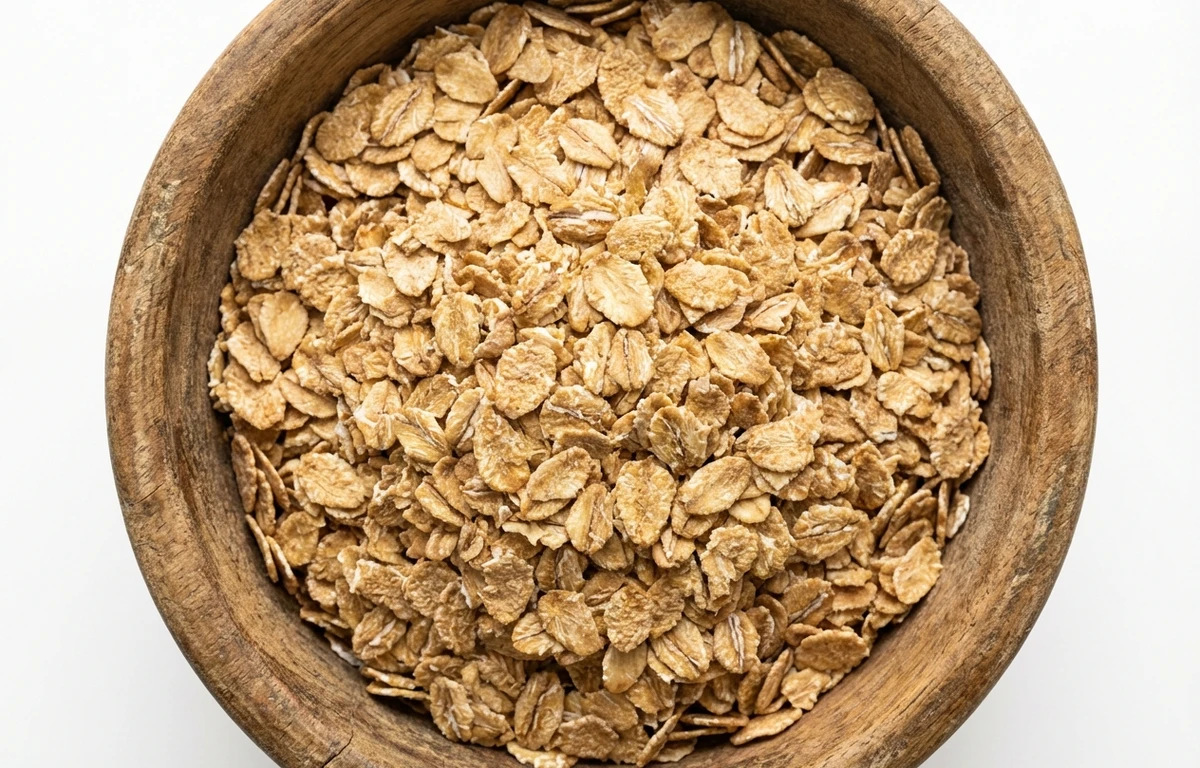
flaked wheat.
VegetarianVeganGluten-freeDairy-freeNut-freePeanut-freeSoy-freeEgg-freeShellfish-freeHoney-freeAlcohol-freeWhole grain
ALSO KNOWN AS
wheat flakesrolled wheatgehun ka pohapressed wheatsteamed wheat flakes
SERVING
CALORIES
339
PROTEIN
11.3g
CARBS
71.1g
FAT
1.9g
FIBER
10.7g
Per 100 g, it provides 1.9 µg of vitamin K.
NUTRITION PROFILE · per 100 g
Everything in this ingredient.
MACRONUTRIENTS
Calories339kcal—
Protein11.3g23%
Carbohydrates71.1g26%
Fiber10.7g38%
Sugar0.40g1%
Total fat1.9g2%
Saturated fat0.30g2%
Trans fat0g—
Cholesterol0mg0%
Water11g—
MINERALS
Sodium2.0mg0%
Potassium363mg8%
Calcium28mg2%
Iron3.6mg20%
Magnesium126mg30%
Phosphorus346mg28%
Zinc2.6mg24%
Copper0.38mg42%
Manganese3.0mg130%
Selenium61.8µg112%
VITAMINS
Vitamin A0µg0%
Vitamin C0mg0%
Vitamin D0µg0%
Vitamin E0.70mg5%
Vitamin K1.9µg2%
Thiamin (B1)0.40mg33%
Riboflavin (B2)0.10mg8%
Niacin (B3)5.4mg34%
Pantothenic acid (B5)0.90mg18%
Vitamin B60.30mg18%
Folate (B9)38µg10%
Vitamin B120µg0%
%DV based on a 2,000 cal diet. Source: USDA FoodData Central. A dash in the %DV column means there’s no established Daily Value for that nutrient.
MEASUREMENT CONVERSIONS
How much is what.
1 cup95g
1 tablespoon6g
1 teaspoon2g
1 oz28.4g
1 lb453.6g
1 ml0.4g
1 liter380g
HEALTH BENEFITS
Why eat it.
- ✓Provides sustained energy through complex carbohydrates
- ✓Contains B-vitamins that support brain function and metabolism
- ✓Helps in maintaining heart health by managing cholesterol levels
COOKING TIPS
In the kitchen.
- 1Toast the flakes in a dry pan for 2-3 minutes to bring out a nutty aroma
- 2Soak in hot milk or water for 5-10 minutes for a quick, nutritious porridge
- 3Use as a thickener in soups or as a crunchy topping for yogurt and salads
STORAGE
Keep it fresh.
- Store in an airtight container to prevent moisture absorption and spoilage
- Keep in a cool, dark, and dry pantry for a shelf life of up to 6 months
- For long-term storage in humid climates, keep in the refrigerator
FAQ
Frequently asked questions.
How long does flaked wheat last?
When stored in an airtight container in a cool, dry place, flaked wheat typically lasts for 6 to 9 months.
What is the difference between flaked wheat and rolled oats?
While both are steamed and rolled, flaked wheat is made from wheat berries and has a slightly firmer texture and different nutrient profile than oats.
Do I need to cook flaked wheat?
It is pre-steamed during processing, so it can be eaten raw in muesli, but soaking or brief cooking makes it softer and easier to digest.
Can I use flaked wheat in brewing?
Yes, it is a common adjunct in brewing, especially for Belgian Witbiers, to add body and improve head retention.
What can I substitute for flaked wheat?
Rolled oats, flaked barley, or flaked rye are the best substitutes depending on the recipe's requirements.
How do I pick the best quality flaked wheat?
Look for flakes that are whole and not powdery, with a fresh, grain-like scent and no signs of moisture or insects.
Is flaked wheat a whole grain?
Yes, most flaked wheat is produced from the entire wheat kernel, retaining the bran, germ, and endosperm.
RECIPES
Cook with flaked wheat.
1 recipes · sorted by what’s quick



















