
Nut Seed
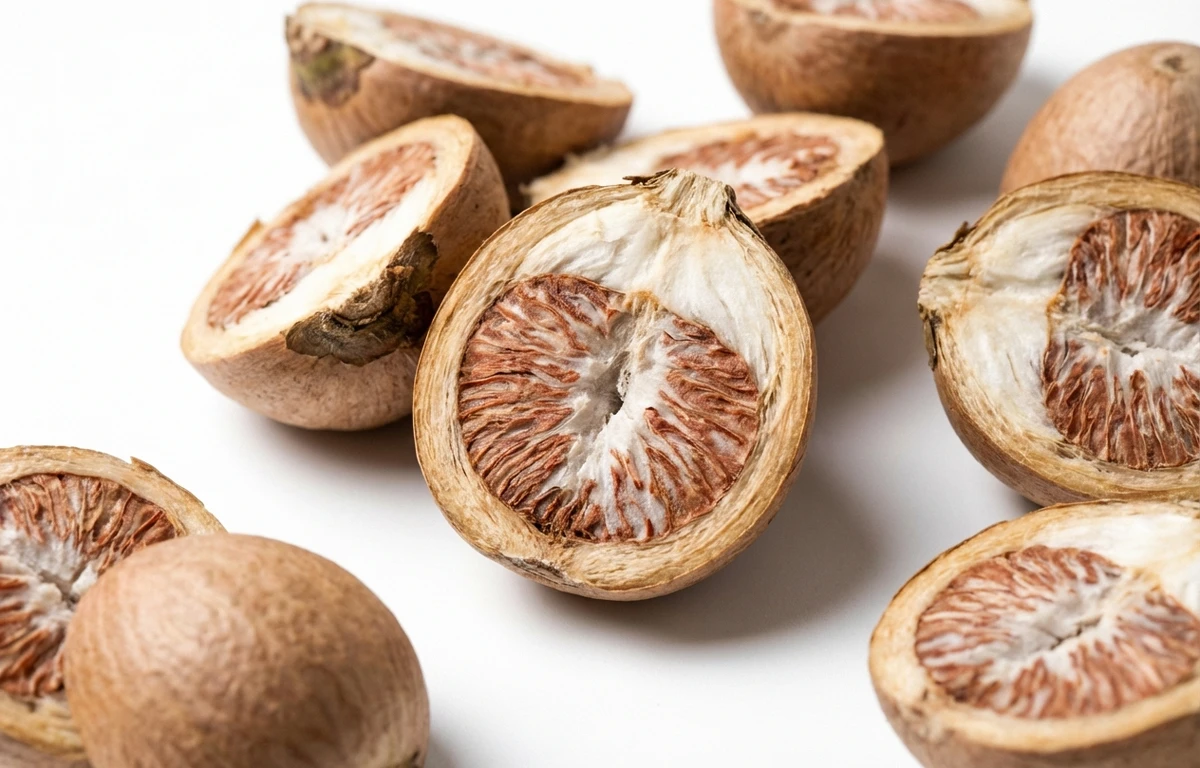
fresh arecanut.
VegetarianVeganGluten-freeDairy-freeNut-freePeanut-freeSoy-freeEgg-freeShellfish-freeHoney-freeAlcohol-free
SERVING
CALORIES
245
PROTEIN
2.7g
CARBS
45g
FAT
5.5g
FIBER
7.6g
NUTRITION PROFILE · per 100 g
Everything in this ingredient.
MACRONUTRIENTS
Calories245kcal—
Protein2.7g5%
Carbohydrates45g16%
Fiber7.6g27%
Sugar4.7g9%
Total fat5.5g7%
Saturated fat3.4g17%
Trans fat0g—
Cholesterol0mg0%
Water37.7g—
MINERALS
Sodium5.5mg0%
Potassium329mg7%
Calcium34mg3%
Iron1.0mg6%
Magnesium47.6mg11%
Phosphorus90.5mg7%
Zinc0.56mg5%
Copper0.71mg79%
Manganese1.4mg59%
Selenium0µg0%
VITAMINS
Vitamin A0µg0%
Vitamin C0mg0%
Vitamin D11µg55%
Vitamin E0.06mg0%
Vitamin K3.7µg3%
Thiamin (B1)0.04mg3%
Riboflavin (B2)0.03mg2%
Niacin (B3)0.74mg5%
Pantothenic acid (B5)0.21mg4%
Vitamin B60.25mg15%
Biotin (B7)1.7µg6%
Folate (B9)26.5µg7%
%DV based on a 2,000 cal diet. Source: USDA FoodData Central. A dash in the %DV column means there’s no established Daily Value for that nutrient.
MEASUREMENT CONVERSIONS
How much is what.
1 oz28.4g
1 lb453.6g
1 piece12g
HEALTH BENEFITS
Why eat it.
- ✓Acts as a mild central nervous system stimulant, which can increase alertness and produce a feeling of euphoria.
- ✓Increases salivation, and is traditionally chewed after meals to aid digestion and freshen breath.
- ✓Historically used in Ayurvedic and traditional Chinese medicine for its purported anthelmintic properties to expel intestinal worms.
- ✓WARNING: The World Health Organization classifies arecanut as a Group 1 carcinogen, strongly linked to cancers of the mouth and esophagus.
COOKING TIPS
In the kitchen.
- 1Fresh arecanut is not typically cooked; it is prepared for chewing.
- 2The soft, fresh nut is usually sliced or chopped into smaller pieces.
- 3It is most famously used in a 'betel quid' (paan), where slices are wrapped in a betel leaf with slaked lime (chuna) and sometimes spices or tobacco.
- 4The application of slaked lime is chemically necessary to release the psychoactive alkaloids from the nut during chewing.
STORAGE
Keep it fresh.
- Store fresh, whole arecanuts in a cool, dry place away from direct sunlight for up to one week.
- For longer storage, place them in a sealed bag or container in the refrigerator, where they can last for 2-3 weeks.
- Fresh arecanuts can also be frozen for several months, although the texture may become softer upon thawing.
FAQ
Frequently asked questions.
Is fresh arecanut healthy?
While traditionally used for mild stimulation and digestive aid, fresh arecanut is classified as a Group 1 carcinogen by the World Health Organization. Its consumption is strongly linked to oral and esophageal cancers, making it an unhealthy choice with significant health risks.
What are the nutritional values of fresh arecanut?
Per 100g, fresh arecanut contains approximately 244.74 calories, 2.73g protein, 45g carbohydrates, and 5.51g fat. Despite these macronutrients, its severe health risks, particularly its carcinogenic properties, far outweigh any potential nutritional benefits.
What are the traditional uses or purported benefits of fresh arecanut?
Traditionally, fresh arecanut has been chewed for its mild central nervous system stimulant effects, which can increase alertness and produce a feeling of euphoria. It's also believed to increase salivation, aid digestion, and freshen breath, and has been used in some traditional medicines for anthelmintic properties. However, these traditional uses come with severe health risks.
Is fresh arecanut vegan or vegetarian?
Yes, fresh arecanut is a plant-based product, making it suitable for both vegan and vegetarian diets from an ingredient perspective. However, its consumption is strongly discouraged due to its classification as a Group 1 carcinogen.
Is fresh arecanut gluten-free?
Yes, fresh arecanut is naturally gluten-free. As a nut/seed, it does not contain wheat, barley, or rye, which are common sources of gluten.
How is fresh arecanut typically consumed or prepared?
Fresh arecanut is almost exclusively consumed by chewing it raw, often wrapped in a betel leaf (paan) with slaked lime and other spices. It is rarely cooked or incorporated into dishes, as its primary use is as a masticatory stimulant.
What does fresh arecanut taste like?
Fresh arecanut has a slightly bitter, astringent, and peppery taste, often described as earthy. When chewed, it produces a stimulating effect and can cause a reddish stain in the mouth.
How should fresh arecanut be stored?
Fresh arecanuts should be stored in a cool, dry place, away from direct sunlight, to prevent spoilage. They can also be refrigerated to extend their freshness for a few weeks, maintaining their texture and flavor.
How do you know if fresh arecanut is good or spoiled?
A fresh arecanut should be firm, green, and free from any mold or soft spots. If it feels mushy, has a foul odor, or shows signs of discoloration or mold, it is spoiled and should not be consumed.
What are the main health risks associated with consuming fresh arecanut?
The primary and most severe health risk is its classification as a Group 1 carcinogen by the World Health Organization. Regular consumption is strongly linked to an increased risk of oral submucous fibrosis, oral cancer, and esophageal cancer, as well as potential addiction and other adverse health effects.



















