
Loading...
Per 100g
Nutrition data source: USDA FoodData Central
Common measurement equivalents in grams
When stored properly in water or a damp towel, it can last 7 to 10 days in the refrigerator.
Yes, it freezes well. It is best to chop it and freeze it in ice cube trays with water or oil for easy use in cooked dishes.
Flat-leaf parsley has a stronger, more robust flavor and a smoother mouthfeel, making it better for cooking, while curly parsley is often used for garnish.
Look for bright green leaves that are crisp and not wilted, yellowed, or slimy.
Fresh cilantro (for a different flavor profile), chervil, or curly parsley are the best substitutes.
Yes, parsley often holds sand and grit. Submerge it in a bowl of cold water, swish it around, and then dry it thoroughly.
No, parsley is very low in calories, providing only about 36 calories per 100 grams, making it a nutrient-dense herb.
Absolutely. The stems are crunchy and packed with flavor. They are excellent when finely chopped in salads or used whole in soups.
While generally safe, people on blood thinners (like Warfarin) should be consistent with their intake due to its very high Vitamin K content.
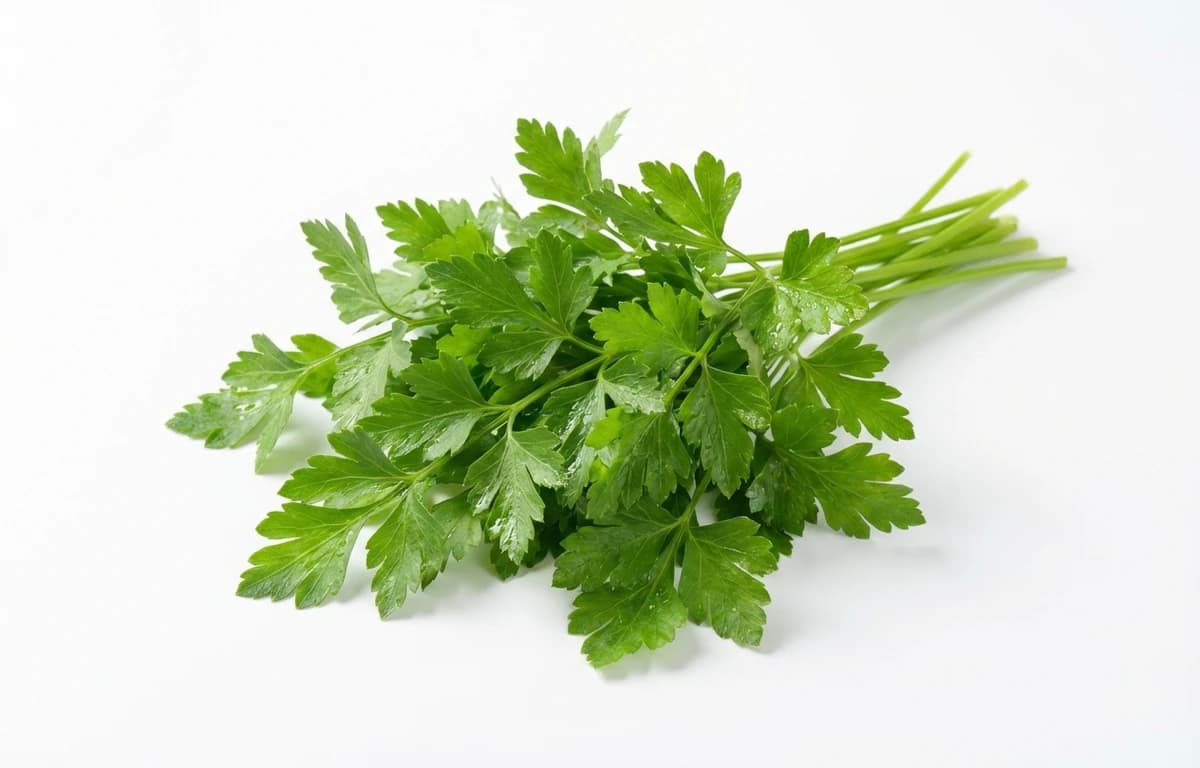
fresh flat-leaf parsley is a versatile ingredient found in cuisines around the world. With 36 calories per 100g and 2.97 grams of protein, it's a nutritious addition to many dishes.
Explore more ingredients in the vegetable category with complete nutrition information.
View all vegetable →Discover 2 recipes featuring fresh flat-leaf parsley with step-by-step instructions.
Browse recipes →