
Loading...
Per 100g
Nutrition data source: USDA FoodData Central
Common measurement equivalents in grams
Fresh ramen noodles typically last 1 to 2 weeks when kept in their original sealed packaging or an airtight container in the refrigerator.
Yes, fresh ramen noodles freeze very well. Store them in freezer-safe bags for up to 3 months. You can drop them directly into boiling water from the freezer.
The yellow color comes from 'kansui' (alkaline mineral water), which reacts with the wheat flour. It is not usually from eggs, though some varieties may add them.
Dried ramen noodles are the best substitute. In a pinch, you can use thin spaghetti boiled with a tablespoon of baking soda to mimic the alkaline texture.
Most traditional fresh ramen noodles are vegan, made from wheat flour, water, and alkaline salts. However, always check the label for egg ingredients.
Ensure they are well-dusted with cornstarch or flour before cooking, and use a large volume of boiling water to allow them to move freely.
If serving in a hot broth, do not rinse; transfer them directly to the bowl. If serving cold (like Hiyashi Chuka), rinse thoroughly in cold water.
Look for signs of mold, a sour or off-smell, or a change in color (greyish spots). If the texture feels excessively slimy or sticky, discard them.
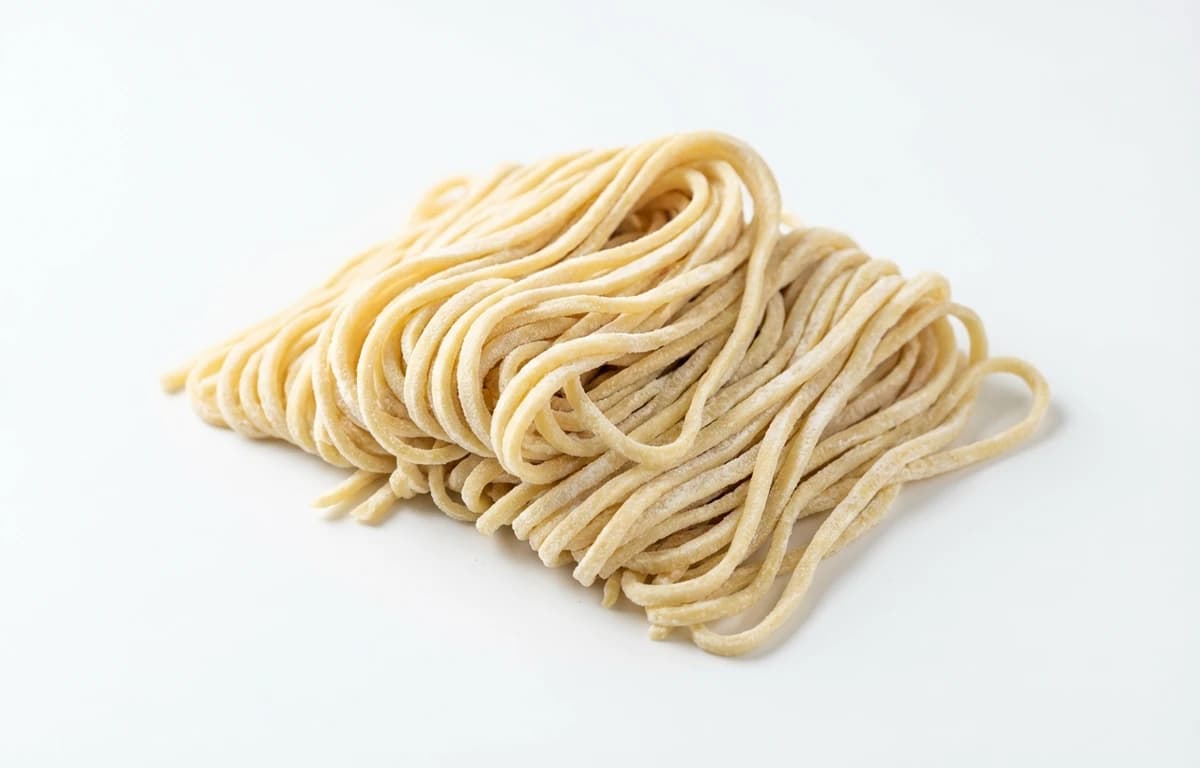
Fresh Ramen Noodles is a versatile ingredient found in cuisines around the world. With 273 calories per 100g and 9 grams of protein, it's a nutritious addition to many dishes.
Explore more ingredients in the grain category with complete nutrition information.
View all grain →Discover 1 recipes featuring fresh ramen noodles with step-by-step instructions.
Browse recipes →Yes, fresh noodles are generally healthier because they are not flash-fried like most instant noodles, resulting in lower saturated fat content.
A standard single serving of fresh ramen noodles is typically between 120g and 150g (one bundle).