
Vegetable
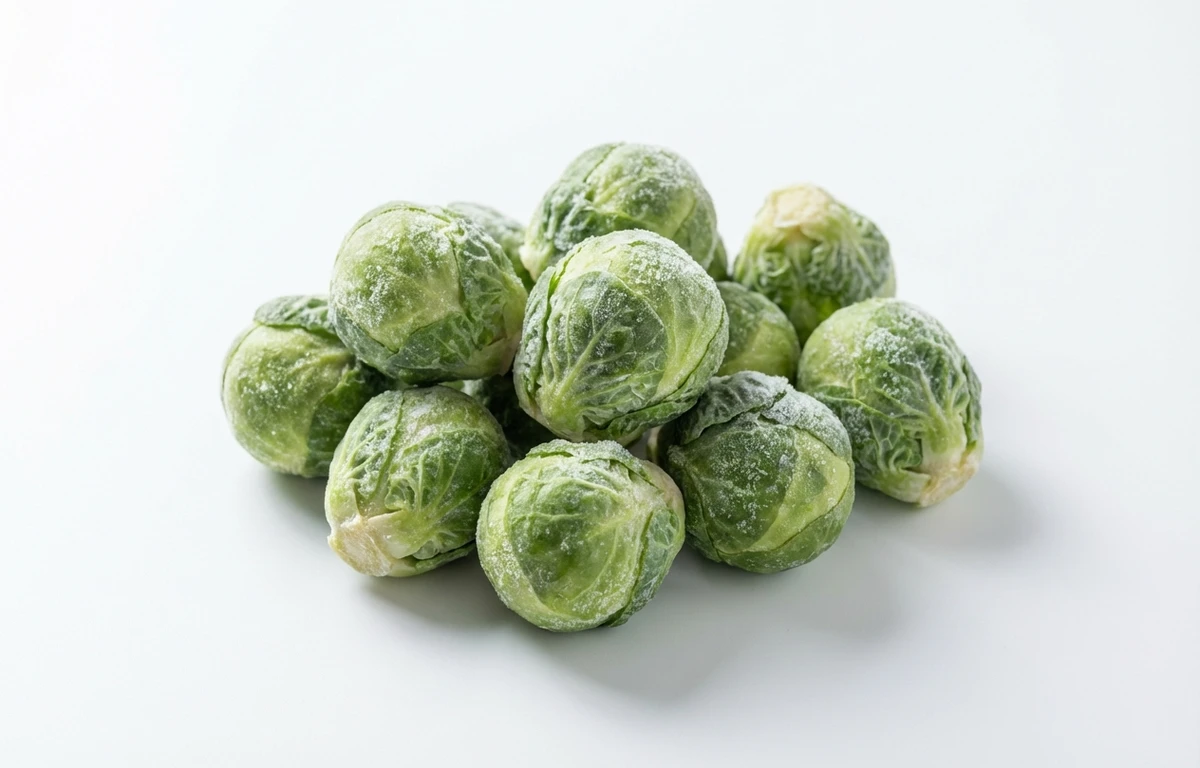
frozen brussels sprouts.
VegetarianVeganGluten-freeDairy-freeNut-freePeanut-freeSoy-freeEgg-freeShellfish-freeHoney-freeAlcohol-free
ALSO KNOWN AS
frozen mini cabbagesfrozen choux de Bruxellesfrozen sproutsfrozen baby cabbages
SERVING
CALORIES
43
PROTEIN
3.4g
CARBS
8.0g
FAT
0.40g
FIBER
3.8g
This ingredient is flagged as naturally gluten-free. Per 100 g, it provides 177 µg of vitamin K.
NUTRITION PROFILE · per 100 g
Everything in this ingredient.
MACRONUTRIENTS
Calories43kcal—
Protein3.4g7%
Carbohydrates8.0g3%
Fiber3.8g14%
Sugar2.2g4%
Total fat0.40g1%
Saturated fat0.10g1%
Trans fat0g—
Cholesterol0mg0%
Water86g—
MINERALS
Sodium15mg1%
Potassium317mg7%
Calcium36mg3%
Iron1.2mg7%
Magnesium20mg5%
Phosphorus56mg4%
Zinc0.30mg3%
Copper0.10mg11%
Manganese0.20mg9%
Selenium1.2µg2%
VITAMINS
Vitamin A38µg4%
Vitamin C62mg69%
Vitamin D0µg0%
Vitamin E0.80mg5%
Vitamin K177µg148%
Thiamin (B1)0.10mg8%
Riboflavin (B2)0.10mg8%
Niacin (B3)0.60mg4%
Pantothenic acid (B5)0.30mg6%
Vitamin B60.20mg12%
Folate (B9)61µg15%
Vitamin B120µg0%
%DV based on a 2,000 cal diet. Source: USDA FoodData Central. A dash in the %DV column means there’s no established Daily Value for that nutrient.
MEASUREMENT CONVERSIONS
How much is what.
1 cup150g
1 oz28.4g
1 lb453.6g
1 piece20g
HEALTH BENEFITS
Why eat it.
- ✓Excellent source of dietary fiber for digestion
COOKING TIPS
In the kitchen.
- 1Roast directly from frozen at high heat for a crispier texture
- 2Avoid over-boiling as it can lead to a mushy texture and sulfurous smell
- 3Toss with olive oil, salt, and balsamic glaze before roasting
STORAGE
Keep it fresh.
- Keep frozen at -18°C (0°F) or below
- Store in original airtight packaging to prevent freezer burn
- Use within 12 months for optimal quality
FAQ
Frequently asked questions.
How long do frozen brussels sprouts last?
They can last up to 12 months in the freezer if kept at a constant temperature of -18°C (0°F).
Are frozen brussels sprouts as healthy as fresh ones?
Yes, they are flash-frozen at peak ripeness, which preserves most of their vitamins and minerals, making them nutritionally comparable to fresh.
How do I pick the best bag of frozen brussels sprouts?
Choose a bag where the sprouts feel individual and loose; if they are in a solid block, they may have thawed and refrozen.
What is the best way to cook frozen brussels sprouts?
Roasting at 200°C (400°F) or air-frying are the best methods to achieve a crispy exterior and tender interior.
Can I use frozen brussels sprouts in salads?
They are not ideal for raw salads. However, they can be roasted and then added to warm grain salads or bowls.
What can I substitute for frozen brussels sprouts?
Fresh brussels sprouts, chopped cabbage, or broccoli florets are the best substitutes.
Why do frozen brussels sprouts sometimes smell bad?
This usually happens when they are overcooked, which releases sulfur compounds. Cooking them quickly at high heat minimizes this.
Are frozen brussels sprouts keto-friendly?
Yes, they are relatively low in net carbs and high in fiber, making them an excellent choice for a ketogenic diet.



















