
Vegetable
frozen carrot.
VegetarianVeganGluten-freeDairy-freeNut-freePeanut-freeSoy-freeEgg-freeShellfish-freeHoney-freeAlcohol-free
ALSO KNOWN AS
frozen gajar
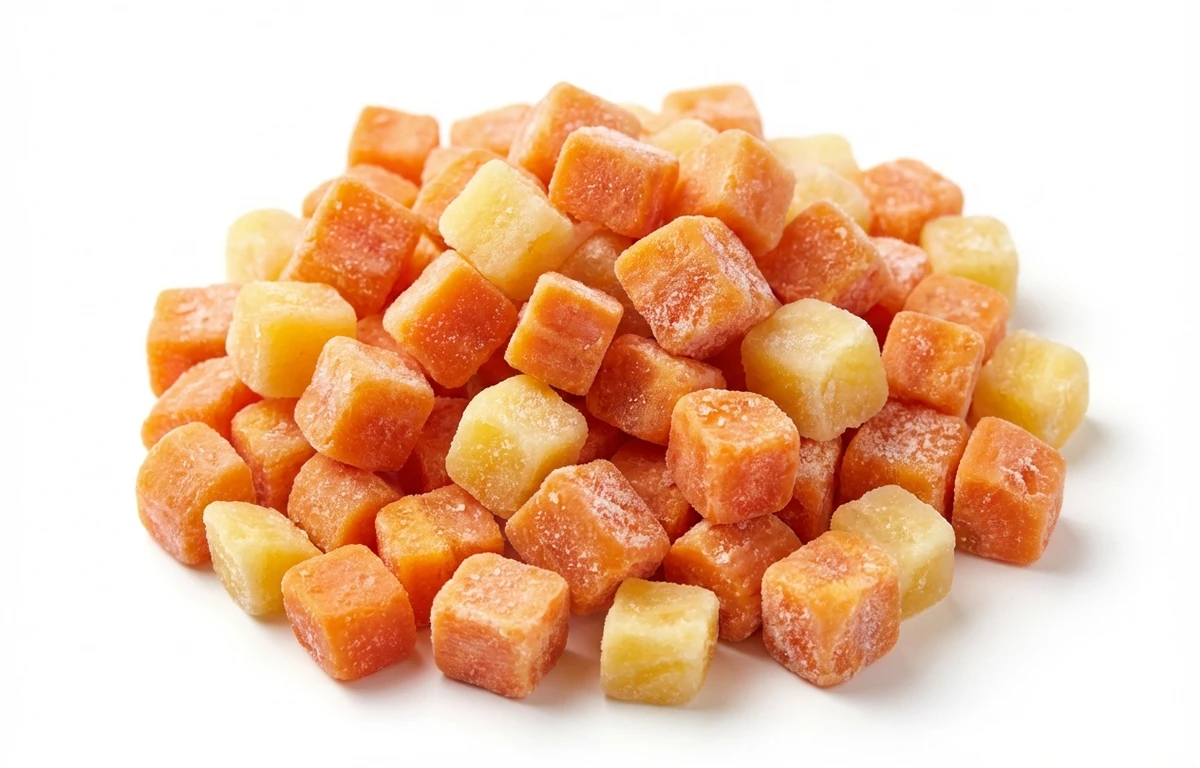
SERVING
CALORIES
36
PROTEIN
0.70g
CARBS
8.2g
FAT
0.20g
FIBER
2.8g
This ingredient is flagged as naturally gluten-free. Per 100 g, it provides 13.2 µg of vitamin K.
NUTRITION PROFILE · per 100 g
Everything in this ingredient.
MACRONUTRIENTS
Calories36kcal—
Protein0.70g1%
Carbohydrates8.2g3%
Fiber2.8g10%
Sugar4.5g9%
Total fat0.20g0%
Saturated fat0.03g0%
Trans fat0g—
Cholesterol0mg0%
Water89g—
MINERALS
Sodium50mg2%
Potassium167mg4%
Calcium28mg2%
Iron0.40mg2%
Magnesium10mg2%
Phosphorus25mg2%
Zinc0.18mg2%
Copper0.04mg4%
Manganese0.12mg5%
Selenium0.10µg0%
VITAMINS
Vitamin A690µg77%
Vitamin C2.5mg3%
Vitamin D0µg0%
Vitamin E0.66mg4%
Vitamin K13.2µg11%
Thiamin (B1)0.03mg3%
Riboflavin (B2)0.04mg3%
Niacin (B3)0.40mg3%
Pantothenic acid (B5)0.20mg4%
Vitamin B60.10mg6%
Folate (B9)12µg3%
Vitamin B120µg0%
%DV based on a 2,000 cal diet. Source: USDA FoodData Central. A dash in the %DV column means there’s no established Daily Value for that nutrient.
MEASUREMENT CONVERSIONS
How much is what.
1 cup150g
1 oz28.4g
1 lb453.6g
HEALTH BENEFITS
Why eat it.
- ✓Good source of fiber aiding in digestive regularity
COOKING TIPS
In the kitchen.
- 1Add directly to soups, stews, or stir-fries without thawing
- 2Steam for 5-7 minutes to maintain the best texture and nutrient profile
- 3Avoid over-boiling as frozen carrots can become mushy more quickly than fresh
STORAGE
Keep it fresh.
- Keep frozen at 0°F (-18°C) or below until ready to use
- Ensure the bag is tightly sealed to prevent freezer burn
- Use within 8 to 12 months for optimal quality and flavor
FAQ
Frequently asked questions.
How long do frozen carrots last in the freezer?
Frozen carrots maintain best quality for 8 to 12 months if kept at a constant 0°F, though they remain safe to eat indefinitely.
Do I need to thaw frozen carrots before cooking?
No, you can add them directly to most dishes like soups, stews, and stir-fries. Thawing may actually result in a softer, less desirable texture.
Are frozen carrots as nutritious as fresh ones?
Yes, frozen carrots are usually blanched and flash-frozen shortly after harvest, which locks in most vitamins and minerals, sometimes making them more nutritious than 'fresh' carrots that have traveled long distances.
How can I tell if frozen carrots have gone bad?
Look for large ice crystals (freezer burn), a shriveled appearance, or an off-smell. If they are stuck together in one solid block, they may have thawed and refrozen.
Can I use frozen carrots in salads?
Frozen carrots are best used in cooked applications. If used in salads, they should be blanched and cooled, as their texture is softer than raw fresh carrots.
What is a good substitute for frozen carrots?
Fresh carrots (peeled and sliced), frozen peas, or frozen corn are common substitutes depending on the recipe's flavor profile.
Are frozen carrots typically peeled?
Yes, almost all commercially available frozen carrots are washed, peeled, and blanched before freezing.



















