
Vegetable10 recipes
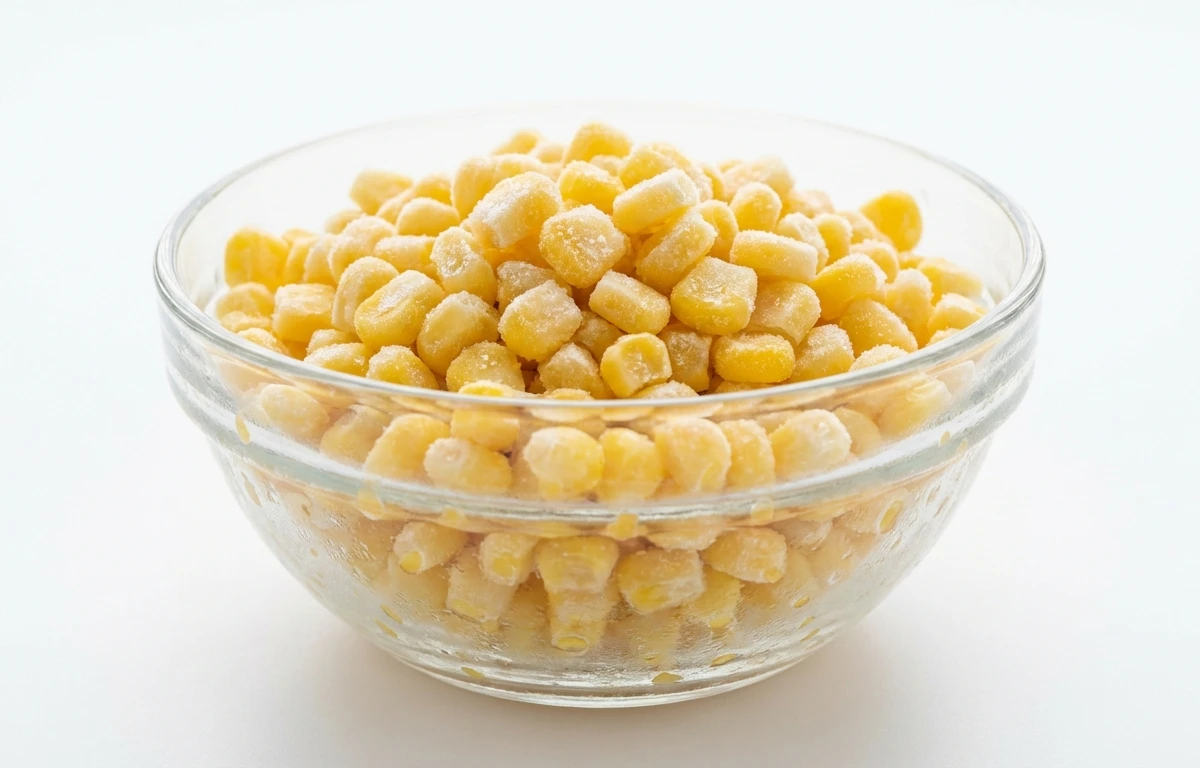
frozen corn kernels.
VegetarianVeganGluten-freeDairy-freeNut-freePeanut-freeSoy-freeEgg-freeShellfish-freeHoney-freeAlcohol-freeWhole grain
ALSO KNOWN AS
sweet corn kernelscorn kernelssweetcorn kernelsmaize kernelsfresh corn kernelsbhutta ke danemakai ke dane
SERVING
CALORIES
88
PROTEIN
3.0g
CARBS
20.7g
FAT
0.77g
FIBER
2.9g
This ingredient is flagged as naturally gluten-free. Per 100 g, it provides 0.30 µg of vitamin K.
NUTRITION PROFILE · per 100 g
Everything in this ingredient.
MACRONUTRIENTS
Calories88kcal—
Protein3.0g6%
Carbohydrates20.7g8%
Fiber2.9g10%
Sugar9.1g18%
Total fat0.77g1%
Saturated fat0.18g1%
Trans fat0g—
Cholesterol0mg0%
Water75g—
MINERALS
Sodium3.0mg0%
Potassium213mg5%
Calcium4.0mg0%
Iron0.41mg2%
Magnesium18mg4%
Phosphorus70mg6%
Zinc0.37mg3%
Copper0.04mg4%
Manganese0.13mg6%
Selenium0.70µg1%
VITAMINS
Vitamin A0µg0%
Vitamin C6.3mg7%
Vitamin D0µg0%
Vitamin K0.30µg0%
Thiamin (B1)0.08mg7%
Riboflavin (B2)0.07mg5%
Niacin (B3)1.7mg11%
Pantothenic acid (B5)0.28mg6%
Vitamin B60.18mg11%
Folate (B9)36µg9%
Vitamin B120µg0%
%DV based on a 2,000 cal diet. Source: USDA FoodData Central. A dash in the %DV column means there’s no established Daily Value for that nutrient.
MEASUREMENT CONVERSIONS
How much is what.
1 cup165g
1 tablespoon10.3g
1 teaspoon3.4g
1 ml0.7g
1 liter687.5g
HEALTH BENEFITS
Why eat it.
- ✓Rich in dietary fiber, which aids digestion and promotes a feeling of fullness.
- ✓Good source of complex carbohydrates, providing sustained energy.
- ✓Provides essential nutrients including B vitamins (especially folate), magnesium, and phosphorus.
COOKING TIPS
In the kitchen.
- 1No need to thaw before cooking; add directly to soups, stews, casseroles, or stir-fries.
- 2For a simple side dish, steam or boil for 3-5 minutes until tender-crisp. Avoid overcooking to prevent mushiness.
- 3Roast frozen corn on a baking sheet at 400°F (200°C) with a little oil and seasoning until lightly browned to enhance its natural sweetness.
- 4Sauté in a pan with butter or olive oil, garlic, and herbs for a quick and flavorful side.
STORAGE
Keep it fresh.
- Keep stored in the freezer at or below 0°F (-18°C) to maintain quality and safety.
- For best results, use within 8-12 months of purchase and keep the bag sealed tightly to prevent freezer burn.
FAQ
Frequently asked questions.
How much protein, calories, and carbs are in frozen corn?
Per 100g, frozen corn kernels contain approximately 88 calories, 3.02g of protein, 20.73g of carbohydrates, and 0.77g of fat. It's a good source of complex carbs and fiber.
Is frozen corn keto-friendly?
No, frozen corn is generally not considered keto-friendly due to its relatively high carbohydrate content (20.73g per 100g). Most ketogenic diets aim for a much lower daily carb intake, making corn difficult to fit into typical keto macros.
How do you cook frozen corn?
Frozen corn is very easy to cook. You can boil it for 2-3 minutes, steam it for 3-5 minutes, or sauté it in a pan with a little butter or oil until heated through, typically 5-7 minutes. No need to thaw beforehand.
Can you eat frozen corn raw?
While technically safe to eat raw after thawing, frozen corn is typically blanched before freezing, which means it's partially cooked. For best taste and texture, it's recommended to cook it briefly to enhance its sweetness and tenderness.
How long does frozen corn last?
Properly stored in a freezer at 0°F (-18°C), frozen corn kernels can last for 8-12 months while maintaining optimal quality. Beyond that, it's still safe to eat but may experience a decline in texture and flavor.
RECIPES
Cook with frozen corn kernels.
10 recipes · sorted by what’s quick



















