
Vegetable
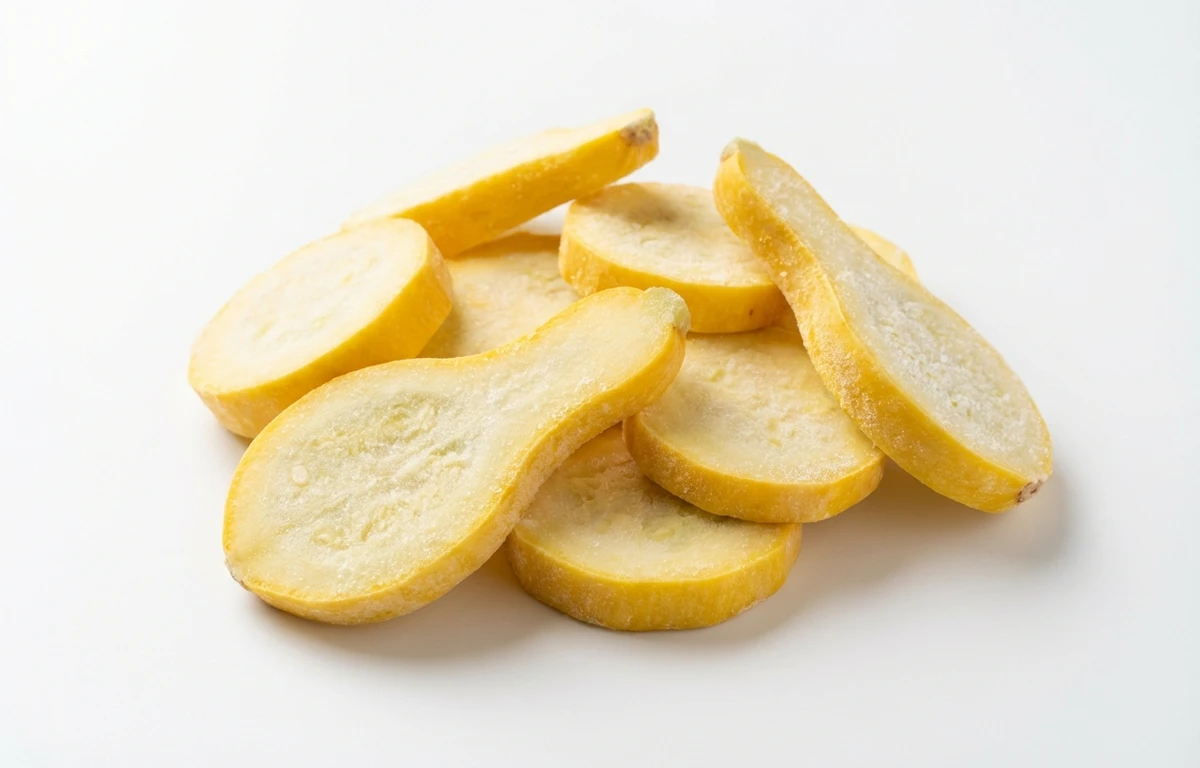
frozen crookneck squash.
VegetarianVeganGluten-freeDairy-freeNut-freePeanut-freeSoy-freeEgg-freeShellfish-freeHoney-freeAlcohol-freeHalalKosher
ALSO KNOWN AS
crookneck squash
SERVING
CALORIES
22
PROTEIN
1.1g
CARBS
4.8g
FAT
0.20g
FIBER
1.6g
This ingredient is flagged as naturally gluten-free. Per 100 g, it provides 3.5 µg of vitamin K.
NUTRITION PROFILE · per 100 g
Everything in this ingredient.
MACRONUTRIENTS
Calories22kcal—
Protein1.1g2%
Carbohydrates4.8g2%
Fiber1.6g6%
Sugar2.1g4%
Total fat0.20g0%
Saturated fat0.04g0%
Trans fat0g—
Cholesterol0mg0%
Water93.2g—
MINERALS
Sodium2.0mg0%
Potassium210mg4%
Calcium20mg2%
Iron0.40mg2%
Magnesium19mg5%
Phosphorus30mg2%
Zinc0.20mg2%
Copper0.06mg7%
Manganese0.15mg7%
Selenium0.20µg0%
VITAMINS
Vitamin A18µg2%
Vitamin C12mg13%
Vitamin D0µg0%
Vitamin E0.12mg1%
Vitamin K3.5µg3%
Thiamin (B1)0.05mg4%
Riboflavin (B2)0.04mg3%
Niacin (B3)0.50mg3%
Pantothenic acid (B5)0.16mg3%
Vitamin B60.10mg6%
Folate (B9)20µg5%
Vitamin B120µg0%
%DV based on a 2,000 cal diet. Source: USDA FoodData Central. A dash in the %DV column means there’s no established Daily Value for that nutrient.
MEASUREMENT CONVERSIONS
How much is what.
1 cup130g
1 tablespoon8.1g
1 teaspoon2.7g
1 ml0.5g
1 liter541.7g
HEALTH BENEFITS
Why eat it.
- ✓Good source of dietary fiber, promoting digestive health and contributing to a feeling of fullness.
- ✓Low in calories and high in water content, making it a hydrating and weight-management-friendly food.
COOKING TIPS
In the kitchen.
- 1For best texture, cook from frozen. Thawing completely before cooking can result in a mushy consistency.
- 2Excellent for use in puréed soups, stews, and casseroles where a softer texture is desirable.
- 3To roast, toss the frozen squash with oil and seasonings, then spread in a single layer and roast at a high temperature (400-425°F or 200-220°C) to help evaporate moisture and achieve browning.
STORAGE
Keep it fresh.
- Store in the freezer at 0°F (-18°C) or below. For best quality, use within 8-12 months.
- Keep the package tightly sealed to prevent freezer burn. If the original bag is opened, transfer the squash to an airtight freezer bag or container, removing as much air as possible.
FAQ
Frequently asked questions.
Is frozen crookneck squash suitable for a vegan or gluten-free diet?
Absolutely, frozen crookneck squash is naturally vegan and gluten-free. As a pure vegetable, it contains no animal products or gluten-containing ingredients, making it suitable for a wide range of dietary needs.
Is frozen crookneck squash low-carb or keto-friendly?
With approximately 4.8g of carbohydrates per 100g, frozen crookneck squash is relatively low in carbs. While it can fit into a low-carb diet, those on a strict ketogenic diet might need to consume it in moderation, depending on their daily carb limits.
How do you cook frozen crookneck squash?
Frozen crookneck squash can be cooked directly from the freezer without thawing. Popular methods include steaming for 5-7 minutes until tender, sautéing with a little oil and seasonings, or roasting at 400°F (200°C) for 15-20 minutes until lightly browned.
What does frozen crookneck squash taste like?
Frozen crookneck squash has a mild, slightly sweet flavor with a tender, somewhat creamy texture when cooked. It readily absorbs the flavors of herbs, spices, and other ingredients it's cooked with, making it versatile in various dishes.
Do I need to thaw frozen crookneck squash before cooking?
Generally, you do not need to thaw frozen crookneck squash before cooking. It can be added directly to soups, stews, stir-fries, or cooked using methods like steaming or sautéing. Thawing first might make it a bit watery.
How long can frozen crookneck squash be stored?
When stored properly in a freezer at 0°F (-18°C) or below, frozen crookneck squash can maintain its quality for 8-12 months. Always check for freezer burn or unusual odors before use.
Can frozen crookneck squash be eaten raw?
While fresh crookneck squash can be eaten raw, it's not recommended to eat frozen crookneck squash raw. Freezing alters the texture, and most commercially frozen vegetables are blanched before freezing, which makes them less palatable and safe for raw consumption after thawing.



















