legume
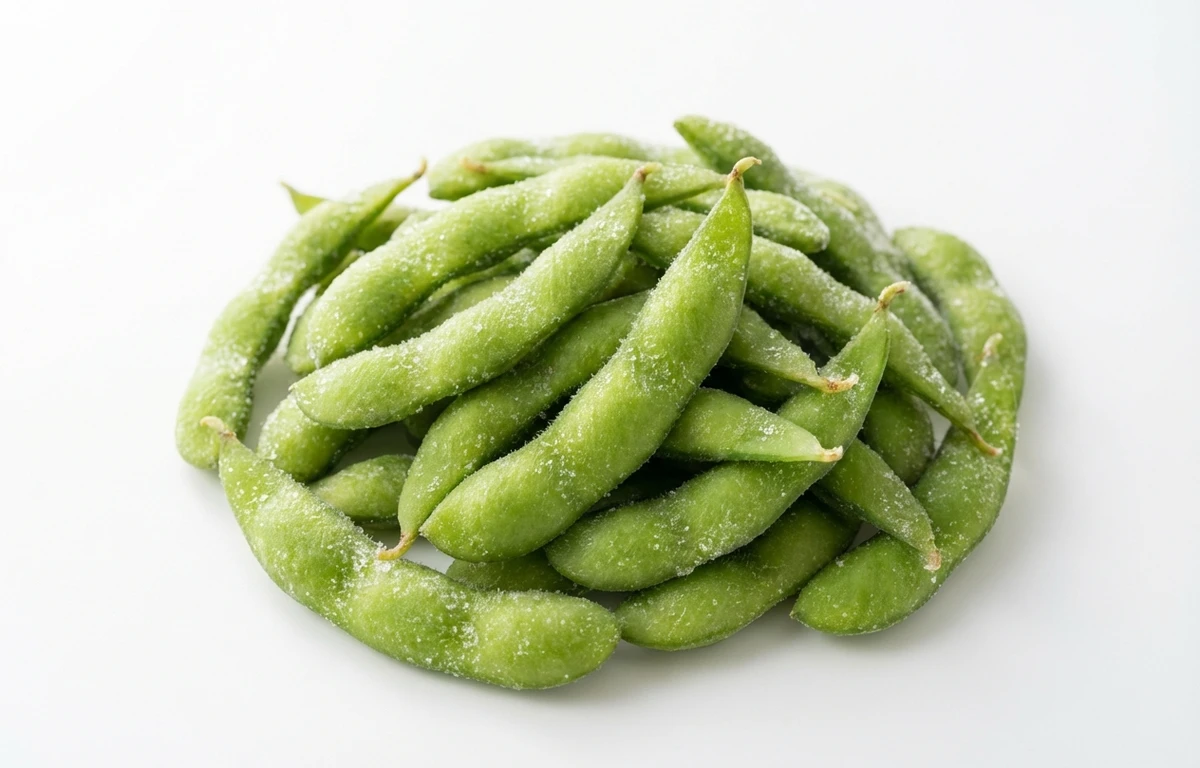
Frozen Edamame Pods.
VegetarianVeganGluten-freeDairy-freeNut-freePeanut-freeSoy-freeEgg-freeShellfish-freeHoney-freeAlcohol-free
SERVING
CALORIES
122
PROTEIN
11.9g
CARBS
9.9g
FAT
5.2g
FIBER
5.2g
NUTRITION PROFILE · per 100 g
Everything in this ingredient.
MACRONUTRIENTS
Calories122kcal—
Protein11.9g24%
Carbohydrates9.9g4%
Fiber5.2g19%
Sugar2.2g4%
Total fat5.2g7%
Saturated fat0.60g3%
Cholesterol0mg0%
Water72g—
MINERALS
Sodium6.0mg0%
Potassium436mg9%
Calcium63mg5%
Iron2.3mg13%
Magnesium64mg15%
Phosphorus187mg15%
Zinc1.3mg12%
Copper0.40mg44%
Manganese0.60mg26%
Selenium1.5µg3%
VITAMINS
Vitamin A15µg2%
Vitamin C6.1mg7%
Vitamin D0µg0%
Vitamin E0.60mg4%
Vitamin K26.5µg22%
Thiamin (B1)0.20mg17%
Riboflavin (B2)0.20mg15%
Niacin (B3)0.60mg4%
Pantothenic acid (B5)0.30mg6%
Vitamin B60.10mg6%
Folate (B9)311µg78%
Vitamin B120µg0%
%DV based on a 2,000 cal diet. Source: USDA FoodData Central. A dash in the %DV column means there’s no established Daily Value for that nutrient.
MEASUREMENT CONVERSIONS
How much is what.
1 cup120g
1 tablespoon8g
1 teaspoon3g
1 oz28.4g
1 lb453.6g
HEALTH BENEFITS
Why eat it.
- ✓Excellent source of plant-based protein, including all essential amino acids.
- ✓High in dietary fiber, aiding digestion and promoting satiety.
- ✓Rich in vitamins like Folate (B9) and K, and minerals such as Iron and Magnesium.
- ✓Contains antioxidants and isoflavones, which may support heart health.
- ✓Low in saturated fat and cholesterol-free.
COOKING TIPS
In the kitchen.
- 1Boil or steam frozen edamame pods for 3-5 minutes until tender-crisp.
- 2Serve warm with a sprinkle of sea salt for a simple snack or appetizer.
- 3Once cooked, the beans can be shelled and added to salads, stir-fries, or pureed into dips.
STORAGE
Keep it fresh.
- Keep frozen in an airtight bag or container until ready to use.
- Do not refreeze once thawed.
- Best consumed within the 'best by' date on the package for optimal quality.
FAQ
Frequently asked questions.
Are frozen edamame pods healthy?
Yes, frozen edamame pods are highly nutritious. They are an excellent source of complete plant-based protein, high in dietary fiber, and rich in essential vitamins and minerals like Folate, Vitamin K, Iron, and Magnesium.
How much protein is in frozen edamame?
Frozen edamame contains approximately 11.9g of protein per 100g. It is considered a complete protein source because it contains all nine essential amino acids, making it a staple for vegetarian and vegan diets.
Is edamame good for weight loss?
Edamame is beneficial for weight loss because it is high in protein and fiber, both of which promote satiety and help you feel full for longer. With 122 calories per 100g, it serves as a nutrient-dense, low-calorie snack.
Is edamame vegan and gluten-free?
Yes, edamame is a naturally vegan and gluten-free legume. It is a whole food that fits perfectly into plant-based diets and is safe for those with celiac disease or gluten sensitivities.
Is edamame keto-friendly?
Edamame can be consumed in moderation on a keto diet. While it contains 9.9g of carbs per 100g, a significant portion of those carbs comes from fiber, resulting in a lower net carb count than many other legumes.
How do you cook frozen edamame pods?
The easiest way is to boil or steam the pods for 3 to 5 minutes until they are bright green and tender. You can also microwave them in a bowl with a tablespoon of water, covered, for about 3 minutes.
Do you eat the pods of the edamame?
No, the outer pods are very fibrous and generally considered inedible. To eat edamame, you pop the beans out of the pod directly into your mouth using your teeth and then discard the empty shell.
What does edamame taste like?
Edamame has a mild, slightly nutty, and sweet flavor with a firm, creamy texture. It is most commonly served with a sprinkle of sea salt, which complements its natural earthiness.
How long does frozen edamame last in the freezer?
Frozen edamame typically maintains its best quality for 8 to 12 months when kept in an airtight container. While it remains safe to eat after this time, it may eventually develop freezer burn or lose its vibrant color.
Can you eat edamame raw?
No, you should not eat raw edamame. Like most soybeans, they contain compounds that can cause digestive upset if not cooked; however, most frozen edamame is par-boiled (blanched) before freezing, requiring only a quick final cook.
SAME CATEGORY