
Vegetable
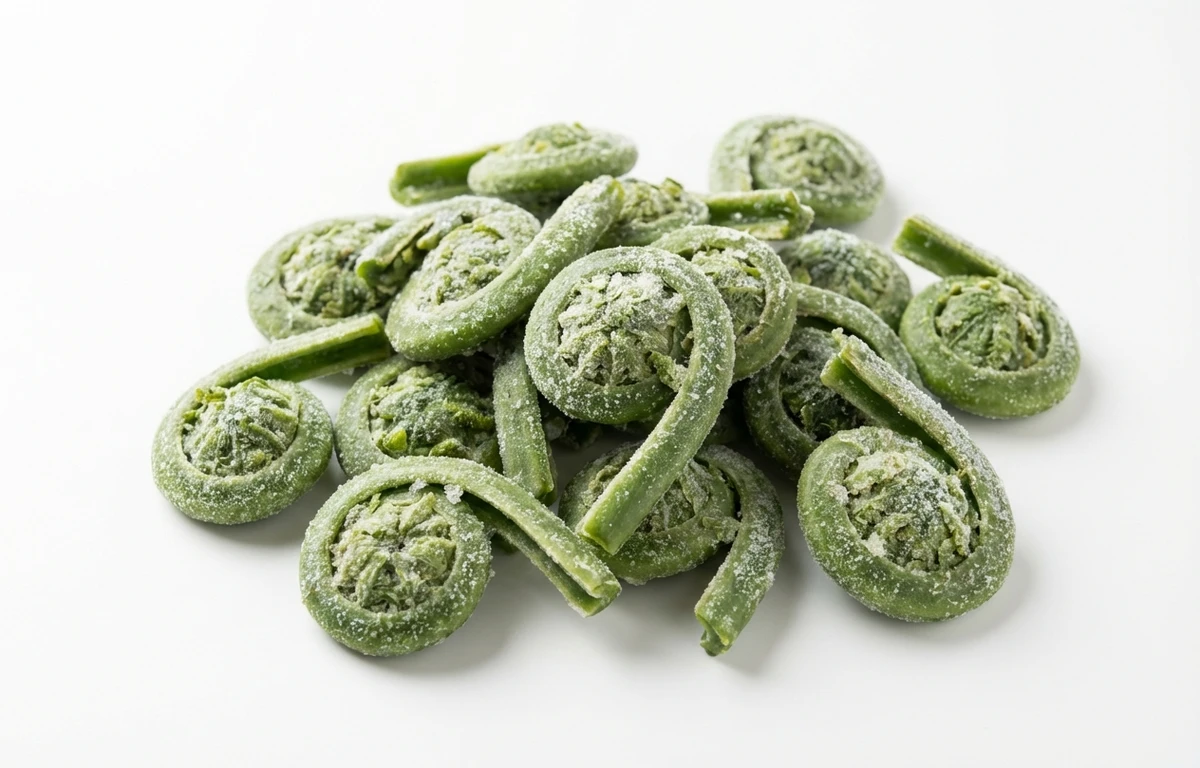
frozen fiddlehead ferns.
VegetarianVeganGluten-freeDairy-freeNut-freePeanut-freeSoy-freeEgg-freeShellfish-freeHoney-freeAlcohol-freeHalalKosher
ALSO KNOWN AS
frozen fiddleheadsfrozen ostrich fernfrozen matteuccia struthiopterisfrozen croziers
SERVING
CALORIES
44
PROTEIN
4.5g
CARBS
5.5g
FAT
0.40g
FIBER
2.0g
This ingredient is flagged as naturally gluten-free. Per 100 g, it provides 0 µg of vitamin K.
NUTRITION PROFILE · per 100 g
Everything in this ingredient.
MACRONUTRIENTS
Calories43.6kcal—
Protein4.5g9%
Carbohydrates5.5g2%
Fiber2.0g7%
Sugar0.50g1%
Total fat0.40g1%
Saturated fat0.05g0%
Trans fat0g—
Cholesterol0mg0%
Water88g—
MINERALS
Sodium1.0mg0%
Potassium370mg8%
Calcium32mg2%
Iron1.3mg7%
Magnesium34mg8%
Phosphorus101mg8%
Zinc0.80mg7%
Copper0.30mg33%
Manganese0.50mg22%
Selenium0.70µg1%
VITAMINS
Vitamin A181µg20%
Vitamin C26.6mg30%
Vitamin D0µg0%
Vitamin E1.3mg9%
Vitamin K0µg0%
Thiamin (B1)0.02mg2%
Riboflavin (B2)0.21mg16%
Niacin (B3)5.0mg31%
Pantothenic acid (B5)0.30mg6%
Vitamin B60.16mg9%
Folate (B9)0µg0%
Vitamin B120µg0%
%DV based on a 2,000 cal diet. Source: USDA FoodData Central. A dash in the %DV column means there’s no established Daily Value for that nutrient.
MEASUREMENT CONVERSIONS
How much is what.
1 cup140g
1 tablespoon9g
1 teaspoon3g
1 oz28.4g
1 lb453.6g
1 piece15g
HEALTH BENEFITS
Why eat it.
- ✓Contains heart-healthy omega-3 fatty acids
- ✓Good source of dietary fiber for digestion
- ✓Rich in potassium which helps manage blood pressure
- ✓Low in calories and fat-free
COOKING TIPS
In the kitchen.
- 1Must be thoroughly cooked (boiled or steamed) to remove natural toxins
- 2Boil for 10-15 minutes or steam for 10-12 minutes before further preparation
- 3Sauté with butter, garlic, and lemon after boiling for the best flavor
STORAGE
Keep it fresh.
- Keep frozen at 0°F (-18°C) or below until ready to use
- Do not refreeze once the ferns have been thawed
- Use within 9 to 12 months for optimal quality and flavor
FAQ
Frequently asked questions.
How long do frozen fiddlehead ferns last?
When kept constantly frozen, they maintain best quality for about 9 to 12 months, though they remain safe to eat indefinitely.
Can I eat frozen fiddlehead ferns raw?
No, fiddlehead ferns must never be eaten raw. They contain a natural toxin that can cause foodborne illness unless they are thoroughly boiled or steamed.
What is the best way to cook frozen fiddleheads?
The safest and best method is to boil them for 10-15 minutes or steam them for 10-12 minutes, then discard the water. You can then sauté or fry them.
What can I substitute for fiddlehead ferns?
Asparagus or green beans are the best substitutes due to their similar texture and earthy, grassy flavor profile.
Do I need to thaw them before cooking?
You can cook them directly from frozen by adding them to boiling water, or thaw them in the refrigerator overnight before steaming.
How do I identify high-quality frozen fiddleheads?
Look for ferns that are tightly coiled and have a vibrant green color. Avoid packages with excessive ice crystals or those where the ferns look brown or mushy.
Are fiddlehead ferns healthy?
Yes, they are very healthy, providing significant amounts of Vitamin A, Vitamin C, and minerals like potassium and iron while being low in calories.
What do fiddlehead ferns taste like?
They have a unique flavor often described as a cross between asparagus, green beans, and broccoli, with a slight nutty or earthy undertone.
Why are they called fiddleheads?
They are named after the curled head of a fiddle (violin), which the young, coiled fern fronds closely resemble.



















