
Vegetable
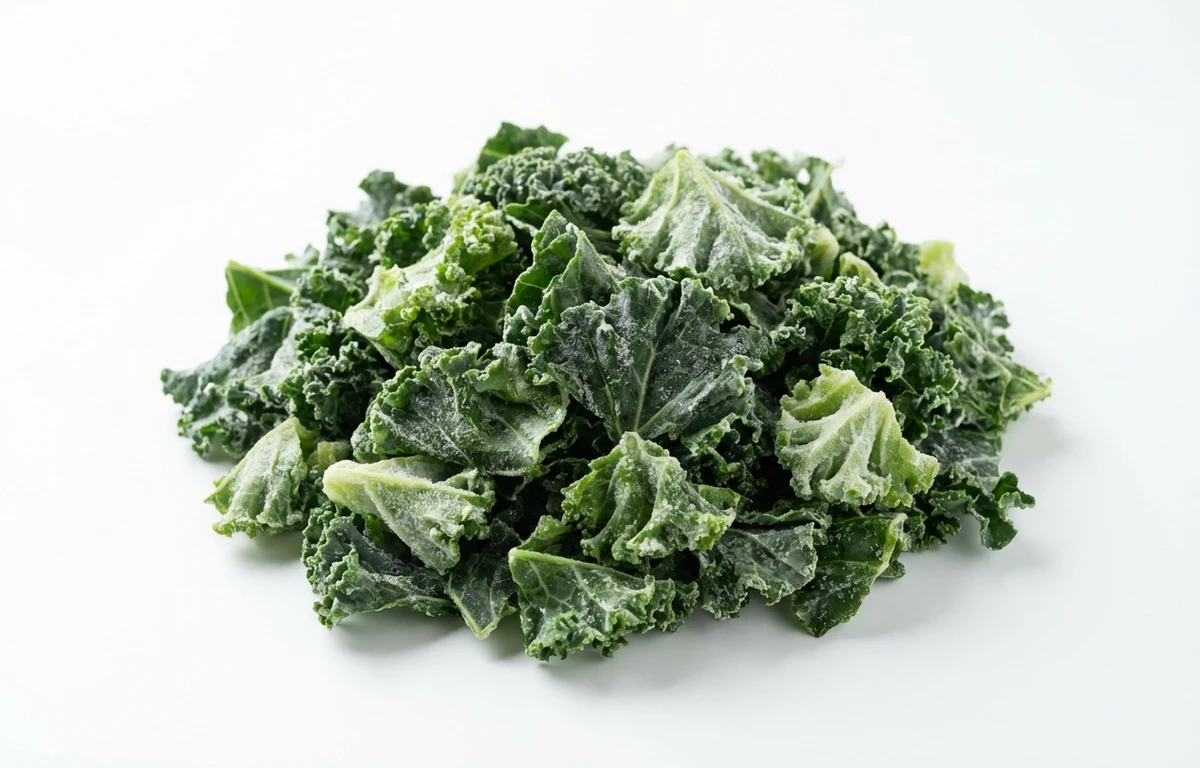
frozen kale.
VegetarianVeganGluten-freeDairy-freeNut-freePeanut-freeSoy-freeEgg-freeShellfish-freeHoney-freeAlcohol-free
ALSO KNOWN AS
frozen chopped kalefrozen curly kalefrozen leaf kalefrozen borecole
SERVING
CALORIES
30
PROTEIN
2.5g
CARBS
5.6g
FAT
0.50g
FIBER
3.6g
This ingredient is flagged as naturally gluten-free. Per 100 g, it provides 600 µg of vitamin K.
NUTRITION PROFILE · per 100 g
Everything in this ingredient.
MACRONUTRIENTS
Calories30kcal—
Protein2.5g5%
Carbohydrates5.6g2%
Fiber3.6g13%
Sugar0.60g1%
Total fat0.50g1%
Saturated fat0.10g1%
Trans fat0g—
Cholesterol0mg0%
Water89g—
MINERALS
Sodium25mg1%
Potassium350mg7%
Calcium130mg10%
Iron1.2mg7%
Magnesium30mg7%
Phosphorus45mg4%
Zinc0.30mg3%
Copper0.10mg11%
Manganese0.60mg26%
Selenium0.80µg1%
VITAMINS
Vitamin A450µg50%
Vitamin C40mg44%
Vitamin D0µg0%
Vitamin E0.80mg5%
Vitamin K600µg500%
Thiamin (B1)0.05mg4%
Riboflavin (B2)0.07mg5%
Niacin (B3)0.50mg3%
Pantothenic acid (B5)0.05mg1%
Vitamin B60.15mg9%
Folate (B9)20µg5%
Vitamin B120µg0%
%DV based on a 2,000 cal diet. Source: USDA FoodData Central. A dash in the %DV column means there’s no established Daily Value for that nutrient.
MEASUREMENT CONVERSIONS
How much is what.
1 cup140g
1 tablespoon8.5g
1 teaspoon2.8g
1 oz28.4g
1 lb453.6g
HEALTH BENEFITS
Why eat it.
- ✓High fiber content aids in digestive health
- ✓Contains lutein and zeaxanthin for eye protection
COOKING TIPS
In the kitchen.
- 1Add directly to smoothies or soups without thawing first
- 2Squeeze out excess water after thawing if using in quiches or bakes
- 3Sauté with garlic and olive oil for a quick, nutrient-dense side dish
STORAGE
Keep it fresh.
- Keep frozen at -18°C (0°F) or below until ready to use
- Ensure the bag is tightly sealed to prevent freezer burn
- Use within 8 to 12 months for optimal quality and flavor
FAQ
Frequently asked questions.
How long does frozen kale last in the freezer?
Frozen kale maintains its best quality for about 8 to 12 months if kept at a constant freezing temperature, though it remains safe to eat indefinitely.
Is frozen kale as nutritious as fresh kale?
Yes, frozen kale is often flash-frozen shortly after harvest, which preserves most of its vitamins and minerals, sometimes making it more nutrient-dense than fresh kale that has traveled long distances.
Do I need to wash frozen kale before using it?
Generally, no. Most commercial frozen kale is blanched and washed before being packaged. Check the label to ensure it is 'ready to cook'.
Can I use frozen kale in a salad?
Frozen kale is not recommended for raw salads because the freezing process breaks down the cell walls, resulting in a soft, limp texture once thawed.
How do I substitute frozen kale for fresh in a recipe?
Use about 1 cup of frozen kale for every 1.5 to 2 cups of fresh chopped kale, as frozen kale is more compressed.
Why is frozen kale better for smoothies?
Frozen kale acts like ice cubes, giving the smoothie a thicker, colder consistency without the bitterness sometimes found in fresh, mature kale.
Does frozen kale contain added salt?
Most plain frozen kale does not contain added sodium, but always check the ingredient list for preservatives or seasonings.
What is the best way to thaw frozen kale?
If thawing is necessary, place it in a colander under cold running water or leave it in the refrigerator overnight. Squeeze it to remove excess moisture before cooking.
Can I refreeze kale once it has thawed?
It is not recommended to refreeze thawed kale as it significantly degrades the texture and can increase the risk of bacterial growth.



















