
Other10 recipes
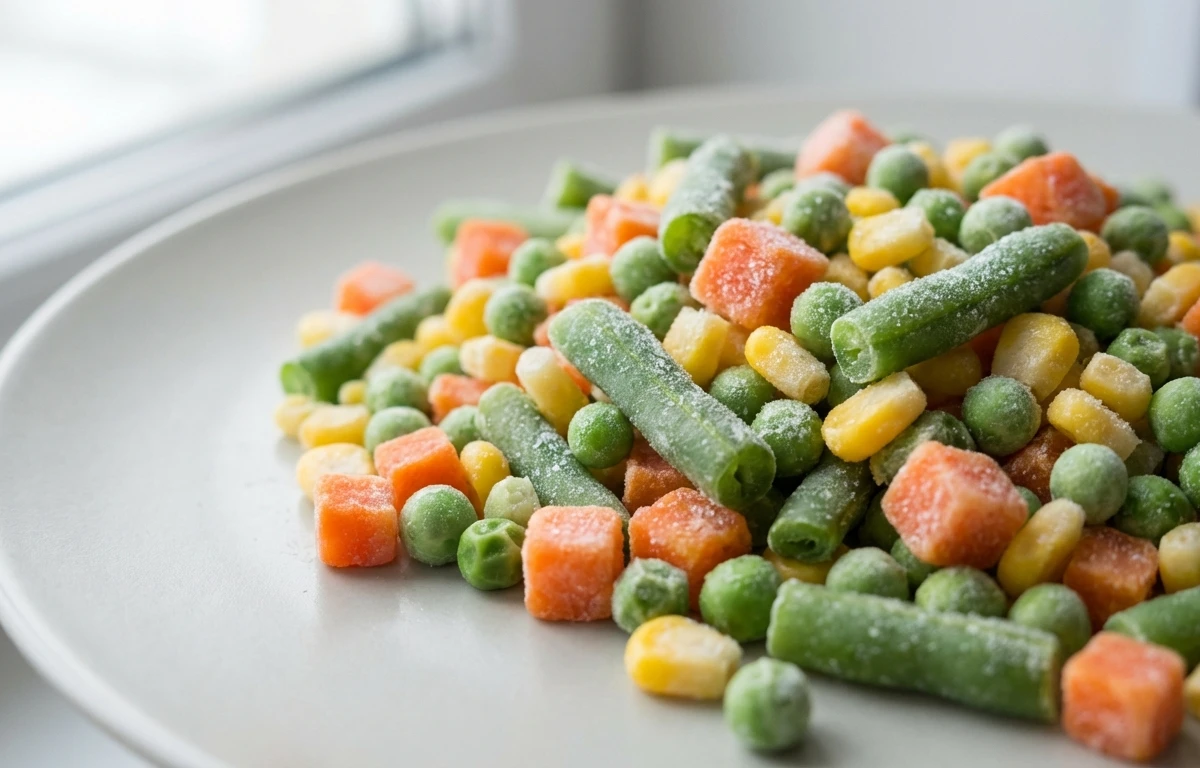
frozen mixed vegetables.
VegetarianVeganGluten-freeDairy-freeNut-freePeanut-freeSoy-freeEgg-freeShellfish-freeHoney-freeAlcohol-free
ALSO KNOWN AS
mixed vegetablesmixed veggiesvegetable mixmixed vegassorted vegetables
SERVING
CALORIES
65
PROTEIN
3.2g
CARBS
13.5g
FAT
0.40g
FIBER
3.7g
This ingredient is flagged as naturally gluten-free. Per 100 g, it provides 25 µg of vitamin K.
NUTRITION PROFILE · per 100 g
Everything in this ingredient.
MACRONUTRIENTS
Calories65kcal—
Protein3.2g6%
Carbohydrates13.5g5%
Fiber3.7g13%
Sugar3.1g6%
Total fat0.40g1%
Saturated fat0.10g1%
Trans fat0g—
Cholesterol0mg0%
Water81g—
MINERALS
Sodium35mg2%
Potassium200mg4%
Calcium25mg2%
Iron0.80mg4%
Magnesium20mg5%
Phosphorus60mg5%
Zinc0.50mg5%
Copper0.08mg9%
Manganese0.20mg9%
Selenium0.60µg1%
VITAMINS
Vitamin A350µg39%
Vitamin C8.0mg9%
Vitamin D0µg0%
Vitamin E0.50mg3%
Vitamin K25µg21%
Thiamin (B1)0.10mg8%
Riboflavin (B2)0.06mg5%
Niacin (B3)1.0mg6%
Pantothenic acid (B5)0.20mg4%
Vitamin B60.10mg6%
Folate (B9)35µg9%
Vitamin B120µg0%
%DV based on a 2,000 cal diet. Source: USDA FoodData Central. A dash in the %DV column means there’s no established Daily Value for that nutrient.
MEASUREMENT CONVERSIONS
How much is what.
1 cup140g
1 tablespoon8.8g
1 teaspoon2.9g
1 ml0.6g
1 liter583.3g
HEALTH BENEFITS
Why eat it.
- ✓Rich in essential vitamins and minerals, such as Vitamin A, Vitamin C, and potassium, which are well-preserved by the flash-freezing process.
COOKING TIPS
In the kitchen.
- 1For the best texture, cook directly from frozen without thawing, as thawing can make the vegetables mushy.
- 2Steam or microwave the vegetables instead of boiling to better retain water-soluble vitamins and prevent them from becoming waterlogged.
- 3Toss frozen vegetables with olive oil and seasonings, then roast at a high temperature (400°F / 200°C) until tender and slightly caramelized for enhanced flavor.
- 4Easily add to soups, stews, casseroles, stir-fries, or fried rice during the last 5-10 minutes of cooking for a quick nutrient boost.
STORAGE
Keep it fresh.
- Store in the original packaging or an airtight container in a freezer set to 0°F (-18°C) or lower to maintain optimal quality and prevent freezer burn.
- For best results, use within 8-12 months of purchase, although they can remain safe to eat indefinitely if kept continuously frozen.
FAQ
Frequently asked questions.
How much protein, calories, and carbs are in frozen mixed vegetables?
Per 100g, frozen mixed vegetables typically contain around 65 calories, 3.2g of protein, 13.5g of carbohydrates, and 0.4g of fat. They are a low-calorie, nutrient-dense food that can easily fit into most diets.
Are frozen mixed vegetables as nutritious as fresh?
Often, yes. Vegetables are flash-frozen at their peak ripeness, locking in nutrients. Studies show that frozen vegetables can retain similar, and sometimes even higher, levels of certain vitamins compared to fresh produce that has been stored for several days.
Are frozen mixed vegetables gluten-free?
Generally, yes. Plain frozen mixed vegetables are naturally gluten-free as they consist solely of vegetables. Always check the ingredient list for any added sauces, seasonings, or fillers that might contain gluten.
Are frozen mixed vegetables keto-friendly?
It depends on the specific mix. While many individual vegetables are keto-friendly, common mixed vegetable blends often contain higher-carb vegetables like corn, peas, and carrots. With approximately 13.5g carbs per 100g, they might be too high for strict keto diets, so check the specific blend's carb count.
How do you cook frozen mixed vegetables?
Frozen mixed vegetables can be cooked directly from frozen without thawing. They can be steamed, boiled, microwaved, stir-fried, or roasted. Cooking times are usually shorter than for fresh vegetables, typically just a few minutes until tender-crisp.
What are the best ways to use frozen mixed vegetables in meals?
They are incredibly versatile! Add them to soups, stews, casseroles, stir-fries, pasta dishes, rice pilafs, or omelets. They can also be a quick and easy side dish for almost any meal, providing a convenient boost of nutrition.
How long do frozen mixed vegetables last in the freezer?
When stored properly in a freezer at 0°F (-18°C) or below, frozen mixed vegetables can last for 8-12 months while maintaining optimal quality. They will remain safe to eat beyond that, but quality, texture, and flavor may decline.
How do I know if frozen mixed vegetables have gone bad?
Signs of spoilage include a thick layer of ice crystals (freezer burn), a noticeable change in color or texture, or an off smell. While freezer-burned vegetables are safe to eat, their quality and taste will be significantly diminished.
RECIPES
Cook with frozen mixed vegetables.
10 recipes · sorted by what’s quick



















