
Vegetable
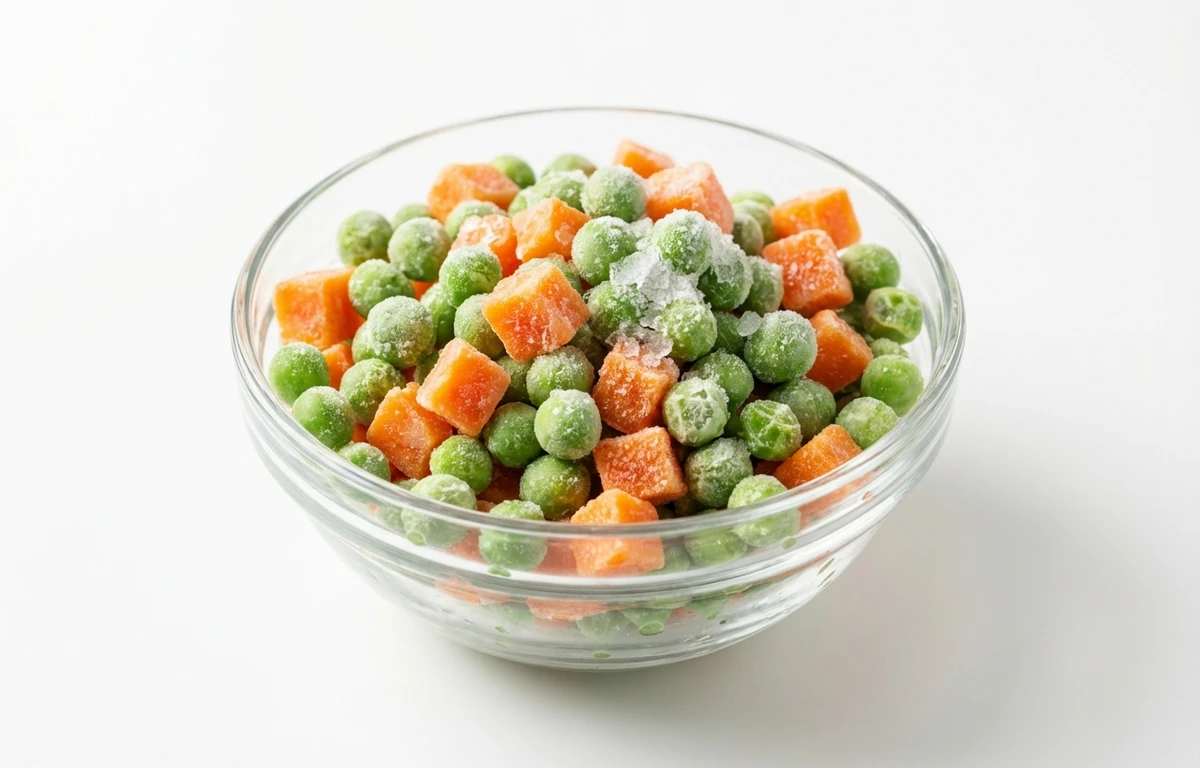
frozen peas and carrots.
VegetarianVeganGluten-freeDairy-freeNut-freePeanut-freeSoy-freeEgg-freeShellfish-freeHoney-freeAlcohol-free
ALSO KNOWN AS
frozen peas and diced carrotsfrozen mixed peas and carrotsfrozen carrot and pea mixfrozen matar gajar
SERVING
CALORIES
55
PROTEIN
3.2g
CARBS
10.5g
FAT
0.40g
FIBER
3.5g
This ingredient is flagged as naturally gluten-free. Per 100 g, it provides 35 µg of vitamin K.
NUTRITION PROFILE · per 100 g
Everything in this ingredient.
MACRONUTRIENTS
Calories55kcal—
Protein3.2g6%
Carbohydrates10.5g4%
Fiber3.5g13%
Sugar3.8g8%
Total fat0.40g1%
Saturated fat0.10g1%
Trans fat0g—
Cholesterol0mg0%
Water81.5g—
MINERALS
Sodium65mg3%
Potassium180mg4%
Calcium25mg2%
Iron1.1mg6%
Magnesium20mg5%
Phosphorus65mg5%
Zinc0.50mg5%
Copper0.08mg9%
Manganese0.20mg9%
Selenium0.70µg1%
VITAMINS
Vitamin A450µg50%
Vitamin C12mg13%
Vitamin D0µg0%
Vitamin E0.50mg3%
Vitamin K35µg29%
Thiamin (B1)0.15mg13%
Riboflavin (B2)0.08mg6%
Niacin (B3)1.2mg8%
Pantothenic acid (B5)0.30mg6%
Vitamin B60.12mg7%
Folate (B9)40µg10%
Vitamin B120µg0%
%DV based on a 2,000 cal diet. Source: USDA FoodData Central. A dash in the %DV column means there’s no established Daily Value for that nutrient.
MEASUREMENT CONVERSIONS
How much is what.
1 cup145g
1 tablespoon9g
1 teaspoon3g
1 oz28.4g
1 lb453.6g
1 liter600g
HEALTH BENEFITS
Why eat it.
- ✓Good source of dietary fiber for digestion
- ✓Low calorie and nutrient dense
COOKING TIPS
In the kitchen.
- 1Add directly to soups or stews without thawing
- 2Steam for 3-5 minutes to retain maximum nutrients and color
- 3Sauté with a little butter or olive oil for a quick side dish
STORAGE
Keep it fresh.
- Keep frozen at -18°C (0°F) or below
- Seal the bag tightly to prevent freezer burn
- Do not refreeze once the vegetables have completely thawed
FAQ
Frequently asked questions.
How long do frozen peas and carrots last?
They typically maintain best quality for 8 to 12 months in the freezer if kept at a constant temperature.
Are frozen peas and carrots as healthy as fresh?
Yes, they are usually flash-frozen shortly after harvest, which preserves most of their vitamins and minerals.
Do I need to wash frozen peas and carrots?
No, they are washed and blanched before being frozen, so they are ready to cook straight from the bag.
What is the best way to cook them to keep them crunchy?
Steaming or quick sautéing is best. Avoid boiling them for long periods as they will become mushy.
Can I use them in fried rice?
Yes, they are a classic addition to fried rice; add them toward the end of cooking so they heat through without overcooking.
How can I tell if they have freezer burn?
Look for white, dried-out patches or an excessive amount of ice crystals inside the bag.
What can I substitute for this mix?
You can use a mix of fresh diced carrots and fresh shelled peas, or other frozen vegetable blends like peas and corn.
Are there any allergens in frozen peas and carrots?
Plain frozen peas and carrots are naturally free of common allergens, but always check the label for cross-contamination warnings.
Can I eat them raw/frozen?
While safe if processed under strict hygiene, it is recommended to cook them briefly to ensure any potential surface bacteria are eliminated.



















