
Fruit
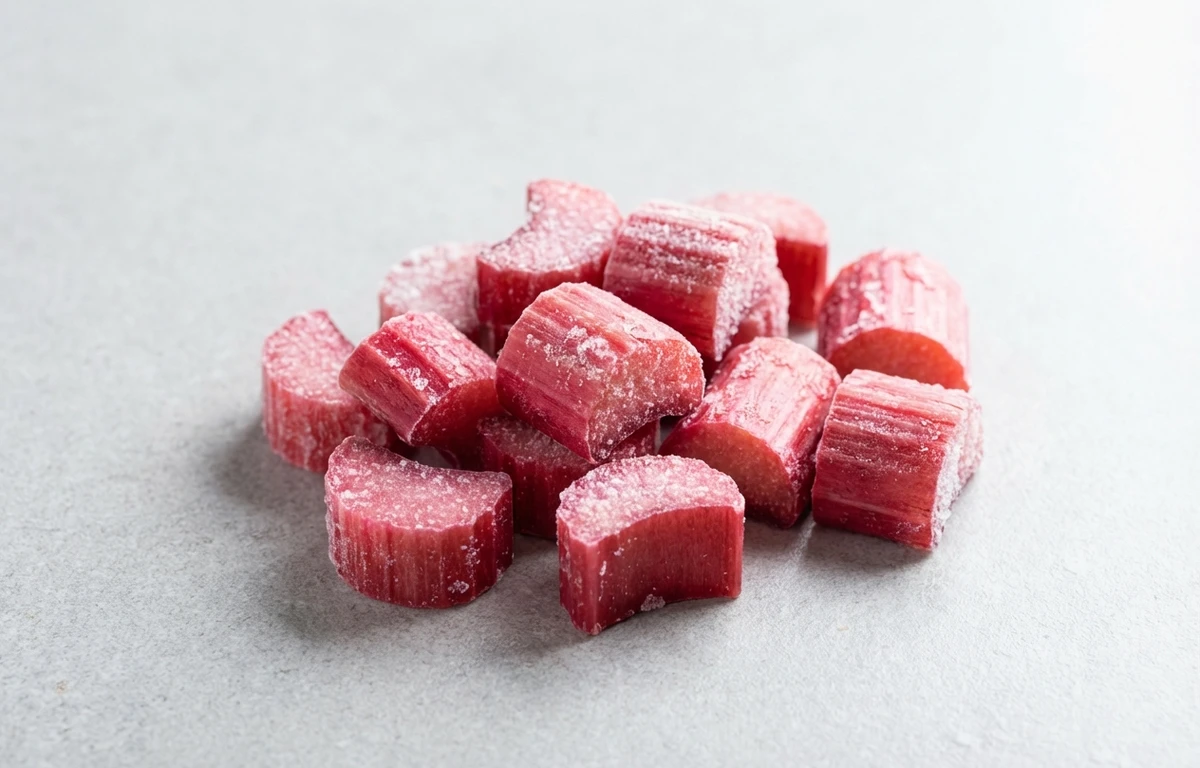
frozen raw rhubarb.
VegetarianVeganGluten-freeDairy-freeNut-freePeanut-freeSoy-freeEgg-freeShellfish-freeHoney-freeAlcohol-freeHalalKosher
ALSO KNOWN AS
frozen rhubarb stalksfrozen pieplant
SERVING
CALORIES
21
PROTEIN
0.90g
CARBS
4.5g
FAT
0.20g
FIBER
1.8g
NUTRITION PROFILE · per 100 g
Everything in this ingredient.
MACRONUTRIENTS
Calories21kcal—
Protein0.90g2%
Carbohydrates4.5g2%
Fiber1.8g6%
Sugar1.1g2%
Total fat0.20g0%
Saturated fat0.05g0%
Trans fat0g—
Cholesterol0mg0%
Water93.6g—
MINERALS
Sodium4.0mg0%
Potassium288mg6%
Calcium86mg7%
Iron0.22mg1%
Magnesium12mg3%
Phosphorus14mg1%
Zinc0.10mg1%
Copper0.02mg2%
Manganese0.20mg9%
Selenium1.1µg2%
VITAMINS
Vitamin A5.0µg1%
Vitamin C8.0mg9%
Vitamin D0µg0%
Vitamin E0.27mg2%
Vitamin K29.3µg24%
Thiamin (B1)0.02mg2%
Riboflavin (B2)0.03mg2%
Niacin (B3)0.30mg2%
Pantothenic acid (B5)0.08mg2%
Vitamin B60.02mg1%
Folate (B9)7.0µg2%
Vitamin B120µg0%
%DV based on a 2,000 cal diet. Source: USDA FoodData Central. A dash in the %DV column means there’s no established Daily Value for that nutrient.
MEASUREMENT CONVERSIONS
How much is what.
1 cup140g
1 oz28.4g
1 lb453.6g
HEALTH BENEFITS
Why eat it.
- ✓Excellent source of Vitamin K for bone health
- ✓High in dietary fiber to aid digestion
- ✓Contains anthocyanins which support heart health
- ✓Low in calories and sugar
- ✓Rich in antioxidants that fight inflammation
COOKING TIPS
In the kitchen.
- 1Do not thaw before adding to pies or crumbles to prevent sogginess
- 2Pair with sweet fruits like strawberries to balance its natural tartness
- 3Ensure only the stalks are used; rhubarb leaves are toxic and should never be eaten
STORAGE
Keep it fresh.
- Keep frozen at 0°F (-18°C) or below
- Store in airtight freezer bags to prevent freezer burn
- Use within 9 to 12 months for best quality
FAQ
Frequently asked questions.
How long does frozen rhubarb last?
Frozen rhubarb maintains peak quality for about 9 to 12 months if stored in an airtight container in the freezer.
Do I need to thaw frozen rhubarb before baking?
No, it is usually best to use it straight from the freezer in baked goods like pies and muffins to maintain texture.
Can I substitute frozen rhubarb for fresh?
Yes, you can substitute frozen for fresh in a 1:1 ratio by weight, though you may need to increase baking time slightly.
Is frozen rhubarb as nutritious as fresh?
Yes, freezing preserves most of the vitamins and minerals, making it a nutritionally comparable alternative to fresh stalks.
What can I use as a substitute for rhubarb?
Cranberries or tart green apples (like Granny Smith) are the best substitutes for rhubarb's signature tartness.
Why is rhubarb often paired with strawberries?
Rhubarb is extremely tart, and the natural sweetness of strawberries provides a perfect flavor balance.
Are the leaves of frozen rhubarb safe?
No, rhubarb leaves contain high levels of oxalic acid and are toxic. Only the stalks should be frozen and consumed.
How do I prevent frozen rhubarb from making my pie watery?
Add an extra tablespoon of thickener (like cornstarch or flour) to your filling to absorb the extra moisture released during baking.
Is rhubarb a fruit or a vegetable?
Botanically it is a vegetable (a stalk), but it is legally classified as a fruit in the US for trade purposes and is culinarily treated as a fruit.



















