
Vegetable
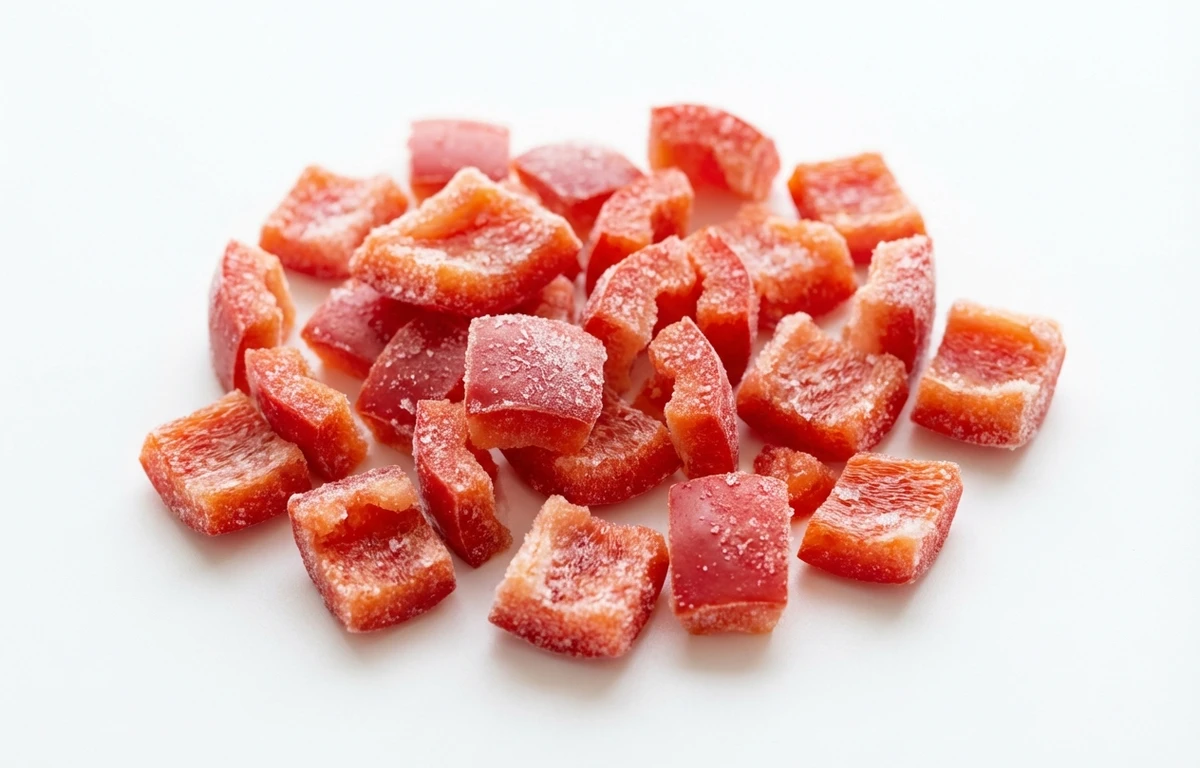
frozen red bell pepper.
VegetarianVeganGluten-freeDairy-freeNut-freePeanut-freeSoy-freeEgg-freeShellfish-freeHoney-freeAlcohol-free
SERVING
CALORIES
20
PROTEIN
1.1g
CARBS
4.5g
FAT
0.21g
FIBER
1.6g
This ingredient is flagged as naturally gluten-free. Per 100 g, it provides 3.8 µg of vitamin K.
NUTRITION PROFILE · per 100 g
Everything in this ingredient.
MACRONUTRIENTS
Calories20kcal—
Protein1.1g2%
Carbohydrates4.5g2%
Fiber1.6g6%
Sugar3.3g7%
Total fat0.21g0%
Saturated fat0.03g0%
Trans fat0g—
Cholesterol0mg0%
Water94g—
MINERALS
Sodium5.0mg0%
Potassium91mg2%
Calcium9.0mg1%
Iron0.62mg3%
Magnesium8.0mg2%
Phosphorus17mg1%
Zinc0.06mg1%
Copper0.05mg6%
Manganese0.12mg5%
Selenium0.20µg0%
VITAMINS
Vitamin A121µg13%
Vitamin C58.7mg65%
Vitamin D0µg0%
Vitamin E1.2mg8%
Vitamin K3.8µg3%
Thiamin (B1)0.07mg6%
Riboflavin (B2)0.04mg3%
Niacin (B3)1.4mg9%
Pantothenic acid (B5)0.03mg1%
Vitamin B60.14mg8%
Folate (B9)14µg4%
Vitamin B120µg0%
%DV based on a 2,000 cal diet. Source: USDA FoodData Central. A dash in the %DV column means there’s no established Daily Value for that nutrient.
MEASUREMENT CONVERSIONS
How much is what.
1 cup140g
1 tablespoon8.8g
1 teaspoon2.9g
1 oz28.4g
1 lb453.6g
1 ml0.6g
1 liter583.3g
COOKING TIPS
In the kitchen.
- 1Add directly from the freezer to hot pans for stir-fries, fajitas, or sautés. This prevents them from becoming overly soft or mushy.
- 2Incorporate into soups, stews, chilis, and sauces, as the excess water they release during cooking adds moisture and flavor.
- 3For roasting, toss frozen peppers with oil and seasonings and roast at a high temperature (400°F / 200°C) until tender and slightly caramelized.
- 4Frozen bell peppers are excellent for blended applications like pasta sauces, soups, or dips after being cooked.
STORAGE
Keep it fresh.
- Store in the freezer at or below 0°F (-18°C) in an airtight container or the original packaging to prevent freezer burn.
- For best quality, use within 8-12 months of purchase. Do not refreeze after they have been fully thawed.
FAQ
Frequently asked questions.
Is frozen red bell pepper vegan, gluten-free, and allergen-free?
Yes, frozen red bell peppers are naturally vegan, gluten-free, and free from common allergens like dairy, soy, and nuts. They are simply a vegetable, making them suitable for a wide range of dietary needs and restrictions.
Is frozen red bell pepper keto-friendly?
Yes, frozen red bell peppers can be included in a keto diet in moderation. With 4.45g of carbohydrates per 100g, they are relatively low in carbs compared to many other vegetables. They can add flavor and nutrients without significantly impacting daily carb limits.
How do you cook frozen red bell pepper?
Frozen red bell peppers can be cooked directly from the freezer without thawing. They are best used in cooked dishes like stir-fries, fajitas, soups, stews, casseroles, or roasted vegetables. Simply add them to your dish during the cooking process until heated through and tender-crisp.
What does frozen red bell pepper taste and feel like compared to fresh?
Frozen red bell peppers retain much of their sweet flavor, but their texture becomes softer and less crisp than fresh bell peppers due to the freezing process. They are best suited for cooked applications where a firm texture isn't essential, as they can become slightly mushy if overcooked.
How long does frozen red bell pepper last?
Properly stored in a freezer at 0°F (-18°C), frozen red bell peppers can last for 8-12 months while maintaining optimal quality. They will remain safe to eat beyond this period, but their texture and flavor might degrade over time.
Can you eat frozen red bell pepper raw?
While technically safe to eat raw after thawing, the texture of frozen red bell peppers becomes very soft and watery, making them less appealing for raw consumption. They are generally not recommended for salads or dishes where a crisp texture is desired.



















