
Other
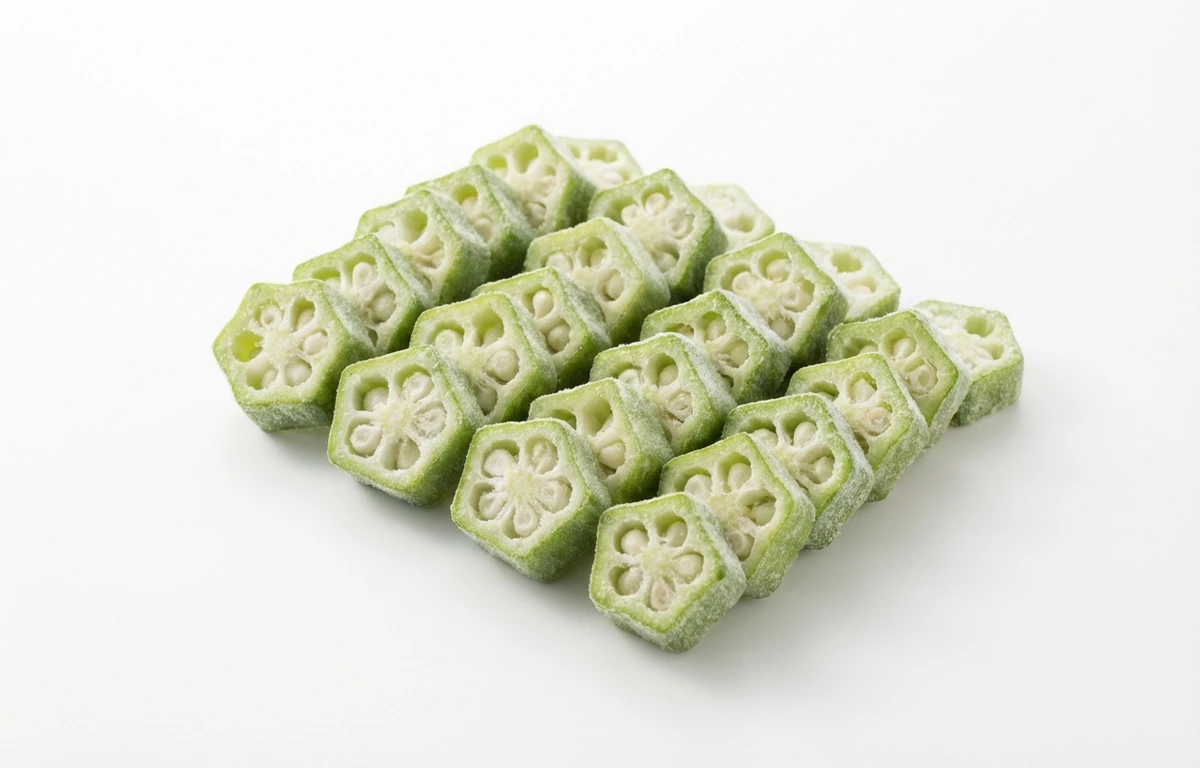
frozen sliced okra.
VegetarianVeganGluten-freeDairy-freeNut-freePeanut-freeSoy-freeEgg-freeShellfish-freeHoney-freeAlcohol-free
ALSO KNOWN AS
frozen cut okrafrozen bhindi slicesfrozen ladyfinger slicesfrozen vendakkai slicesfrozen bendakaya slices
SERVING
CALORIES
33
PROTEIN
1.9g
CARBS
7.5g
FAT
0.20g
FIBER
3.2g
This ingredient is flagged as naturally gluten-free. Per 100 g, it provides 31.3 µg of vitamin K.
NUTRITION PROFILE · per 100 g
Everything in this ingredient.
MACRONUTRIENTS
Calories33kcal—
Protein1.9g4%
Carbohydrates7.5g3%
Fiber3.2g11%
Sugar1.5g3%
Total fat0.20g0%
Saturated fat0.05g0%
Trans fat0g—
Cholesterol0mg0%
Water89.6g—
MINERALS
Sodium7.0mg0%
Potassium299mg6%
Calcium82mg6%
Iron0.60mg3%
Magnesium57mg14%
Phosphorus61mg5%
Zinc0.58mg5%
Copper0.10mg11%
Manganese0.70mg30%
Selenium0.70µg1%
VITAMINS
Vitamin A36µg4%
Vitamin C23mg26%
Vitamin D0µg0%
Vitamin E0.27mg2%
Vitamin K31.3µg26%
Thiamin (B1)0.20mg17%
Riboflavin (B2)0.06mg5%
Niacin (B3)1.0mg6%
Pantothenic acid (B5)0.15mg3%
Vitamin B60.21mg12%
Folate (B9)60µg15%
Vitamin B120µg0%
%DV based on a 2,000 cal diet. Source: USDA FoodData Central. A dash in the %DV column means there’s no established Daily Value for that nutrient.
MEASUREMENT CONVERSIONS
How much is what.
1 cup130g
1 tablespoon15g
1 teaspoon5g
1 oz28.4g
1 lb453.6g
1 ml1.8g
1 liter550g
HEALTH BENEFITS
Why eat it.
- ✓High in dietary fiber which aids digestion and gut health
- ✓Good source of folate (B9) which is vital for cell function
COOKING TIPS
In the kitchen.
- 1Cook directly from frozen to maintain the best texture and minimize mucilage
- 2Roasting or air-frying at high heat helps reduce the characteristic 'slimy' texture
- 3Add acidic ingredients like lemon juice or tomatoes to help break down the okra's sap
STORAGE
Keep it fresh.
- Keep frozen at -18°C (0°F) or below until ready to use
- Do not thaw and refreeze as it degrades the texture and increases sliminess
- Store in an airtight freezer bag to prevent freezer burn
FAQ
Frequently asked questions.
How long does frozen sliced okra last?
When kept at a constant freezer temperature, it maintains best quality for 10-12 months.
Should I thaw frozen okra before cooking?
No, it is best to cook it directly from frozen. Thawing makes the okra much slimier and softer.
How do I pick a good bag of frozen okra?
Feel the bag to ensure the pieces are loose and separate; large clumps indicate the product may have thawed and refrozen.
What can I use as a substitute for frozen okra?
Fresh okra is the best substitute. For texture in stews, green beans or zucchini can work, though they lack the thickening properties.
Is frozen okra as nutritious as fresh?
Yes, frozen okra is flash-frozen at peak ripeness, preserving most of its vitamins and minerals.
Why is my frozen okra slimy when I cook it?
Okra contains mucilage. To reduce this, cook it quickly at high heat or add an acidic ingredient like vinegar or lemon.
Can I use frozen sliced okra in gumbo?
Yes, it is a classic ingredient for gumbo and acts as a natural thickener for the stew.
Is frozen okra keto-friendly?
Yes, it is relatively low in net carbs (about 4g per 100g) and high in fiber, making it suitable for keto diets.



















