
Other
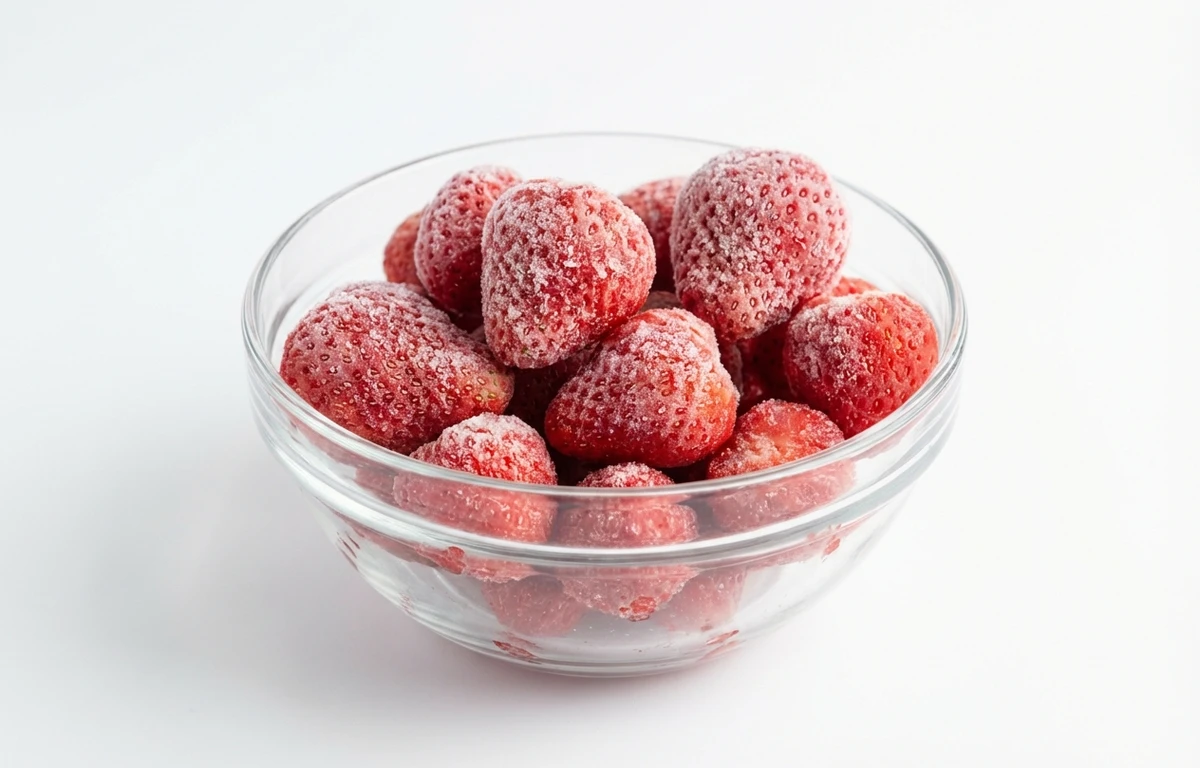
frozen strawberries.
VegetarianVeganGluten-freeDairy-freeNut-freePeanut-freeSoy-freeEgg-freeShellfish-freeHoney-freeAlcohol-free
SERVING
CALORIES
35
PROTEIN
0.43g
CARBS
9.1g
FAT
0.11g
FIBER
2.1g
This ingredient is flagged as naturally gluten-free. Per 100 g, it provides 2.2 µg of vitamin K.
NUTRITION PROFILE · per 100 g
Everything in this ingredient.
MACRONUTRIENTS
Calories35kcal—
Protein0.43g1%
Carbohydrates9.1g3%
Fiber2.1g8%
Sugar4.6g9%
Total fat0.11g0%
Saturated fat0.01g0%
Trans fat0g—
Cholesterol0mg0%
Water90g—
MINERALS
Sodium2.0mg0%
Potassium148mg3%
Calcium16mg1%
Iron0.75mg4%
Magnesium11mg3%
Phosphorus13mg1%
Zinc0.13mg1%
Copper0.05mg6%
Manganese0.29mg13%
Selenium0.70µg1%
VITAMINS
Vitamin A2.0µg0%
Vitamin C41.2mg46%
Vitamin D0µg0%
Vitamin E0.29mg2%
Vitamin K2.2µg2%
Thiamin (B1)0.02mg2%
Riboflavin (B2)0.04mg3%
Niacin (B3)0.46mg3%
Pantothenic acid (B5)0.11mg2%
Vitamin B60.03mg2%
Folate (B9)17µg4%
Vitamin B120µg0%
%DV based on a 2,000 cal diet. Source: USDA FoodData Central. A dash in the %DV column means there’s no established Daily Value for that nutrient.
MEASUREMENT CONVERSIONS
How much is what.
1 cup149g
1 tablespoon9.3g
1 teaspoon3.1g
1 ml0.6g
1 liter620.8g
HEALTH BENEFITS
Why eat it.
- ✓Provides dietary fiber, aiding in digestion and promoting a feeling of fullness.
- ✓Contains potassium and flavonoids, which may contribute to heart health by helping to manage blood pressure.
COOKING TIPS
In the kitchen.
- 1Use directly from the freezer for smoothies to create a thick, icy texture without needing extra ice.
- 2When thawed, frozen strawberries become soft and release juice, making them ideal for creating sauces, compotes, or coulis.
- 3For baking in muffins or cakes, toss the frozen strawberries in a small amount of flour before adding to the batter to prevent them from sinking.
- 4Thaw in the refrigerator overnight for a gentler defrosting process that helps retain some texture, compared to microwaving which can make them mushy.
STORAGE
Keep it fresh.
- Store in the original packaging or an airtight container in the freezer at 0°F (-18°C) or below.
- For best quality, use within 8-12 months of purchase. Once opened, reseal the bag tightly to prevent freezer burn.
FAQ
Frequently asked questions.
How many calories and carbs are in frozen strawberries?
Per 100g, frozen strawberries contain approximately 35 calories and 9.13g of carbohydrates. They are naturally low in fat (0.11g) and provide a small amount of protein (0.43g).
Are frozen strawberries suitable for a vegan or gluten-free diet?
Yes, frozen strawberries are naturally vegan and gluten-free. They are simply fruit, with no animal products or gluten-containing ingredients added, making them suitable for these dietary restrictions.
What are the best ways to use frozen strawberries?
Frozen strawberries are incredibly versatile. They are perfect for smoothies, adding a cold, thick texture without needing ice. You can also use them in baked goods like muffins or pies, make sauces, jams, or simply thaw them slightly for a refreshing topping on yogurt, oatmeal, or ice cream.
Do frozen strawberries need to be thawed before use?
It depends on the intended use. For smoothies, they can be used directly from the freezer. If you're adding them to baked goods or want to eat them whole, thawing them in the refrigerator for a few hours or briefly in the microwave is recommended.
How long do frozen strawberries last in the freezer?
Properly stored frozen strawberries can last for 8-12 months in a standard freezer while maintaining good quality. Beyond this, they are generally still safe to eat but may experience a decline in texture and flavor.
Do I need to wash frozen strawberries?
Most commercially frozen strawberries are washed and ready to use before freezing. However, if you're concerned or if the packaging doesn't specify, a quick rinse under cold water after thawing (if thawing) won't hurt, but it's generally not necessary for safety.



















