
Fruit
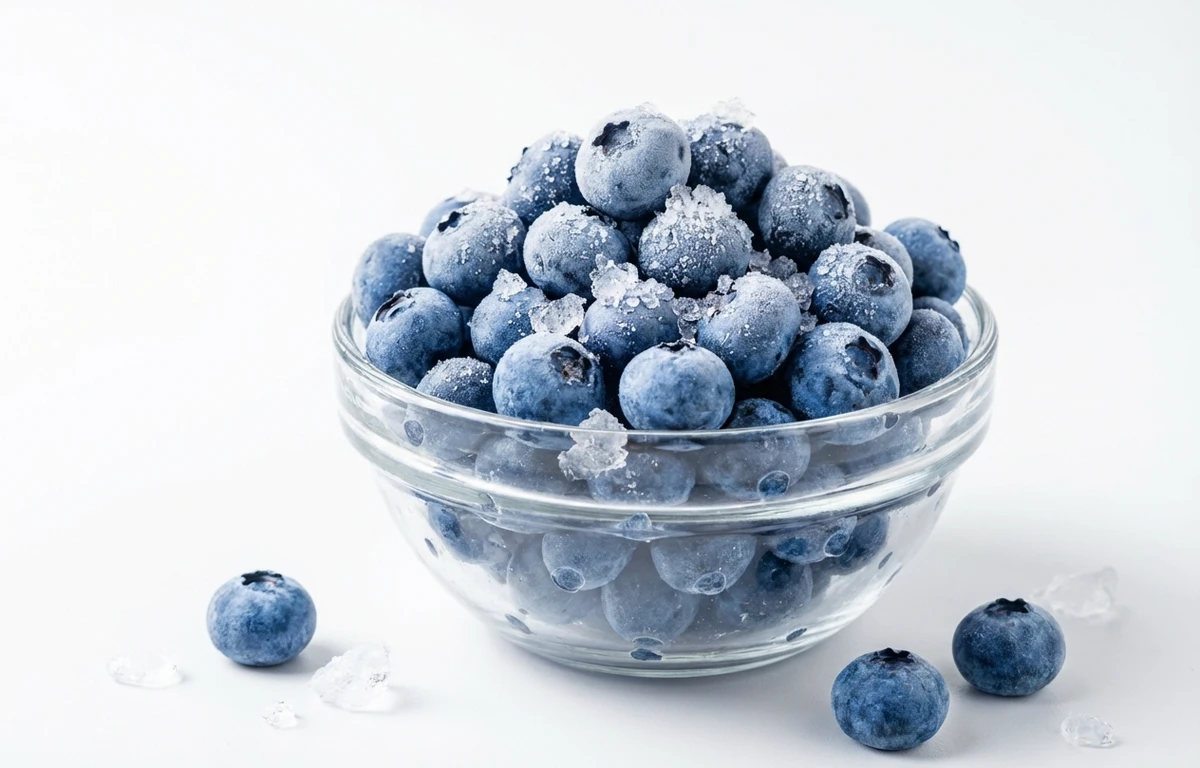
frozen sweetened blueberry.
VegetarianVeganGluten-freeDairy-freeNut-freePeanut-freeSoy-freeEgg-freeShellfish-freeHoney-freeAlcohol-free
ALSO KNOWN AS
frozen sugared blueberriessweetened frozen blueberriesfrozen blueberries with sugarfrozen sweetened berries
SERVING
CALORIES
85
PROTEIN
0.40g
CARBS
21.5g
FAT
0.50g
FIBER
2.4g
NUTRITION PROFILE · per 100 g
Everything in this ingredient.
MACRONUTRIENTS
Calories85kcal—
Protein0.40g1%
Carbohydrates21.5g8%
Fiber2.4g9%
Sugar18.2g36%
Total fat0.50g1%
Saturated fat0g0%
Trans fat0g—
Cholesterol0mg0%
Water77g—
MINERALS
Sodium1.0mg0%
Potassium54mg1%
Calcium6.0mg0%
Iron0.20mg1%
Magnesium5.0mg1%
Phosphorus10mg1%
Zinc0.10mg1%
Copper0.04mg4%
Manganese0.28mg12%
Selenium0.10µg0%
VITAMINS
Vitamin A3.0µg0%
Vitamin C2.5mg3%
Vitamin D0µg0%
Vitamin E0.40mg3%
Vitamin K16.3µg14%
Thiamin (B1)0.03mg3%
Riboflavin (B2)0.04mg3%
Niacin (B3)0.40mg3%
Pantothenic acid (B5)0.10mg2%
Vitamin B60.05mg3%
Folate (B9)6.0µg2%
Vitamin B120µg0%
%DV based on a 2,000 cal diet. Source: USDA FoodData Central. A dash in the %DV column means there’s no established Daily Value for that nutrient.
MEASUREMENT CONVERSIONS
How much is what.
1 cup155g
1 tablespoon10g
1 teaspoon3.3g
1 oz28.4g
1 lb453.6g
1 liter650g
1 piece0.5g
HEALTH BENEFITS
Why eat it.
- ✓Rich in anthocyanins and antioxidants
- ✓Supports heart health and circulation
- ✓Good source of Vitamin K for bone health
- ✓High fiber content aids digestion
- ✓Convenient way to consume fruit year-round
COOKING TIPS
In the kitchen.
- 1Do not thaw before adding to muffins or pancakes to prevent color bleeding
- 2Rinse quickly in cold water if using in salads to remove excess syrup
- 3Perfect for blending directly into smoothies for a thick texture
STORAGE
Keep it fresh.
- Keep frozen at 0°F (-18°C) or below
- Ensure the bag is tightly sealed to prevent freezer burn
- Use within 10-12 months for optimal quality
FAQ
Frequently asked questions.
How long do frozen sweetened blueberries last?
They are best used within 10 to 12 months if kept at a constant freezing temperature, though they remain safe to eat indefinitely.
Do I need to wash frozen blueberries before use?
Most commercially frozen blueberries are pre-washed before freezing and can be used directly from the bag.
Can I substitute frozen blueberries for fresh in baking?
Yes, but do not thaw them first. Increase baking time by a few minutes and be aware that the sweetened variety adds extra sugar to your recipe.
How can I tell if they have freezer burn?
Look for shriveled berries or a heavy coating of ice crystals inside the bag, which indicates moisture loss and potential flavor degradation.
Are frozen blueberries as healthy as fresh?
Freezing preserves most vitamins and antioxidants, though the 'sweetened' version contains significantly more sugar and calories than fresh berries.
What is the best way to thaw them?
Thaw them in the refrigerator overnight in a bowl to catch any juices, or use the defrost setting on a microwave for immediate use.
Why are my frozen blueberries in a solid block?
This usually happens if the berries partially thawed and then refroze. It is best to buy bags where the berries feel loose and individual.
Can I use these for making jam?
Yes, they are excellent for jam. Since they are already sweetened, you may need to reduce the amount of sugar called for in your recipe.
What can I use as a substitute for sweetened frozen blueberries?
Frozen unsweetened blueberries (add 1-2 tablespoons of sugar per cup) or frozen mixed berries are the best alternatives.



















