
Vegetable
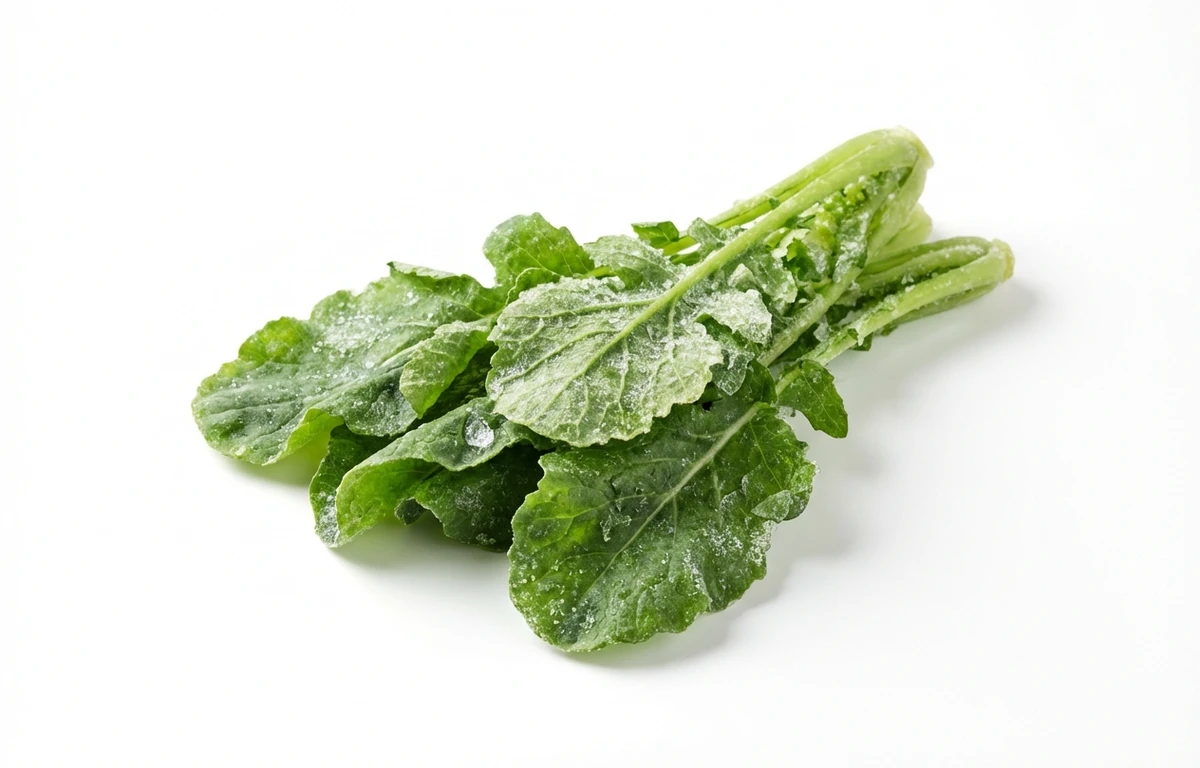
frozen turnip greens.
VegetarianVeganGluten-freeDairy-freeNut-freePeanut-freeSoy-freeEgg-freeShellfish-freeHoney-freeAlcohol-free
ALSO KNOWN AS
frozen turnip topsfrozen turnip leavesfrozen shalgam saag
SERVING
CALORIES
28
PROTEIN
2.5g
CARBS
5.1g
FAT
0.30g
FIBER
3.5g
This ingredient is flagged as naturally gluten-free. Per 100 g, it provides 360 µg of vitamin K.
NUTRITION PROFILE · per 100 g
Everything in this ingredient.
MACRONUTRIENTS
Calories28kcal—
Protein2.5g5%
Carbohydrates5.1g2%
Fiber3.5g13%
Sugar0.50g1%
Total fat0.30g0%
Saturated fat0.06g0%
Trans fat0g—
Cholesterol0mg0%
Water90.2g—
MINERALS
Sodium22mg1%
Potassium203mg4%
Calcium152mg12%
Iron1.1mg6%
Magnesium24mg6%
Phosphorus32mg3%
Zinc0.15mg1%
Copper0.10mg11%
Manganese0.35mg15%
Selenium0.80µg1%
VITAMINS
Vitamin A380µg42%
Vitamin C18mg20%
Vitamin D0µg0%
Vitamin E1.8mg12%
Vitamin K360µg300%
Thiamin (B1)0.05mg4%
Riboflavin (B2)0.07mg5%
Niacin (B3)0.40mg3%
Pantothenic acid (B5)0.20mg4%
Vitamin B60.15mg9%
Folate (B9)118µg30%
Vitamin B120µg0%
%DV based on a 2,000 cal diet. Source: USDA FoodData Central. A dash in the %DV column means there’s no established Daily Value for that nutrient.
MEASUREMENT CONVERSIONS
How much is what.
1 cup150g
1 oz28.4g
1 lb453.6g
HEALTH BENEFITS
Why eat it.
- ✓Good source of dietary fiber for digestive health
COOKING TIPS
In the kitchen.
- 1Cook directly from frozen; no need to thaw before boiling or sautéing
- 2Sauté with garlic, onions, and a splash of vinegar to balance the peppery bite
- 3Add to soups, stews, or casseroles during the last 10-15 minutes of cooking
STORAGE
Keep it fresh.
- Keep frozen at 0°F (-18°C) or below until ready to use
- Store in original airtight packaging to prevent freezer burn
- Use within 8 to 12 months for optimal flavor and texture
FAQ
Frequently asked questions.
How long do frozen turnip greens last in the freezer?
They maintain best quality for 8 to 12 months if kept at a constant 0°F, though they remain safe to eat indefinitely.
Do I need to wash frozen turnip greens before cooking?
No, commercially frozen turnip greens are blanched and thoroughly washed before being packaged.
What is a good substitute for frozen turnip greens?
Frozen kale, frozen collard greens, or frozen mustard greens are the best substitutes due to their similar texture and flavor.
Are frozen turnip greens as nutritious as fresh ones?
Yes, they are often frozen at peak ripeness, which preserves most of their vitamins and minerals, especially Vitamin K and A.
How do I know if frozen turnip greens have gone bad?
Look for heavy ice crystals (freezer burn), a shriveled appearance, or a dull, brownish color instead of vibrant green.
Can I use frozen turnip greens in smoothies?
Yes, they can be added to smoothies for a nutrient boost, though they have a stronger, more peppery flavor than spinach.
What is the best way to cook them to retain nutrients?
Steaming or quick sautéing is better than boiling in large amounts of water, which can leach out water-soluble vitamins.
Are frozen turnip greens bitter?
They have a naturally peppery and slightly bitter flavor profile, which is often mellowed by cooking with fats or acids like lemon juice.
Can I refreeze turnip greens after they have thawed?
It is not recommended as it significantly degrades the texture and can pose a safety risk if they were left at room temperature.



















