
Fruit
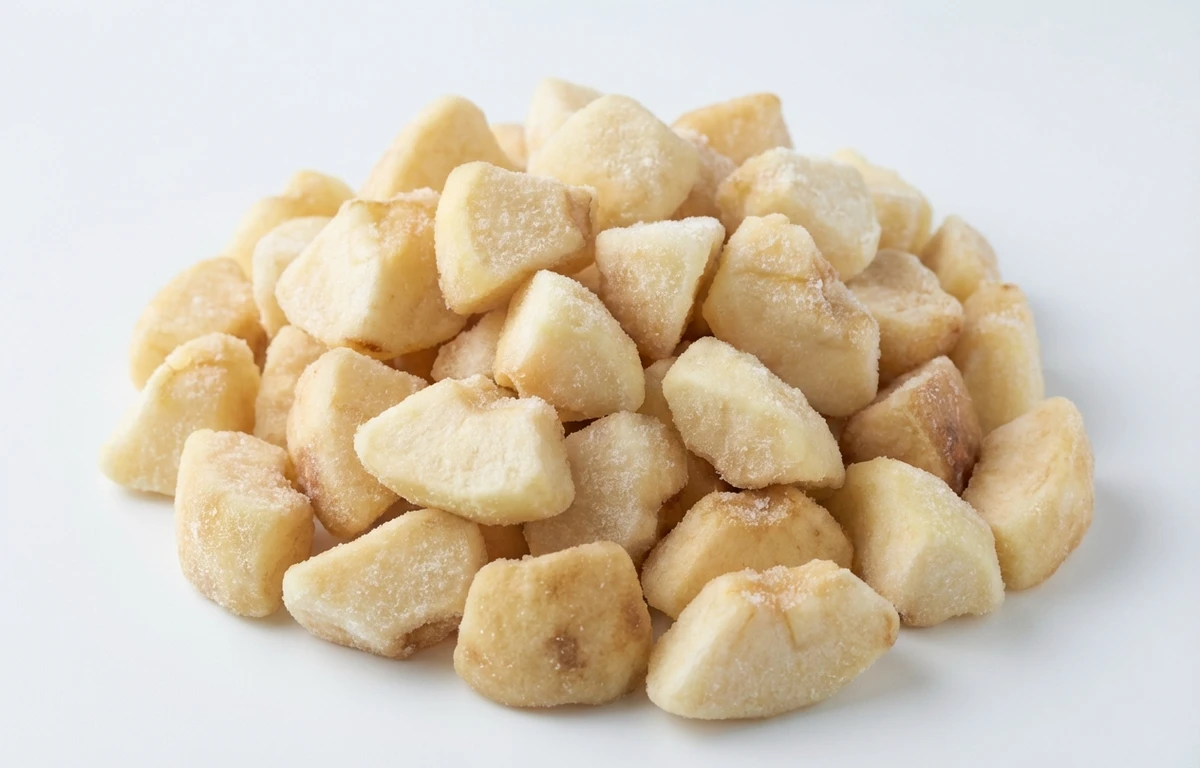
frozen unsweetened apple.
VegetarianVeganGluten-freeDairy-freeNut-freePeanut-freeSoy-freeEgg-freeShellfish-freeHoney-freeAlcohol-free
ALSO KNOWN AS
frozen apple slicesfrozen apple chunks
SERVING
CALORIES
50
PROTEIN
0.30g
CARBS
13.5g
FAT
0.10g
FIBER
2.4g
NUTRITION PROFILE · per 100 g
Everything in this ingredient.
MACRONUTRIENTS
Calories50kcal—
Protein0.30g1%
Carbohydrates13.5g5%
Fiber2.4g9%
Sugar10.1g20%
Total fat0.10g0%
Saturated fat0.02g0%
Trans fat0g—
Cholesterol0mg0%
Water85.8g—
MINERALS
Sodium1.0mg0%
Potassium107mg2%
Calcium6.0mg0%
Iron0.12mg1%
Magnesium5.0mg1%
Phosphorus11mg1%
Zinc0.04mg0%
Copper0.03mg3%
Manganese0.04mg2%
Selenium0.10µg0%
VITAMINS
Vitamin A3.0µg0%
Vitamin C3.5mg4%
Vitamin D0µg0%
Vitamin E0.18mg1%
Vitamin K2.2µg2%
Thiamin (B1)0.02mg2%
Riboflavin (B2)0.03mg2%
Niacin (B3)0.09mg1%
Pantothenic acid (B5)0.06mg1%
Vitamin B60.04mg2%
Folate (B9)3.0µg1%
Vitamin B120µg0%
%DV based on a 2,000 cal diet. Source: USDA FoodData Central. A dash in the %DV column means there’s no established Daily Value for that nutrient.
MEASUREMENT CONVERSIONS
How much is what.
1 cup140g
1 tablespoon8.8g
1 teaspoon2.9g
1 oz28.4g
1 lb453.6g
1 ml1.7g
1 liter590g
HEALTH BENEFITS
Why eat it.
- ✓High in dietary fiber which supports digestive health
- ✓Contains polyphenols that may support heart health
- ✓Low calorie density makes it an excellent snack for weight management
- ✓Provides a source of Vitamin C for immune support
- ✓Hydrating due to high water content
COOKING TIPS
In the kitchen.
- 1Add directly to smoothies for a thick, cold texture without needing ice
- 2Use frozen in pies or crumbles; just add a few extra minutes to the baking time
- 3Sauté frozen slices with cinnamon and a splash of water for a quick warm topping
STORAGE
Keep it fresh.
- Keep frozen at 0°F (-18°C) or below in an airtight container
- Use within 6 to 9 months for optimal flavor and texture
- Prevent freezer burn by removing as much air as possible from the bag
FAQ
Frequently asked questions.
Do I need to thaw frozen apples before baking?
Usually no. You can use them frozen in pies, muffins, or cobblers, though you may need to increase the baking time by 5-10 minutes.
How long do frozen apples last in the freezer?
They are best used within 6-9 months, but they remain safe to eat indefinitely if kept constantly frozen at 0°F.
Are frozen apples as nutritious as fresh ones?
Yes, apples are typically frozen at peak ripeness, which preserves most of their vitamins, minerals, and fiber content.
Can I refreeze apples once they have thawed?
It is not recommended as the cell structure breaks down during thawing, leading to a mushy and unappealing texture upon refreezing.
Why are my frozen apples brown?
Browning occurs due to oxidation. Commercial frozen apples often use ascorbic acid (Vitamin C) to prevent this; if yours are brown, they are still safe but may look less appetizing.
What is the best way to thaw frozen apples?
Thaw them in the refrigerator overnight if you need them soft, or use the defrost setting on a microwave for immediate use.
Can I use frozen apples for applesauce?
Absolutely. Frozen apples are excellent for making sauce as the freezing process already softens the fruit's cell walls.
What can I substitute for frozen apples?
Fresh apples are the best substitute. Frozen pears or frozen peaches can also work in many baking and smoothie recipes.



















