
Dairy
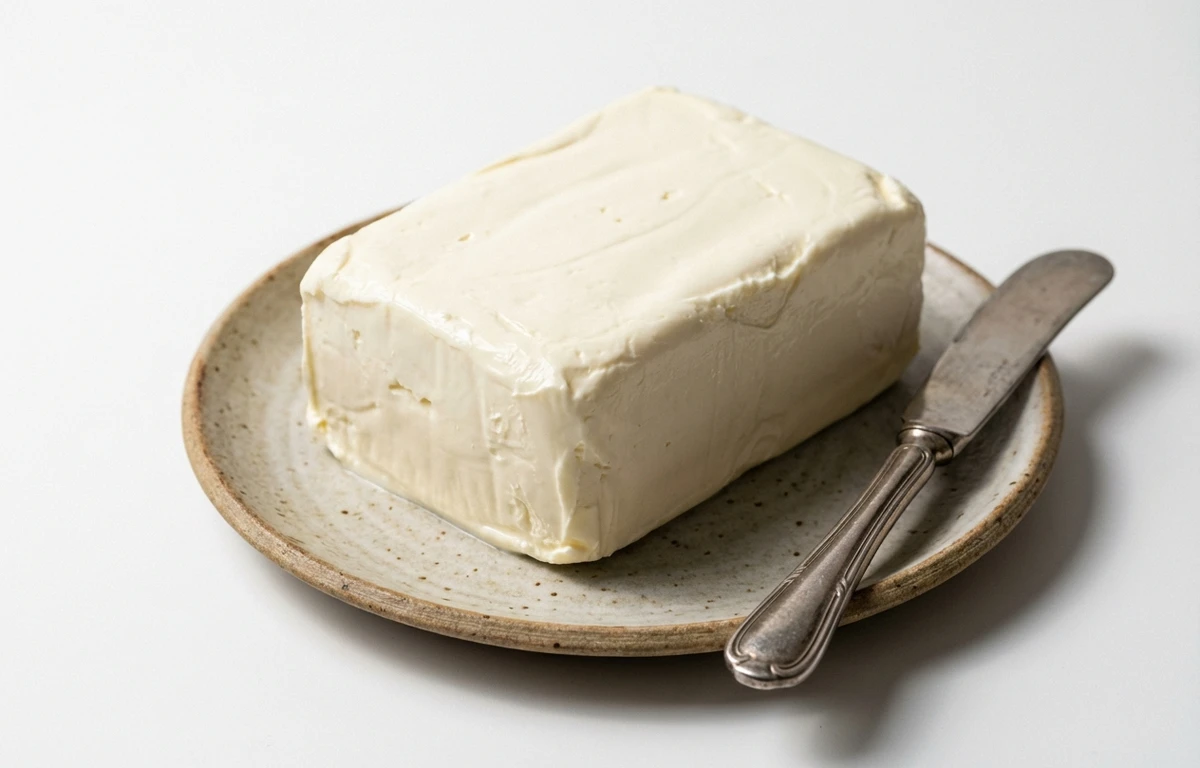
full fat cream cheese.
VegetarianVeganGluten-freeDairy-freeNut-freePeanut-freeSoy-freeEgg-freeShellfish-freeHoney-freeAlcohol-freeFermented
SERVING
CALORIES
342
PROTEIN
5.9g
CARBS
4.1g
FAT
34.2g
FIBER
0g
NUTRITION PROFILE · per 100 g
Everything in this ingredient.
MACRONUTRIENTS
Calories342kcal—
Protein5.9g12%
Carbohydrates4.1g1%
Fiber0g0%
Sugar3.2g6%
Total fat34.2g44%
Saturated fat19.3g97%
Trans fat1.0g—
Cholesterol110mg37%
Water54.1g—
MINERALS
Sodium321mg14%
Potassium132mg3%
Calcium98mg8%
Iron0.10mg1%
Magnesium9.0mg2%
Phosphorus106mg8%
Zinc0.50mg5%
Copper0.02mg2%
Manganese0.01mg0%
Selenium2.4µg4%
VITAMINS
Vitamin A308µg34%
Vitamin C0mg0%
Vitamin D0.10µg1%
Vitamin E0.30mg2%
Vitamin K2.9µg2%
Thiamin (B1)0.02mg2%
Riboflavin (B2)0.18mg14%
Niacin (B3)0.10mg1%
Pantothenic acid (B5)0.45mg9%
Vitamin B60.05mg3%
Folate (B9)11µg3%
Vitamin B120.20µg8%
%DV based on a 2,000 cal diet. Source: USDA FoodData Central. A dash in the %DV column means there’s no established Daily Value for that nutrient.
MEASUREMENT CONVERSIONS
How much is what.
1 cup227g
1 tablespoon14.2g
1 teaspoon4.7g
1 ml1g
1 liter946.7g
1 piece227g
HEALTH BENEFITS
Why eat it.
- ✓Good source of Vitamin A, which is essential for vision and immune function.
- ✓Provides dietary fat, which is necessary for absorbing fat-soluble vitamins (A, D, E, K) and providing sustained energy.
- ✓Contains some beneficial bacteria (probiotics) from the culturing process, which can support gut health.
- ✓Source of complete protein, supplying all essential amino acids for tissue repair and maintenance.
COOKING TIPS
In the kitchen.
- 1For smooth, lump-free dips, frostings, or cheesecakes, allow the cream cheese to soften to room temperature for about 30-60 minutes before mixing.
- 2When adding to hot sauces or soups, temper it by whisking a small amount of the hot liquid into the cream cheese before adding the mixture back to the pot to prevent curdling.
- 3To create a lighter, whipped texture for spreads, beat cold cream cheese with an electric mixer until it becomes fluffy and airy.
STORAGE
Keep it fresh.
- Keep refrigerated at or below 40°F (4°C) in its original sealed container. Do not leave at room temperature for more than two hours.
- Once opened, use within 7-10 days for optimal freshness and safety. Press plastic wrap directly onto the surface to prevent oxidation.
- Freezing is not recommended as it permanently alters the texture, causing it to become crumbly and watery upon thawing.
FAQ
Frequently asked questions.
Is full fat cream cheese healthy?
Full fat cream cheese provides beneficial nutrients like Vitamin A, essential for vision and immune function, and dietary fat which aids in absorbing fat-soluble vitamins. It also offers some protein and beneficial bacteria. However, it is high in calories and saturated fat, so it's best consumed in moderation as part of a balanced diet.
How much protein, fat, and calories are in full fat cream cheese?
Per 100g, full fat cream cheese contains approximately 342 calories, 5.9g of protein, and 34.2g of fat. It also has about 4.1g of carbohydrates. This makes it a calorie-dense food, primarily due to its high fat content.
Is full fat cream cheese good for weight loss?
Due to its high calorie and fat content (342 calories and 34.2g fat per 100g), full fat cream cheese is generally not considered ideal for weight loss when consumed in large quantities. While it can provide satiety, portion control is crucial if you're managing your calorie intake for weight loss.
Is full fat cream cheese vegan?
No, full fat cream cheese is not vegan. It is a dairy product made from cow's milk and cream, making it unsuitable for a vegan diet.
Is full fat cream cheese gluten-free?
Yes, plain full fat cream cheese is naturally gluten-free as it's made from dairy ingredients. However, always check the label for flavored varieties or those with added ingredients, as cross-contamination or gluten-containing additives could be present.
Is full fat cream cheese keto-friendly?
Yes, full fat cream cheese is generally considered keto-friendly. It is low in carbohydrates (around 4.1g per 100g) and high in fat, which aligns well with the macronutrient requirements of a ketogenic diet.
What does full fat cream cheese taste like and what is it used for?
Full fat cream cheese has a rich, tangy, and slightly sweet flavor with a smooth, creamy texture. It's widely used in both sweet and savory dishes, from spreading on bagels and making cheesecakes to thickening sauces and dips.
Can I substitute full fat cream cheese with a lower-fat version in recipes?
While you can substitute, lower-fat cream cheese may alter the texture and richness of your dish. Full fat cream cheese provides a superior creamy consistency and flavor, especially in baked goods like cheesecakes, where the fat content is crucial for structure and mouthfeel.
How do you store full fat cream cheese?
Full fat cream cheese should always be stored in the refrigerator, tightly sealed in its original packaging or an airtight container. This helps maintain its freshness and prevents it from absorbing odors from other foods.
Can you freeze full fat cream cheese?
While technically possible, freezing full fat cream cheese is not recommended for best quality. Freezing can alter its texture, making it crumbly or watery upon thawing, which is less ideal for spreading or baking. It's best used fresh.



















