
Dairy
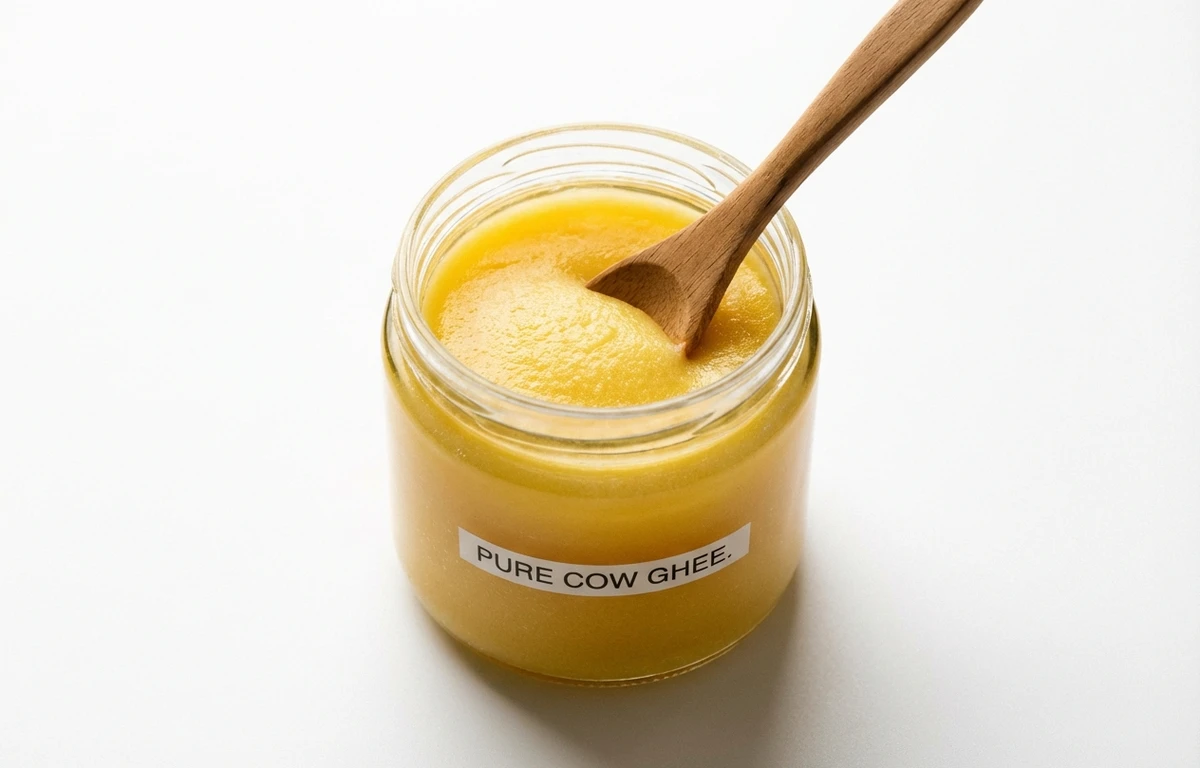
ghee for frying.
VegetarianVeganGluten-freeDairy-freeNut-freePeanut-freeSoy-freeEgg-freeShellfish-freeHoney-freeAlcohol-free
ALSO KNOWN AS
desi gheeclarified butterghee for fryingIndian butter for fryingclarified butter for frying
SERVING
CALORIES
876
PROTEIN
0.30g
CARBS
0g
FAT
99.5g
FIBER
0g
NUTRITION PROFILE · per 100 g
Everything in this ingredient.
MACRONUTRIENTS
Calories876kcal—
Protein0.30g1%
Carbohydrates0g0%
Fiber0g0%
Sugar0g0%
Total fat99.5g128%
Saturated fat61.9g310%
Trans fat3.3g—
Cholesterol256mg85%
Water0.20g—
MINERALS
Sodium2.0mg0%
Potassium5.0mg0%
Calcium4.0mg0%
Iron0mg0%
Magnesium0mg0%
Phosphorus3.0mg0%
Zinc0.01mg0%
Copper0mg0%
Manganese0mg0%
Selenium0µg0%
VITAMINS
Vitamin A840µg93%
Vitamin C0mg0%
Vitamin D1.5µg8%
Vitamin E2.8mg19%
Vitamin K8.6µg7%
Thiamin (B1)0mg0%
Riboflavin (B2)0mg0%
Niacin (B3)0mg0%
Pantothenic acid (B5)0mg0%
Vitamin B60mg0%
Folate (B9)0µg0%
Vitamin B120.01µg0%
%DV based on a 2,000 cal diet. Source: USDA FoodData Central. A dash in the %DV column means there’s no established Daily Value for that nutrient.
MEASUREMENT CONVERSIONS
How much is what.
1 cup227g
1 tablespoon14.2g
1 teaspoon4.7g
1 ml1g
1 liter946.7g
HEALTH BENEFITS
Why eat it.
- ✓High smoke point (approx. 485°F/250°C) makes it stable for frying, reducing the formation of harmful free radicals.
- ✓Contains butyric acid, a short-chain fatty acid that may support gut health and reduce inflammation.
- ✓Rich source of fat-soluble vitamins, including Vitamin A, E, and K, which support vision, immune function, and skin health.
- ✓Virtually free of lactose and casein, making it a suitable cooking fat for many individuals with dairy sensitivities.
COOKING TIPS
In the kitchen.
- 1Excellent for high-heat cooking methods like searing, frying, and roasting due to its high smoke point, which prevents it from burning easily.
- 2Use it to sauté spices (a technique called 'tadka' or 'tempering') to release their aromatic compounds before adding to a dish.
- 3Adds a rich, nutty, and slightly caramelized flavor to foods; can be used as a finishing oil drizzled over vegetables, lentils, or rice.
- 4Can be used as a 1:1 substitute for butter or oil in many baking recipes for a tender texture and distinct flavor.
STORAGE
Keep it fresh.
- Store in an airtight container in a cool, dark pantry for up to 3 months. Avoid direct sunlight and heat.
- For long-term storage (up to a year), keep it in the refrigerator. It will solidify but remains easy to scoop.
- Always use a clean, dry utensil to scoop out ghee to prevent moisture contamination and spoilage.
FAQ
Frequently asked questions.
Is ghee healthy for frying?
Ghee is considered a healthy fat for frying due to its high smoke point (around 485°F/250°C), which means it's stable at high temperatures and less likely to produce harmful compounds. It also contains beneficial compounds like butyric acid and fat-soluble vitamins A, E, and K. However, like all fats, it is calorie-dense and should be consumed in moderation.
What are the nutritional facts of ghee?
Per 100g, ghee contains approximately 876 calories, 99.5g of fat, 0.3g of protein, and 0g of carbohydrates. It is almost pure fat, making it a concentrated source of energy and a good option for high-fat diets.
Is ghee good for weight loss?
While ghee is calorie-dense, its healthy fats can promote satiety, potentially aiding in portion control. It also contains butyric acid, which some research suggests may support metabolism. However, weight loss ultimately depends on overall caloric intake and expenditure, so moderation is key.
Is ghee lactose-free or dairy-free?
Ghee is virtually free of lactose and casein, the primary milk proteins, because these are removed during its clarification process. This makes it a suitable cooking fat for many individuals with dairy sensitivities or lactose intolerance, though it is still derived from dairy.
Is ghee vegan?
No, ghee is not vegan. It is made from butter, which is a dairy product derived from animal milk. While it is vegetarian, it does not fit a vegan diet.
Is ghee keto-friendly?
Yes, ghee is highly keto-friendly. It is almost pure fat with virtually no carbohydrates or protein, making it an excellent fat source for those following a ketogenic diet to meet their fat macros.
Why is ghee good for frying?
Ghee is excellent for frying due to its exceptionally high smoke point of approximately 485°F (250°C). This stability at high temperatures prevents it from breaking down and forming harmful free radicals, making it a safer and healthier option for high-heat cooking compared to many other oils.
What does ghee taste like?
Ghee has a rich, nutty, and slightly sweet flavor, often described as a more intense and caramelized version of butter. It adds a distinct depth of flavor to dishes, especially in Indian cuisine, without the milky notes of regular butter.
How should I store ghee?
Ghee should be stored in an airtight container in a cool, dark place, away from direct sunlight and heat. Refrigeration is not typically necessary for commercially prepared ghee, but it can extend its shelf life, especially in warm climates.
How long does ghee last?
When stored properly in a cool, dark place, unopened ghee can last for up to 12 months or even longer. Once opened, it typically remains fresh for 3-6 months at room temperature and can last up to a year or more if refrigerated.



















