
Loading...
Per 100g
Nutrition data source: USDA FoodData Central
Common measurement equivalents in grams
Homemade paste lasts about 2-3 weeks in the refrigerator if kept in an airtight container. Commercial versions last longer due to preservatives.
Yes, it freezes very well. Freeze it in 1-tablespoon portions in an ice cube tray, then transfer the frozen cubes to a freezer bag.
The standard ratio is 1:1 (equal parts by weight of ginger and garlic), though some prefer a 60:40 ratio favoring garlic for a more savory profile.
This is a natural chemical reaction between the sulfur in garlic and trace minerals or amino acids, often triggered by acidity or temperature changes. It is safe to eat.
You can use equal parts of freshly minced ginger and garlic. If using powders, use 1/8 teaspoon of each powder to replace 1 teaspoon of paste.
Discard the paste if it develops a sour or off-smell, shows signs of mold, or if the color changes significantly to a dark brown.
Homemade paste has a much stronger, fresher aroma. Store-bought versions often contain salt, oil, and acidifiers (like vinegar) which can slightly alter the flavor.
It is usually added after sautéing onions but before adding tomatoes or liquids, allowing it to cook for 1-2 minutes to remove the raw edge.
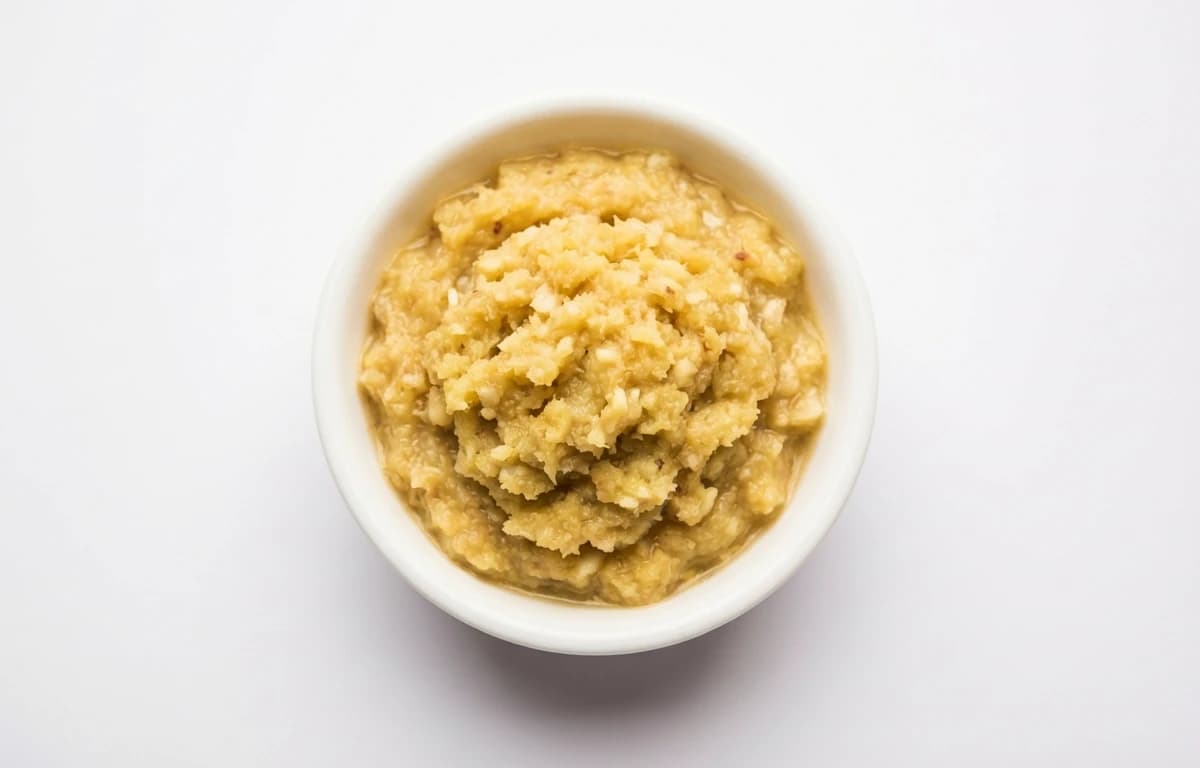
ginger garlic paste is a versatile ingredient found in cuisines around the world. With 95 calories per 100g and 3.5 grams of protein, it's a nutritious addition to many dishes.
Explore more ingredients in the vegetable category with complete nutrition information.
View all vegetable →Discover 10 recipes featuring ginger garlic paste with step-by-step instructions.
Browse recipes →Pure ginger garlic paste is naturally free from gluten, dairy, nuts, and soy. Always check labels on commercial brands for cross-contamination.