
Vegetable10 recipes
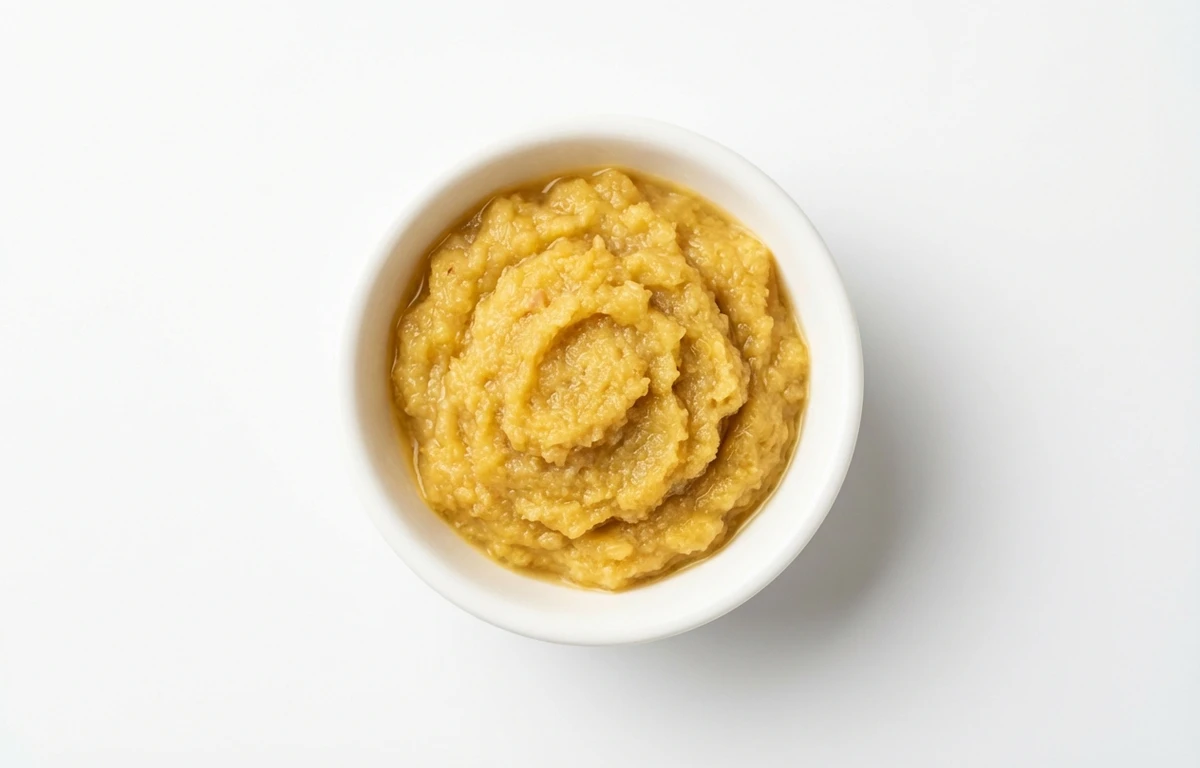
ginger paste.
VegetarianVeganGluten-freeDairy-freeNut-freePeanut-freeSoy-freeEgg-freeShellfish-freeHoney-freeAlcohol-free
ALSO KNOWN AS
adrak pasteground ginger pasteginger pureecrushed gingerginger mashginger pulp
SERVING
CALORIES
80
PROTEIN
1.8g
CARBS
17.8g
FAT
0.75g
FIBER
2.0g
NUTRITION PROFILE · per 100 g
Everything in this ingredient.
MACRONUTRIENTS
Calories80kcal—
Protein1.8g4%
Carbohydrates17.8g6%
Fiber2.0g7%
Sugar1.7g3%
Total fat0.75g1%
Saturated fat0.20g1%
Trans fat0g—
Cholesterol0mg0%
Water78.9g—
MINERALS
Sodium13mg1%
Potassium415mg9%
Calcium16mg1%
Iron0.60mg3%
Magnesium43mg10%
Phosphorus34mg3%
Zinc0.34mg3%
Copper0.23mg26%
Manganese0.23mg10%
Selenium0.70µg1%
VITAMINS
Vitamin A0µg0%
Vitamin C5.0mg6%
Vitamin D0µg0%
Vitamin E0.26mg2%
Vitamin K0.10µg0%
Thiamin (B1)0.03mg3%
Riboflavin (B2)0.03mg2%
Niacin (B3)0.75mg5%
Pantothenic acid (B5)0.20mg4%
Vitamin B60.16mg9%
Folate (B9)11µg3%
Vitamin B120µg0%
%DV based on a 2,000 cal diet. Source: USDA FoodData Central. A dash in the %DV column means there’s no established Daily Value for that nutrient.
MEASUREMENT CONVERSIONS
How much is what.
1 cup250g
1 tablespoon15g
1 teaspoon5g
1 oz28.4g
1 lb453.6g
1 ml1g
1 liter1000g
HEALTH BENEFITS
Why eat it.
- ✓Contains gingerol with powerful medicinal and anti-inflammatory properties
- ✓Highly effective against nausea and morning sickness
- ✓Helps improve digestion and reduces intestinal gas
- ✓May help lower blood sugar levels and improve heart disease risk factors
- ✓Can help reduce muscle pain and soreness
COOKING TIPS
In the kitchen.
- 1Sauté in oil at the beginning of cooking to mellow the sharp, raw bite.
- 2Add a teaspoon to marinades for meat or tofu to tenderize and add depth.
- 3Mix with honey and hot water for an instant soothing ginger tea.
STORAGE
Keep it fresh.
- Store in an airtight glass container in the refrigerator for up to 2 weeks.
- Freeze in ice cube trays for up to 6 months for convenient portioning.
- Always use a clean, dry spoon to scoop the paste to prevent bacterial growth.
FAQ
Frequently asked questions.
How long does ginger paste last in the fridge?
Homemade ginger paste typically lasts 1-2 weeks in the refrigerator when stored in an airtight container. Store-bought versions may last longer due to preservatives.
Can I freeze ginger paste?
Yes, ginger paste freezes very well. Freezing it in ice cube trays allows you to pop out exactly the amount you need for a recipe.
What is the ratio for substituting fresh ginger with paste?
Generally, 1 tablespoon of ginger paste is equivalent to about 1 inch of fresh ginger root or 1 tablespoon of freshly grated ginger.
How do I make ginger paste at home?
Peel fresh ginger root, chop it into small pieces, and blend in a food processor with a tiny amount of oil or water until smooth.
Is ginger paste as healthy as fresh ginger?
Yes, ginger paste retains most of the nutritional benefits and active compounds like gingerol found in fresh ginger root.
Why did my ginger paste turn blue or green?
This is often a natural chemical reaction between the ginger's enzymes and the acidity in the environment or trace minerals; it is usually safe to eat but may look unappealing.
Can I use ginger paste in baking?
Yes, it can be used in gingerbread, cookies, or cakes, though it provides a more intense moisture and 'zing' compared to dried ground ginger.
Does ginger paste contain salt?
Commercial ginger pastes often contain salt and oil as preservatives. Always check the label if you are monitoring sodium intake.
What can I use as a substitute for ginger paste?
You can use freshly grated ginger, finely minced ginger, or ground ginger powder (use 1/4 tsp powder for every 1 tsp of paste).
RECIPES
Cook with ginger paste.
10 recipes · sorted by what’s quick



















