
Other4 recipes
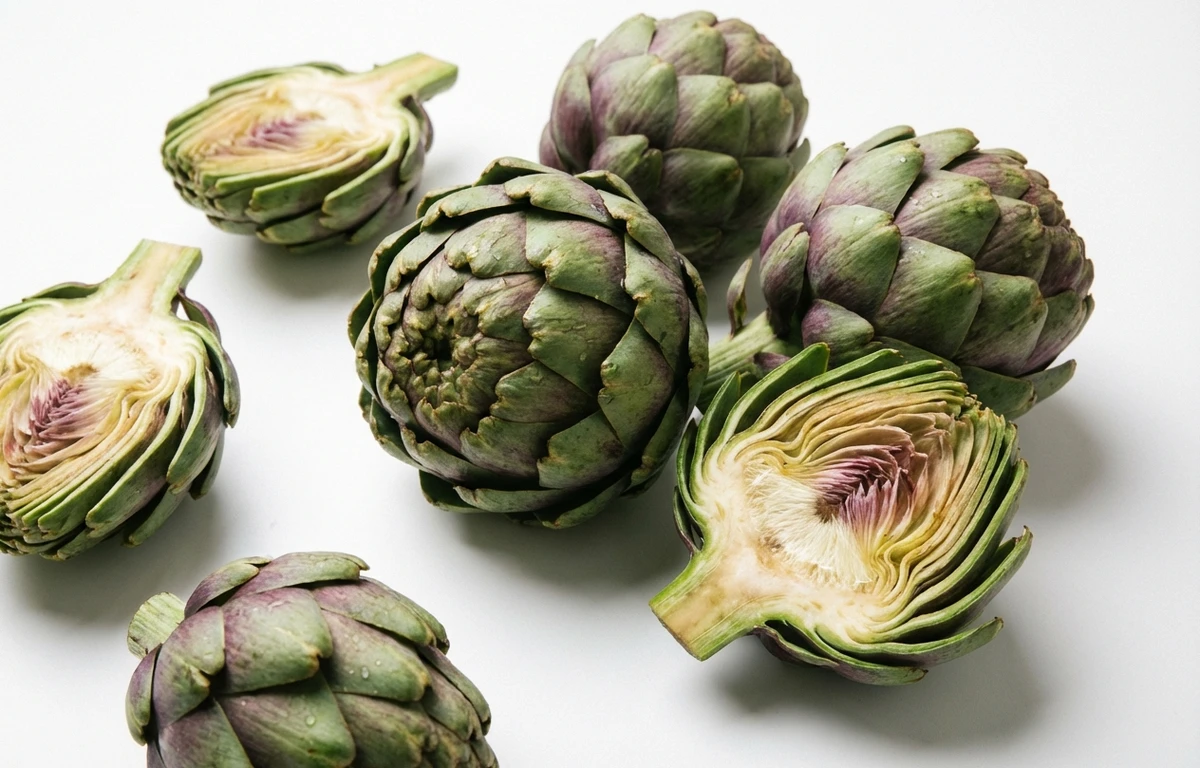
globe artichokes.
VegetarianVeganGluten-freeDairy-freeNut-freePeanut-freeSoy-freeEgg-freeShellfish-freeHoney-freeAlcohol-freeHalalKosher
ALSO KNOWN AS
french artichokegreen artichokecynara scolymuswhole artichoke
SERVING
CALORIES
47
PROTEIN
3.3g
CARBS
10.5g
FAT
0.15g
FIBER
5.4g
This ingredient is flagged as naturally gluten-free. Per 100 g, it provides 14.8 µg of vitamin K.
NUTRITION PROFILE · per 100 g
Everything in this ingredient.
MACRONUTRIENTS
Calories47kcal—
Protein3.3g7%
Carbohydrates10.5g4%
Fiber5.4g19%
Sugar0.99g2%
Total fat0.15g0%
Saturated fat0.04g0%
Trans fat0g—
Cholesterol0mg0%
Water84.9g—
MINERALS
Sodium94mg4%
Potassium370mg8%
Calcium44mg3%
Iron1.3mg7%
Magnesium60mg14%
Phosphorus90mg7%
Zinc0.49mg4%
Copper0.13mg14%
Manganese0.26mg11%
Selenium0.20µg0%
VITAMINS
Vitamin A1.0µg0%
Vitamin C11.7mg13%
Vitamin D0µg0%
Vitamin E0.19mg1%
Vitamin K14.8µg12%
Thiamin (B1)0.07mg6%
Riboflavin (B2)0.07mg5%
Niacin (B3)1.1mg7%
Pantothenic acid (B5)0.34mg7%
Vitamin B60.12mg7%
Folate (B9)68µg17%
Vitamin B120µg0%
%DV based on a 2,000 cal diet. Source: USDA FoodData Central. A dash in the %DV column means there’s no established Daily Value for that nutrient.
MEASUREMENT CONVERSIONS
How much is what.
1 cup150g
1 oz28.4g
1 lb453.6g
1 piece350g
HEALTH BENEFITS
Why eat it.
- ✓High in dietary fiber which supports digestive health
- ✓Contains cynarin which may support liver function and bile production
- ✓Good source of folate, essential for DNA synthesis and cell division
- ✓May help lower LDL cholesterol levels
COOKING TIPS
In the kitchen.
- 1Rub cut surfaces with lemon juice immediately to prevent enzymatic browning
- 2Steam whole for 25-45 minutes until a petal from the center pulls out easily
- 3Always remove the fuzzy 'choke' above the heart before eating if using large artichokes
STORAGE
Keep it fresh.
- Sprinkle with a little water and store in a sealed plastic bag in the refrigerator
- Do not wash or trim the artichoke until you are ready to cook it
- Best used within 5 to 7 days of purchase for optimal freshness
FAQ
Frequently asked questions.
How do I know if an artichoke is fresh?
Look for heavy, firm artichokes with tight, compact leaves. If you squeeze it, the leaves should make a slight squeaking sound.
Can you freeze fresh artichokes?
Yes, but they must be blanched or fully cooked first. Raw artichokes turn brown and develop an unpleasant texture in the freezer.
What part of the globe artichoke is edible?
The edible parts are the fleshy base of the outer leaves, the heart (the bottom), and the center of the stem.
What is a good substitute for fresh globe artichokes?
Canned or frozen artichoke hearts are the best substitute. For a different vegetable with a similar flavor profile, try cardoons or Jerusalem artichokes.
How do I prepare an artichoke for cooking?
Cut off the top inch of the artichoke, trim the stem, and use kitchen shears to snip off the thorny tips of the remaining leaves.
Are artichokes high in sodium?
Artichokes are naturally higher in sodium than most vegetables (about 94mg per 100g), but they are still considered a low-sodium food.
When is artichoke season?
The peak season is in the spring (March through May), with a smaller secondary crop appearing in the fall.
Why do artichokes make water taste sweet?
They contain a compound called cynarin that inhibits sweet receptors on your tongue; when you drink water, the cynarin is washed away, causing the receptors to fire and creating a sweet sensation.
RECIPES
Cook with globe artichokes.
4 recipes · sorted by what’s quick



















