
Loading...
Per 100g
Nutrition data source: USDA FoodData Central
Common measurement equivalents in grams
Gold leaf is biologically inert and offers no nutritional value. It contains 0 calories, protein, carbohydrates, or fat, passing through the digestive system without being absorbed. Its use is purely for aesthetic enhancement.
Modern scientific evidence does not support any health benefits from consuming gold leaf. While historically used in some traditional medicine systems, it is nutritionally neutral and primarily serves as a decorative element in food, offering no physiological advantage.
Yes, food-grade gold leaf (often labeled as E175) is considered safe for consumption. It is non-toxic and passes through the digestive system without being absorbed or causing harm. Always ensure the product is specifically marked for culinary use.
Yes, gold leaf is inherently vegan as it is a pure metal product, not derived from animals. It is also naturally gluten-free, making it suitable for individuals with celiac disease or gluten sensitivities.
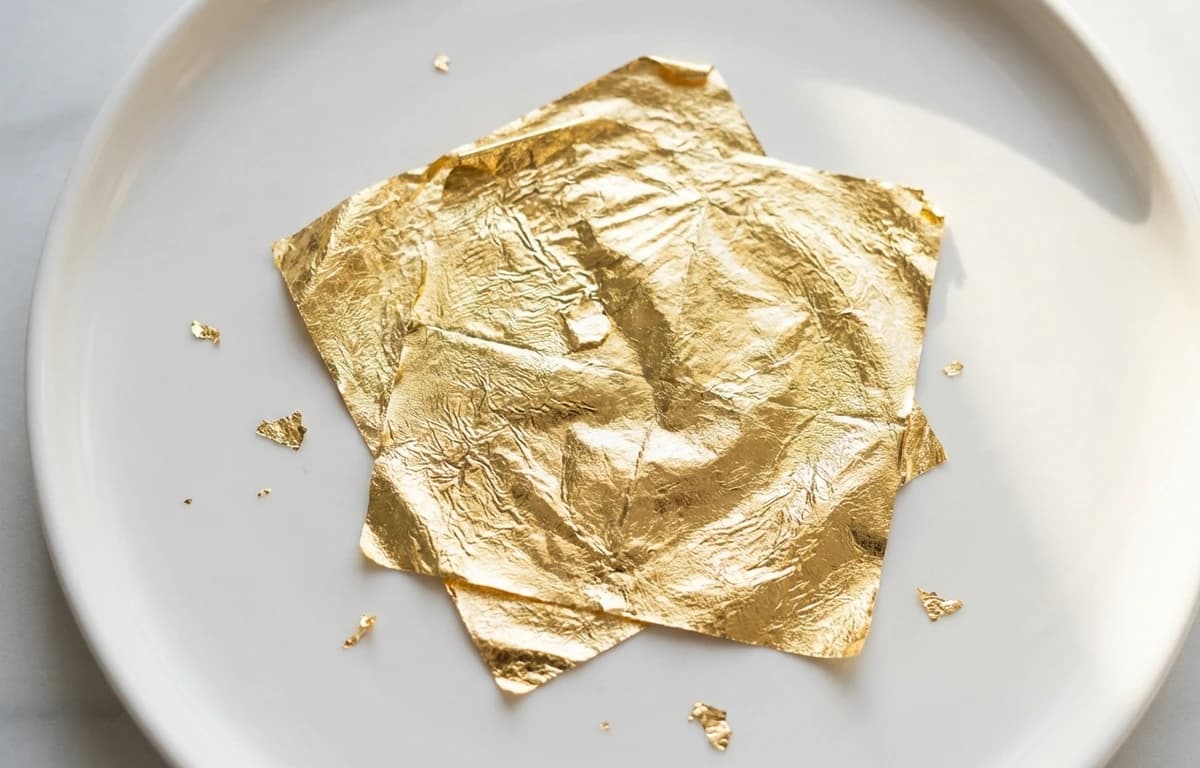
Gold leaf is used exclusively for decorative purposes to add a luxurious touch to culinary creations. It's commonly applied to desserts, chocolates, cakes, pastries, beverages, and even some savory dishes for visual appeal.
Gold leaf is completely tasteless and odorless. Its sole purpose in food is visual, providing a shimmering, opulent finish without altering the flavor or texture of the dish it adorns.
Gold leaf is extremely delicate and should be stored in its original packaging, in a cool, dry place away from direct sunlight, humidity, and drafts. Keep it sealed to prevent damage and contamination.
gold leaf (varq) is a versatile ingredient found in cuisines around the world. With its calories per 100g and valuable grams of protein, it's a nutritious addition to many dishes.
Explore more ingredients in the garnish category with complete nutrition information.
View all garnish →Discover 1 recipes featuring gold leaf (varq) with step-by-step instructions.
Browse recipes →Yes, gold leaf is suitable for diabetics and those on a keto diet. Since it contains no calories, carbohydrates, sugars, or fats, it will not impact blood sugar levels or carbohydrate intake, making it a neutral decorative addition.
Edible gold leaf is pure gold (typically 22-24 karats) and is certified food-grade (E175), meaning it's safe for consumption. Non-edible gold leaf may contain other metals or impurities and is intended only for artistic or decorative crafts, not food.
As a pure metal, gold leaf itself does not expire or spoil in the traditional sense. However, if exposed to air, moisture, or mishandling, it can become brittle, crumble, or lose its pristine appearance, making it difficult to use for decoration.