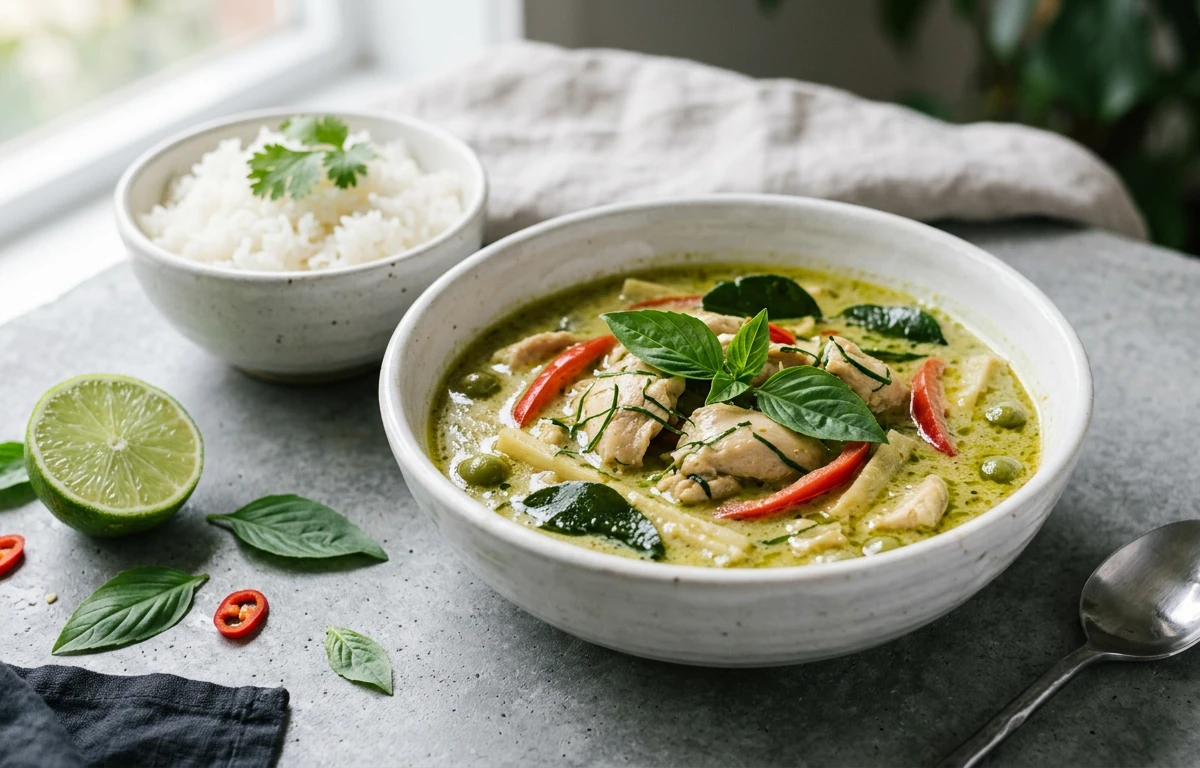
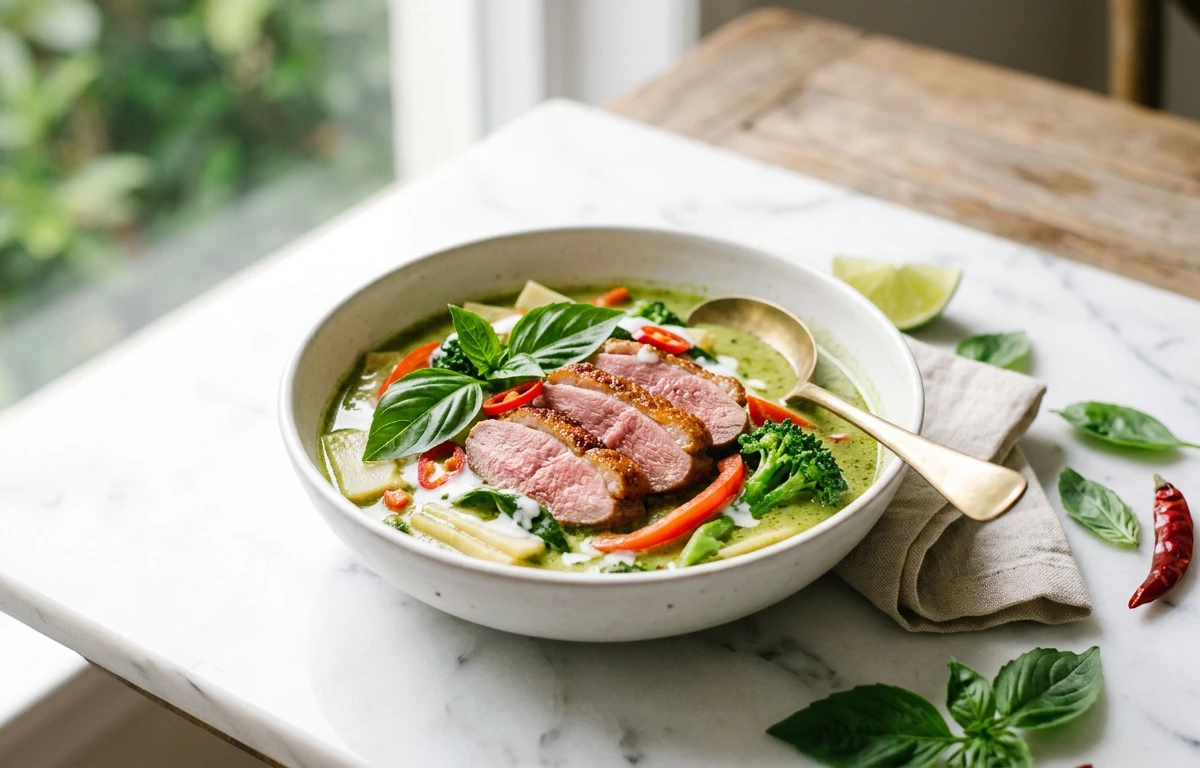
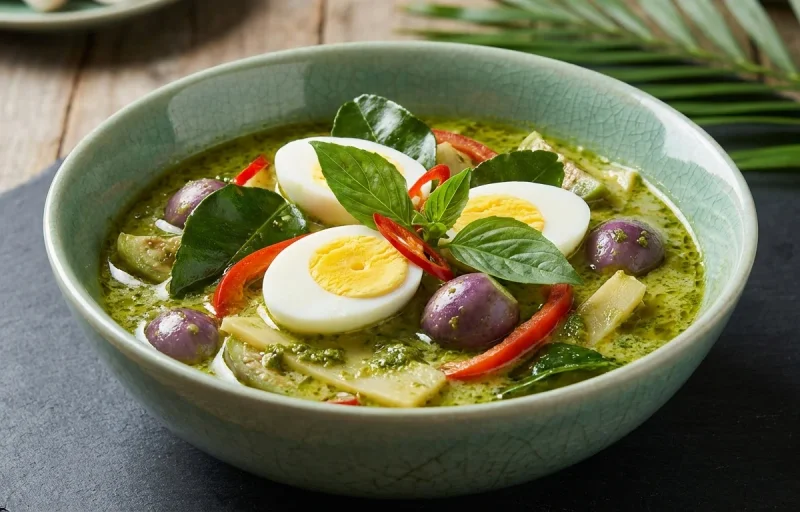
Other5 recipes
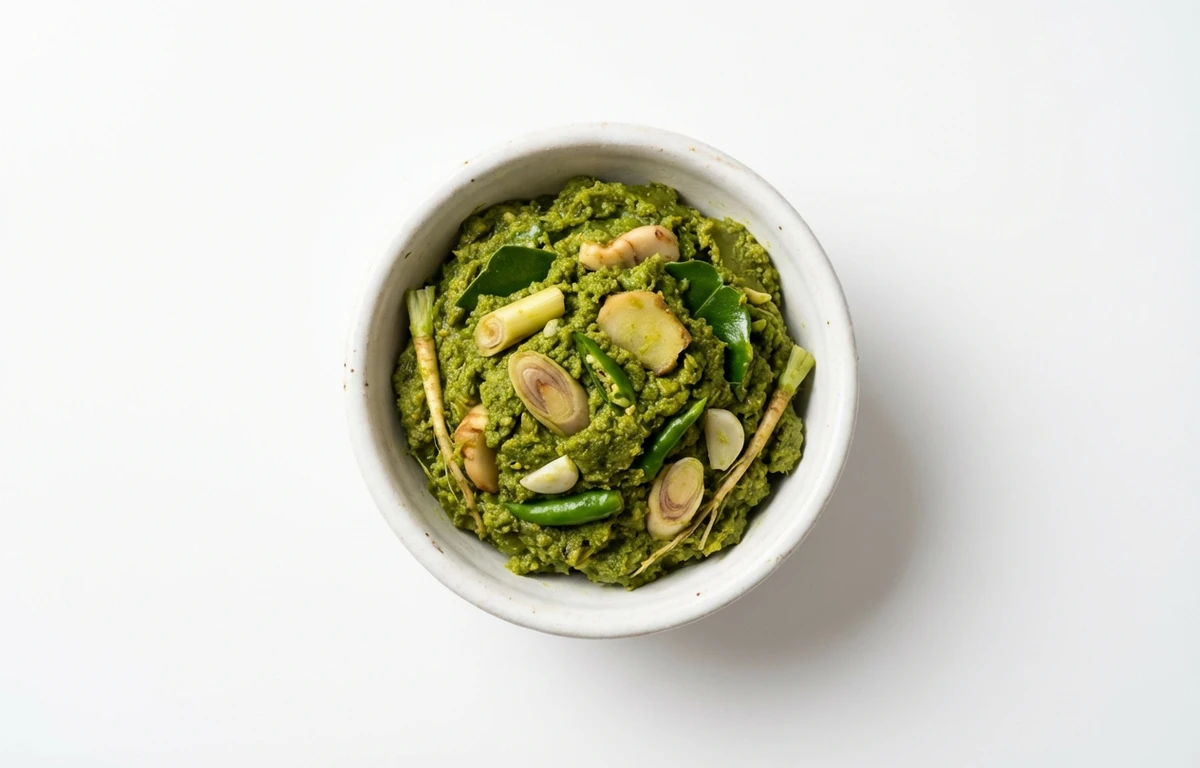
green curry paste.
VegetarianVeganGluten-freeDairy-freeNut-freePeanut-freeSoy-freeEgg-freeShellfish-freeHoney-freeAlcohol-freeFermented
ALSO KNOWN AS
Thai green curry pastekreung gaeng keow wahn
SERVING
CALORIES
135
PROTEIN
4.2g
CARBS
14.5g
FAT
7.1g
FIBER
6.0g
This ingredient is flagged as naturally gluten-free. Per 100 g, it provides 10 µg of vitamin K.
NUTRITION PROFILE · per 100 g
Everything in this ingredient.
MACRONUTRIENTS
Calories135kcal—
Protein4.2g8%
Carbohydrates14.5g5%
Fiber6.0g21%
Sugar3.5g7%
Total fat7.1g9%
Saturated fat1.2g6%
Trans fat0g—
Cholesterol5.0mg2%
Water65g—
MINERALS
Sodium4200mg183%
Potassium450mg10%
Calcium120mg9%
Iron3.5mg19%
Magnesium45mg11%
Phosphorus80mg6%
Zinc0.80mg7%
Copper0.20mg22%
Manganese0.50mg22%
Selenium2.0µg4%
VITAMINS
Vitamin A150µg17%
Vitamin C12mg13%
Vitamin D0µg0%
Vitamin E1.5mg10%
Vitamin K10µg8%
Thiamin (B1)0.10mg8%
Riboflavin (B2)0.10mg8%
Niacin (B3)1.5mg9%
Pantothenic acid (B5)0.40mg8%
Vitamin B60.30mg18%
Folate (B9)25µg6%
Vitamin B120.10µg4%
%DV based on a 2,000 cal diet. Source: USDA FoodData Central. A dash in the %DV column means there’s no established Daily Value for that nutrient.
MEASUREMENT CONVERSIONS
How much is what.
1 cup260g
1 tablespoon18g
1 teaspoon6g
1 oz28.4g
1 lb453.6g
1 ml1.1g
1 liter1080g
HEALTH BENEFITS
Why eat it.
- ✓Lemongrass and coriander seeds aid in healthy digestion
- ✓Capsaicin from chilies may help boost metabolic rate
COOKING TIPS
In the kitchen.
- 1Fry the paste in oil or thick coconut cream first to release aromatic oils
- 2Add the paste gradually to control the heat level of the dish
- 3Balance the intense flavors with palm sugar and lime juice at the end of cooking
STORAGE
Keep it fresh.
- Store in an airtight container in the refrigerator for up to 3 months
- Freeze in ice cube trays for convenient portions for up to 6 months
- Keep the surface covered with a thin layer of oil to prevent oxidation and drying
FAQ
Frequently asked questions.
Is green curry paste vegetarian?
Traditional Thai green curry paste is not vegetarian as it typically contains shrimp paste (kapi). Look for 'vegan' labeled versions that use fermented soybean paste instead.
How long does green curry paste last in the fridge?
Once opened, a commercial jar usually lasts 3-6 months if kept refrigerated and handled with clean utensils.
Can I freeze green curry paste?
Yes, it freezes very well. Portioning it into ice cube trays allows you to use exactly what you need for a single meal.
What is a good substitute for green curry paste?
Red curry paste is the closest substitute, though it is spicier and less herbal. You can also use a mix of green chilies, lemongrass, and ginger in a pinch.
Why is my green curry not green enough?
Commercial pastes often lose color. Adding fresh Thai basil or pureed spinach/coriander at the end of cooking can restore the vibrant green hue.
How do I reduce the spiciness of a dish made with this paste?
Increase the amount of coconut milk or add a little more sugar and lime juice to balance the heat.
Does green curry paste contain gluten?
Most authentic green curry pastes are naturally gluten-free, but always check the label for thickeners or soy sauce additives in processed brands.
What makes green curry different from red curry?
Green curry uses fresh green chilies and more fresh herbs like coriander and basil, making it more aromatic and herbal compared to the dried red chili base of red curry.
How much paste should I use per serving?
Generally, 1 to 2 tablespoons of paste per 400ml can of coconut milk is standard, depending on your heat tolerance.
RECIPES
Cook with green curry paste.
5 recipes · sorted by what’s quick