
Grain
hard red winter wheat.
VegetarianVeganGluten-freeDairy-freeNut-freePeanut-freeSoy-freeEgg-freeShellfish-freeHoney-freeAlcohol-freeWhole grain
ALSO KNOWN AS
winter wheat
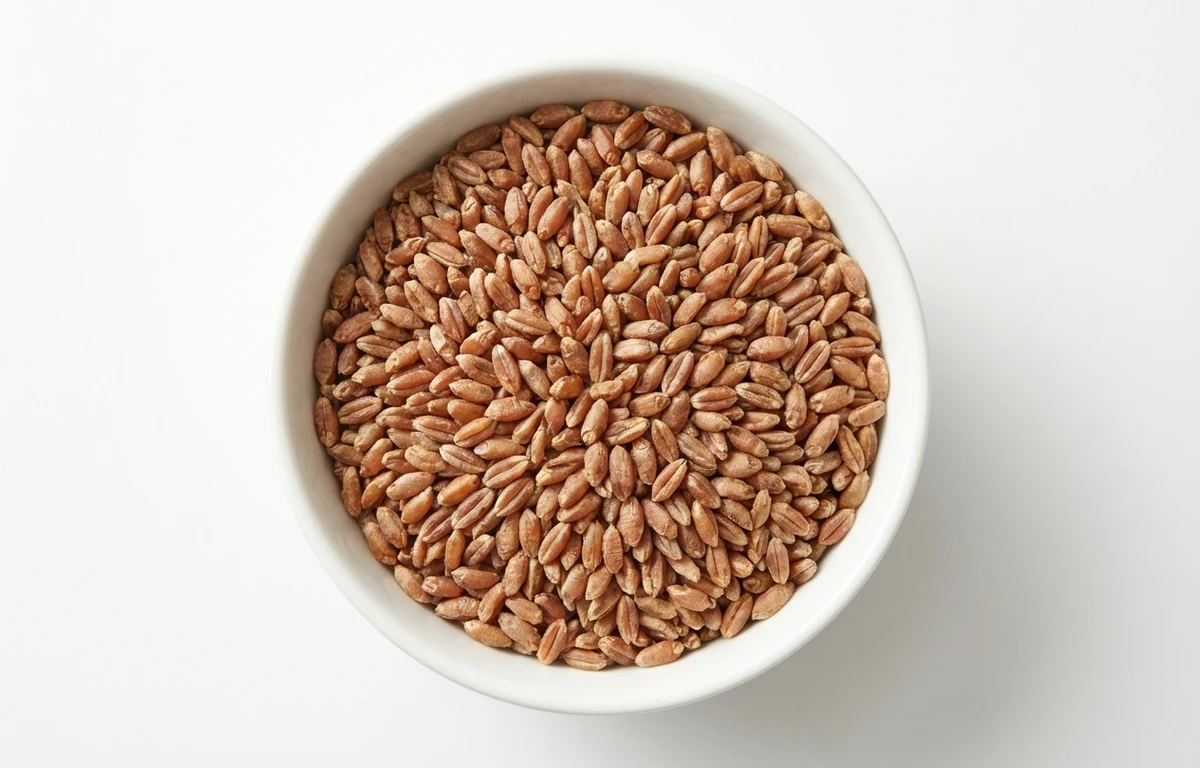
SERVING
CALORIES
327
PROTEIN
12.6g
CARBS
71.2g
FAT
1.5g
FIBER
12.2g
NUTRITION PROFILE · per 100 g
Everything in this ingredient.
MACRONUTRIENTS
Calories327kcal—
Protein12.6g25%
Carbohydrates71.2g26%
Fiber12.2g44%
Sugar0.41g1%
Total fat1.5g2%
Saturated fat0.27g1%
Cholesterol0mg0%
Water13.1g—
MINERALS
Sodium2.0mg0%
Potassium363mg8%
Calcium29mg2%
Iron3.2mg18%
Magnesium126mg30%
Phosphorus288mg23%
Zinc2.6mg24%
Copper0.43mg48%
Manganese4.0mg173%
Selenium70.7µg129%
VITAMINS
Vitamin A0µg0%
Vitamin C0mg0%
Vitamin D0µg0%
Vitamin E1.0mg7%
Vitamin K1.9µg2%
Thiamin (B1)0.38mg32%
Riboflavin (B2)0.12mg9%
Niacin (B3)5.5mg34%
Pantothenic acid (B5)0.95mg19%
Vitamin B60.30mg18%
Folate (B9)38µg10%
Vitamin B120µg0%
%DV based on a 2,000 cal diet. Source: USDA FoodData Central. A dash in the %DV column means there’s no established Daily Value for that nutrient.
MEASUREMENT CONVERSIONS
How much is what.
1 cup192g
1 tablespoon12g
1 teaspoon4g
1 ml0.8g
1 liter800g
HEALTH BENEFITS
Why eat it.
- ✓Rich in dietary fiber, which aids in digestion, promotes satiety, and helps regulate blood sugar levels.
- ✓Excellent source of essential minerals such as manganese, selenium, and phosphorus, supporting bone health, antioxidant defense, and energy metabolism.
- ✓Provides complex carbohydrates for sustained energy release, making it a beneficial component of a balanced diet for athletes and active individuals.
- ✓The bran and germ contain beneficial plant compounds like lignans and phenolic acids, which have antioxidant properties.
COOKING TIPS
In the kitchen.
- 1To reduce cooking time, soak wheat berries in water for several hours or overnight before simmering.
- 2Cook wheat berries using a ratio of approximately 1 part grain to 3 parts liquid (water or broth) for about 45-60 minutes, or until tender and chewy.
- 3Use cooked wheat berries as a base for grain salads, add them to soups and stews for texture, or serve as a side dish similar to rice.
- 4Grind the berries into flour at home; its high protein and gluten content make it ideal for baking yeast breads with a strong structure and robust flavor.
STORAGE
Keep it fresh.
- Store whole wheat berries in an airtight container in a cool, dark, and dry place like a pantry for up to 6 months.
- For long-term storage (over a year), place the airtight container in a freezer to prevent the natural oils in the germ from going rancid and to protect against pests.
FAQ
Frequently asked questions.
Is hard red winter wheat healthy?
Yes, hard red winter wheat is very healthy as a whole grain. It is rich in dietary fiber, essential minerals like manganese, selenium, and phosphorus, and provides complex carbohydrates. These nutrients support digestion, sustained energy, and overall well-being.
What are the nutritional benefits of hard red winter wheat?
Hard red winter wheat is an excellent source of dietary fiber, which aids digestion, promotes satiety, and helps regulate blood sugar. It also provides essential minerals such as manganese, selenium, and phosphorus, crucial for bone health, antioxidant defense, and energy metabolism. Its complex carbohydrates offer sustained energy release.
How much protein, calories, and carbohydrates are in hard red winter wheat?
Per 100g, hard red winter wheat contains approximately 327 calories, 12.61g of protein, and 71.18g of carbohydrates. It also has a low fat content of about 1.54g, making it a nutrient-dense grain.
Is hard red winter wheat gluten-free?
No, hard red winter wheat is not gluten-free. As a type of wheat, it naturally contains gluten, which is responsible for its dough-forming properties. Individuals with celiac disease or gluten sensitivity should avoid it.
Is hard red winter wheat suitable for diabetics?
Due to its high fiber content and complex carbohydrates, hard red winter wheat can be a good choice for diabetics when consumed in moderation as part of a balanced diet. The fiber helps regulate blood sugar levels and promotes satiety, but portion control is important due to its carbohydrate content.
Is hard red winter wheat keto-friendly?
No, hard red winter wheat is not keto-friendly. With over 70g of carbohydrates per 100g, it is far too high in carbs to fit into a ketogenic diet, which typically restricts daily carbohydrate intake to 20-50g.
What is hard red winter wheat used for?
Hard red winter wheat is primarily used for making bread flours, especially for yeast breads, rolls, and flatbreads, due to its high protein content and strong gluten structure. It can also be used for general-purpose flour blends and some pasta.
How do you cook whole hard red winter wheat berries?
To cook whole wheat berries, rinse them thoroughly, then combine one part wheat berries with three parts water or broth in a pot. Bring to a boil, then reduce heat, cover, and simmer for 60-90 minutes until tender but still chewy. Drain any excess liquid and serve.
How should I store hard red winter wheat?
Whole hard red winter wheat berries should be stored in an airtight container in a cool, dark, and dry place to prevent spoilage and insect infestation. Properly stored, they can last for several years. Flour made from it has a shorter shelf life and is best kept in the refrigerator or freezer.
What is the difference between hard red winter wheat and other wheat types?
Hard red winter wheat is characterized by its high protein content and strong gluten, making it ideal for bread making. 'Hard' refers to its protein content, 'red' to its bran color, and 'winter' means it's planted in the fall and harvested in the summer. Other types like soft wheat have lower protein and are better for pastries.



















