
Grain
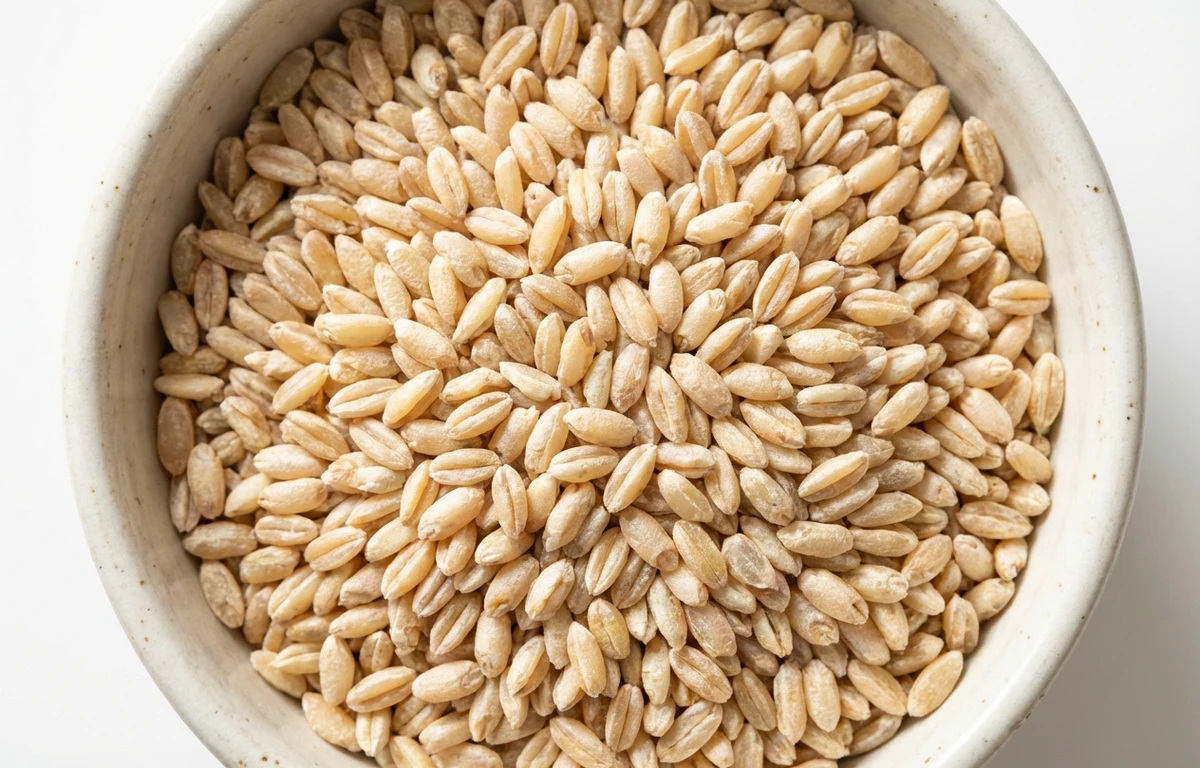
hard white wheat.
VegetarianVeganGluten-freeDairy-freeNut-freePeanut-freeSoy-freeEgg-freeShellfish-freeHoney-freeAlcohol-freeWhole grain
SERVING
CALORIES
342
PROTEIN
11.3g
CARBS
75.9g
FAT
1.7g
FIBER
12.2g
NUTRITION PROFILE · per 100 g
Everything in this ingredient.
MACRONUTRIENTS
Calories342kcal—
Protein11.3g23%
Carbohydrates75.9g28%
Fiber12.2g44%
Sugar0.41g1%
Total fat1.7g2%
Saturated fat0.28g1%
Cholesterol0mg0%
Water9.6g—
MINERALS
Sodium2.0mg0%
Potassium432mg9%
Calcium32mg2%
Iron4.6mg25%
Magnesium93mg22%
Phosphorus355mg28%
Zinc3.3mg30%
Copper0.36mg40%
Manganese3.8mg166%
VITAMINS
Vitamin A0µg0%
Vitamin C0mg0%
Vitamin D0µg0%
Vitamin E1.0mg7%
Vitamin K1.9µg2%
Thiamin (B1)0.39mg33%
Riboflavin (B2)0.11mg8%
Niacin (B3)4.4mg27%
Pantothenic acid (B5)0.95mg19%
Vitamin B60.37mg22%
Folate (B9)38µg10%
Vitamin B120µg0%
%DV based on a 2,000 cal diet. Source: USDA FoodData Central. A dash in the %DV column means there’s no established Daily Value for that nutrient.
MEASUREMENT CONVERSIONS
How much is what.
1 cup192g
1 tablespoon12g
1 teaspoon4g
1 ml0.8g
1 liter800g
HEALTH BENEFITS
Why eat it.
- ✓High in dietary fiber, which supports digestive health, promotes satiety, and helps maintain regular bowel movements.
- ✓Good source of essential minerals like manganese, selenium, and phosphorus, which are vital for bone health, antioxidant defense, and energy metabolism.
- ✓Whole grain consumption is associated with a reduced risk of chronic diseases, including heart disease and type 2 diabetes.
- ✓Provides B vitamins, such as niacin and thiamin, which are crucial for converting food into energy.
COOKING TIPS
In the kitchen.
- 1To reduce cooking time, soak the wheat berries in water for several hours or overnight before cooking.
- 2Simmer 1 part wheat berries in 3 parts water or broth for 45-60 minutes, or until tender and chewy. They can also be cooked in a pressure cooker or slow cooker.
- 3Use cooked wheat berries as a base for grain salads, add them to soups and stews for texture, or serve as a side dish instead of rice.
- 4Grind fresh into whole wheat flour for baking. Hard white wheat flour has a milder flavor and lighter color than traditional red wheat flour, making it ideal for breads, rolls, and pastries.
STORAGE
Keep it fresh.
- Store whole wheat berries in a sealed, airtight container in a cool, dark, and dry place like a pantry for up to 6 months.
- For long-term storage (over a year), place the airtight container in the freezer to protect the natural oils in the germ from becoming rancid.
FAQ
Frequently asked questions.
Is hard white wheat healthy?
Yes, hard white wheat is very healthy as a whole grain. It's rich in dietary fiber, which aids digestion and promotes satiety, and provides essential minerals like manganese, selenium, and phosphorus. Regular consumption of whole grains like hard white wheat is linked to a reduced risk of chronic diseases such as heart disease and type 2 diabetes.
How much protein, calories, and carbs are in hard white wheat?
Per 100 grams, hard white wheat contains approximately 342 calories, 11.31 grams of protein, and 75.9 grams of carbohydrates. It also provides 1.71 grams of fat, making it a nutrient-dense source of energy and plant-based protein.
Is hard white wheat good for weight loss?
Yes, hard white wheat can be beneficial for weight loss due to its high fiber content. Fiber helps you feel full longer, reducing overall calorie intake. As a whole grain, it also provides sustained energy, which can help manage cravings and support an active lifestyle.
Is hard white wheat gluten-free?
No, hard white wheat is not gluten-free. As a type of wheat, it naturally contains gluten, which is a protein composite found in wheat and related grains. Individuals with celiac disease or gluten sensitivity should avoid hard white wheat.
Can diabetics eat hard white wheat?
Yes, diabetics can generally eat hard white wheat in moderation as part of a balanced diet. As a whole grain, its high fiber content helps slow down sugar absorption, leading to a more gradual rise in blood glucose compared to refined grains. Portion control is still important.
What is hard white wheat used for?
Hard white wheat is primarily used for making whole wheat flour, which is excellent for baking. It's often preferred for lighter-colored whole wheat breads, rolls, tortillas, and pastries because it has a milder flavor and lighter color than hard red wheat. The berries can also be cooked and added to salads or pilafs.
How does hard white wheat differ from hard red wheat?
Hard white wheat differs from hard red wheat primarily in its color and flavor profile. Hard white wheat has a lighter, tan-colored bran and a milder, sweeter flavor, making it less bitter than hard red wheat. Both are 'hard' wheats, meaning they have a high protein content suitable for yeast breads.
How should I store hard white wheat berries or flour?
Whole hard white wheat berries should be stored in an airtight container in a cool, dark, dry place to prevent spoilage and insect infestation; they can last for several years. Hard white whole wheat flour should also be stored in an airtight container, preferably in the refrigerator or freezer, to extend its shelf life and prevent rancidity due to its natural oils.
What does 'hard white wheat' mean?
'Hard' refers to the wheat's high protein content, which is ideal for baking strong, elastic doughs like those used in bread. 'White' indicates the color of the wheat kernel's bran, which is lighter in color and has a milder flavor compared to 'red' wheat varieties.
Is hard white wheat a whole grain?
Yes, hard white wheat is a whole grain when consumed as the intact kernel (wheat berry) or when milled into whole wheat flour. This means it contains all three parts of the grain: the bran, germ, and endosperm, retaining its full nutritional value.



















