
Spice
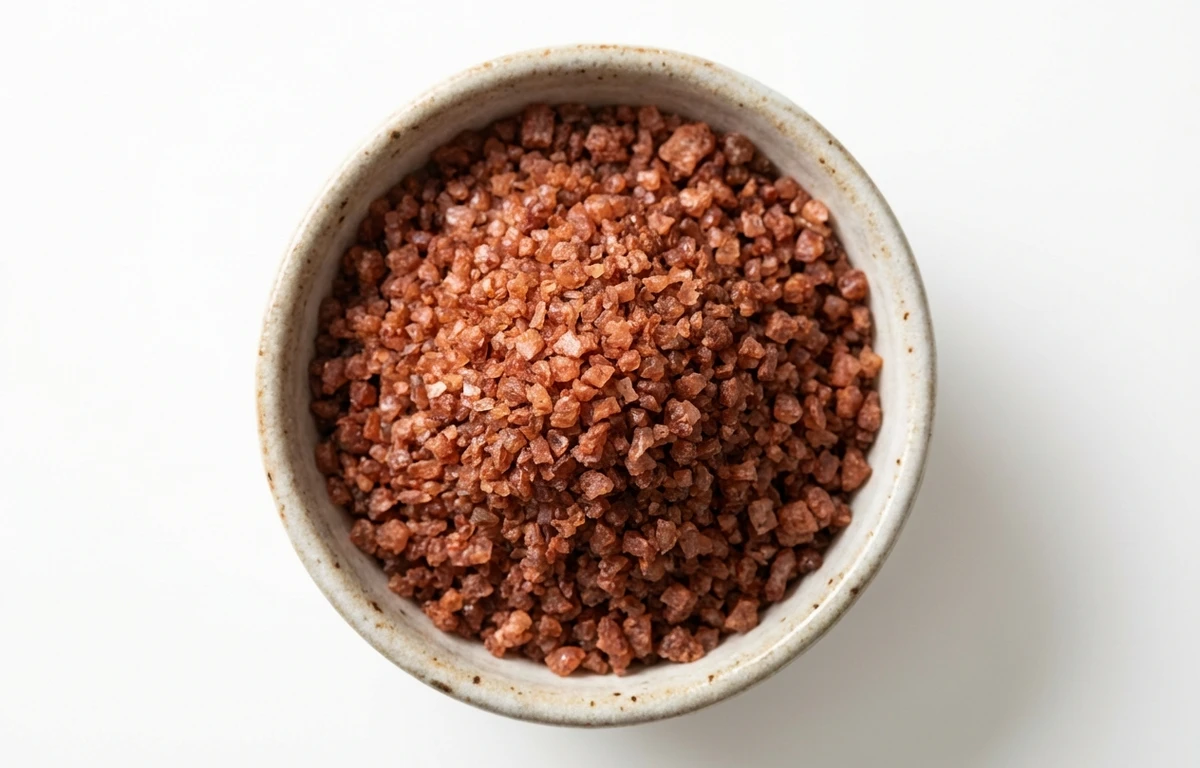
hawaiian red alaea salt.
VegetarianVeganGluten-freeDairy-freeNut-freePeanut-freeSoy-freeEgg-freeShellfish-freeHoney-freeAlcohol-free
ALSO KNOWN AS
alaea saltred alaea salthawaiian red clay salt
SERVING
CALORIES
0
PROTEIN
0g
CARBS
0g
FAT
0g
FIBER
0g
NUTRITION PROFILE · per 100 g
Everything in this ingredient.
MACRONUTRIENTS
Calories0kcal—
Protein0g0%
Carbohydrates0g0%
Fiber0g0%
Sugar0g0%
Total fat0g0%
Saturated fat0g0%
Trans fat0g—
Cholesterol0mg0%
Water0.20g—
MINERALS
Sodium38000mg1652%
Potassium5.0mg0%
Calcium25mg2%
Iron8.5mg47%
Magnesium2.0mg0%
Zinc0.10mg1%
VITAMINS
Vitamin A0µg0%
Vitamin C0mg0%
Vitamin D0µg0%
Vitamin E0mg0%
Vitamin K0µg0%
Thiamin (B1)0mg0%
Riboflavin (B2)0mg0%
Niacin (B3)0mg0%
Pantothenic acid (B5)0mg0%
Vitamin B60mg0%
Folate (B9)0µg0%
Vitamin B120µg0%
%DV based on a 2,000 cal diet. Source: USDA FoodData Central. A dash in the %DV column means there’s no established Daily Value for that nutrient.
MEASUREMENT CONVERSIONS
How much is what.
1 cup288g
1 tablespoon18g
1 teaspoon6g
1 ml1.2g
1 liter1200g
HEALTH BENEFITS
Why eat it.
- ✓Provides trace minerals like iron oxide, potassium, and magnesium not found in refined table salt.
- ✓Being unrefined, it avoids the anti-caking agents and additives often found in common table salt.
- ✓Its mellow flavor and larger crystal size can lead to using less salt by volume, potentially aiding in sodium moderation.
COOKING TIPS
In the kitchen.
- 1Use as a finishing salt on grilled meats, roasted vegetables, and seafood to add a crunchy texture and earthy flavor.
- 2Incorporate into traditional Hawaiian dishes like Kalua pig, poke, and lomi-lomi salmon for authentic taste.
- 3Its striking red color makes it an excellent garnish for adding visual appeal to dishes, including salads and even chocolate desserts.
- 4Avoid using in clear broths or brines if clarity is desired, as the red clay can make the liquid cloudy.
STORAGE
Keep it fresh.
- Store in an airtight container in a cool, dry place to prevent clumping from moisture absorption.
- Keep away from direct sunlight to preserve its natural color and mineral integrity.
FAQ
Frequently asked questions.
Is Hawaiian Red Alaea Salt healthy?
Yes, it's considered a healthier alternative to highly refined table salt due to its natural, unrefined state. It contains trace minerals like iron oxide, potassium, and magnesium, which are often stripped from processed salts. However, like all salts, it should be consumed in moderation due to its sodium content.
What are the unique health benefits of Hawaiian Red Alaea Salt compared to regular table salt?
Its primary benefit comes from the alaea clay, which infuses it with trace minerals, particularly iron oxide, giving it its red hue. Unlike many refined table salts, it's free from anti-caking agents and other additives. Some believe its mellow flavor encourages using less, potentially aiding in sodium moderation.
How much sodium is in Hawaiian Red Alaea Salt?
Hawaiian Red Alaea Salt is primarily sodium chloride, so its sodium content is comparable to other salts, roughly 38-40% sodium by weight. While its larger crystal size and distinct flavor might lead some to use less by volume, the sodium content per gram remains similar to other sea salts.
Is Hawaiian Red Alaea Salt suitable for vegan or gluten-free diets?
Yes, Hawaiian Red Alaea Salt is naturally vegan and gluten-free. It is simply sea salt blended with volcanic alaea clay, containing no animal products or gluten-containing ingredients. It's a pure mineral product.
What does Hawaiian Red Alaea Salt taste like and how should it be used in cooking?
It has a distinctive, mellow, slightly earthy, and subtly sweet flavor, less sharp than regular table salt. It's traditionally used in Hawaiian cuisine for dishes like kalua pig, poke, and jerky. It also works wonderfully as a finishing salt for grilled meats, seafood, and roasted vegetables, adding both flavor and visual appeal.
What gives Hawaiian Red Alaea Salt its distinctive red color?
The red color comes from the addition of purified volcanic alaea clay, which is rich in iron oxide. This clay is naturally occurring in Hawaii and is traditionally mixed with the sea salt during its production, imparting both color and trace minerals.
Can Hawaiian Red Alaea Salt be used as a direct substitute for regular table salt?
Yes, it can be used as a substitute, but be mindful of its unique flavor and larger crystal size. For general cooking, you might need to adjust the quantity slightly if measuring by volume, as larger crystals take up more space. It truly shines as a finishing salt where its flavor and texture can be appreciated.
How should Hawaiian Red Alaea Salt be stored to maintain its quality?
Like other salts, Hawaiian Red Alaea Salt should be stored in an airtight container in a cool, dry place away from direct sunlight and humidity. This prevents clumping and helps preserve its unique flavor and texture.
Is Hawaiian Red Alaea Salt iodized?
No, Hawaiian Red Alaea Salt is typically not iodized. It is an unrefined, natural sea salt product, and iodine is usually added to common table salt as a public health measure. If you require iodine in your diet, you should not rely on this salt as a primary source.
Is Hawaiian Red Alaea Salt keto-friendly?
Yes, Hawaiian Red Alaea Salt is entirely keto-friendly. As a pure salt, it contains zero carbohydrates, calories, or fats, making it a perfect seasoning for those following a ketogenic diet. It can also help replenish electrolytes.



















