
Spice
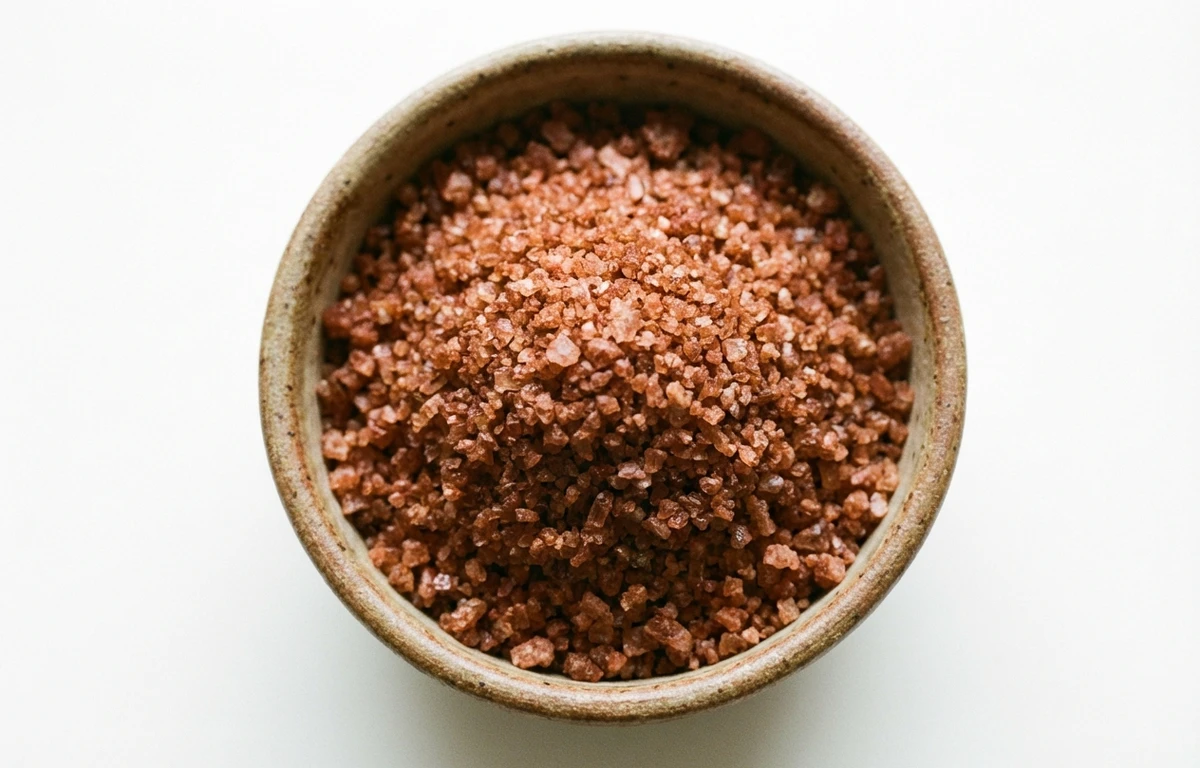
hawaiian red sea salt.
VegetarianVeganGluten-freeDairy-freeNut-freePeanut-freeSoy-freeEgg-freeShellfish-freeHoney-freeAlcohol-free
ALSO KNOWN AS
alaea saltred alaea salthawaiian red saltalae salt
SERVING
CALORIES
0
PROTEIN
0g
CARBS
0g
FAT
0g
FIBER
0g
NUTRITION PROFILE · per 100 g
Everything in this ingredient.
MACRONUTRIENTS
Calories0kcal—
Protein0g0%
Carbohydrates0g0%
Fiber0g0%
Sugar0g0%
Total fat0g0%
Saturated fat0g0%
Trans fat0g—
Cholesterol0mg0%
Water0.20g—
MINERALS
Sodium38000mg1652%
Potassium120mg3%
Calcium80mg6%
Iron20mg111%
Magnesium50mg12%
Zinc0.10mg1%
Copper0.05mg6%
Manganese0.10mg4%
Selenium0.10µg0%
VITAMINS
Vitamin A0µg0%
Vitamin C0mg0%
Vitamin D0µg0%
Vitamin E0mg0%
Vitamin K0µg0%
Thiamin (B1)0mg0%
Riboflavin (B2)0mg0%
Niacin (B3)0mg0%
Pantothenic acid (B5)0mg0%
Vitamin B60mg0%
Folate (B9)0µg0%
Vitamin B120µg0%
%DV based on a 2,000 cal diet. Source: USDA FoodData Central. A dash in the %DV column means there’s no established Daily Value for that nutrient.
MEASUREMENT CONVERSIONS
How much is what.
1 cup290g
1 tablespoon18g
1 teaspoon6g
1 oz28.4g
1 lb453.6g
1 ml1.2g
1 liter1200g
HEALTH BENEFITS
Why eat it.
- ✓Contains trace minerals like iron oxide from volcanic clay
- ✓Lower sodium content by volume compared to table salt
- ✓Helps maintain electrolyte balance
- ✓Natural source of iron which supports blood health
- ✓Free from artificial anti-caking agents
COOKING TIPS
In the kitchen.
- 1Use as a finishing salt to preserve its unique red color and crunchy texture
- 2Essential for traditional Hawaiian dishes like Kalua Pig and Poke
- 3Rub on meats before roasting to create a flavorful, mineral-rich crust
STORAGE
Keep it fresh.
- Store in an airtight container to prevent moisture absorption
- Keep in a cool, dry place away from direct sunlight
- Avoid using metal containers for long-term storage to prevent corrosion
FAQ
Frequently asked questions.
What gives Hawaiian red sea salt its color?
The red color comes from Alaea, a natural volcanic clay found in Hawaii that is rich in iron oxide.
How long does Hawaiian red sea salt last?
Salt is a natural preservative and has an indefinite shelf life if kept dry and free from contaminants.
Can I use Hawaiian red salt in place of table salt?
Yes, but it has a coarser texture and a more earthy flavor. Use slightly less by volume as the crystals are larger.
Is Hawaiian red salt healthier than regular salt?
It contains more trace minerals and slightly less sodium chloride per gram, but it should still be consumed in moderation.
What is the best substitute for Hawaiian red sea salt?
Himalayan pink salt is the closest substitute in terms of mineral content and aesthetic, though the flavor profile differs slightly.
Does it contain iodine?
Unlike fortified table salt, natural sea salts like Alaea salt typically do not contain added iodine.
Can it be used in a salt grinder?
Yes, if you purchase the coarse grain variety, it works well in ceramic or plastic grinders.
Is it suitable for a low-sodium diet?
While it has slightly less sodium than table salt, it is still primarily sodium chloride and should be limited on low-sodium diets.
How do I identify high-quality Alaea salt?
Look for a deep, consistent brick-red color and ensure it is sourced from reputable Hawaiian producers.



















