
Vegetable
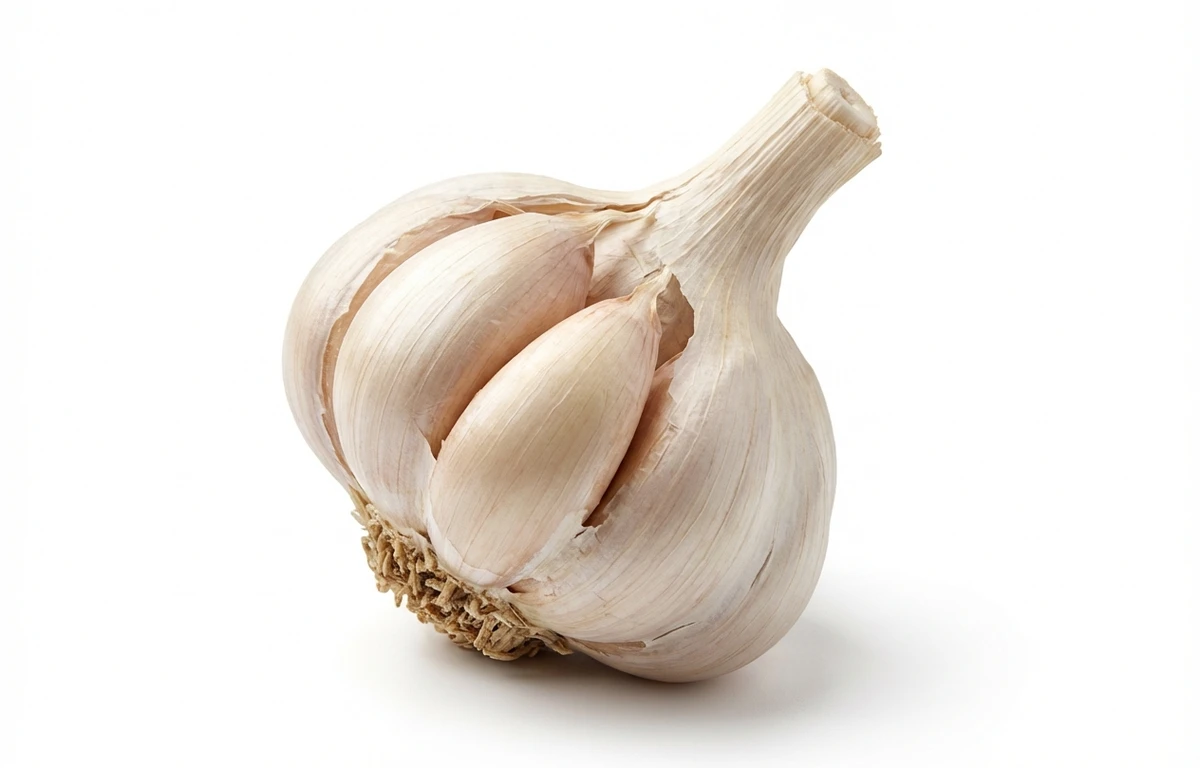
head of garlic.
VegetarianVeganGluten-freeDairy-freeNut-freePeanut-freeSoy-freeEgg-freeShellfish-freeHoney-freeAlcohol-free
ALSO KNOWN AS
garlic bulbwhole garliclahsun ki ganthajoailknoblauch
SERVING
CALORIES
149
PROTEIN
6.4g
CARBS
33.1g
FAT
0.50g
FIBER
2.1g
This ingredient is flagged as naturally gluten-free. Per 100 g, it provides 1.7 µg of vitamin K.
NUTRITION PROFILE · per 100 g
Everything in this ingredient.
MACRONUTRIENTS
Calories149kcal—
Protein6.4g13%
Carbohydrates33.1g12%
Fiber2.1g8%
Sugar1.0g2%
Total fat0.50g1%
Saturated fat0.09g0%
Trans fat0g—
Cholesterol0mg0%
Water58.6g—
MINERALS
Sodium17mg1%
Potassium401mg9%
Calcium181mg14%
Iron1.7mg9%
Magnesium25mg6%
Phosphorus153mg12%
Zinc1.2mg11%
Copper0.30mg33%
Manganese1.7mg73%
Selenium14.2µg26%
VITAMINS
Vitamin A0µg0%
Vitamin C31.2mg35%
Vitamin D0µg0%
Vitamin E0.08mg1%
Vitamin K1.7µg1%
Thiamin (B1)0.20mg17%
Riboflavin (B2)0.11mg8%
Niacin (B3)0.70mg4%
Pantothenic acid (B5)0.60mg12%
Vitamin B61.2mg73%
Folate (B9)3.0µg1%
Vitamin B120µg0%
%DV based on a 2,000 cal diet. Source: USDA FoodData Central. A dash in the %DV column means there’s no established Daily Value for that nutrient.
MEASUREMENT CONVERSIONS
How much is what.
1 oz1.8g
1 lb0.1g
1 piece50g
HEALTH BENEFITS
Why eat it.
- ✓May help reduce blood pressure and improve cholesterol levels
- ✓Has natural antimicrobial and antifungal properties
COOKING TIPS
In the kitchen.
- 1Crush or chop garlic and let it sit for 10 minutes before cooking to activate allicin
- 2Avoid burning garlic as it becomes extremely bitter; add it later in the sautéing process
- 3Roast whole heads with olive oil to create a sweet, spreadable paste
STORAGE
Keep it fresh.
- Store whole heads in a cool, dry, and dark place with good air circulation
- Do not refrigerate whole garlic as it encourages sprouting and mold
- Once the head is broken, use the cloves within 7-10 days for best flavor
FAQ
Frequently asked questions.
How long does a whole head of garlic last?
A whole, unpeeled head of garlic can last up to 6 months if stored in a cool, dry place with plenty of ventilation.
How can I tell if a head of garlic is fresh?
Look for heads that are firm to the touch with tight, papery skin. Avoid those that feel soft, have damp spots, or have green sprouts.
Can I freeze a whole head of garlic?
Yes, you can freeze it, but the texture will soften. It is better to peel the cloves first or freeze them as a paste with a little oil.
What is the best substitute for fresh garlic?
1/8 teaspoon of garlic powder or 1/4 teaspoon of granulated garlic can replace one medium clove. Shallots are a good fresh alternative.
Why does garlic sometimes turn blue or green when cooked?
This is a natural reaction between the sulfur compounds in garlic and trace minerals (like copper) or acids. It is safe to eat.
Is it safe to eat garlic that has sprouted?
Yes, it is safe, but the green sprout in the center can be bitter. You can remove the sprout before using the clove.
How many cloves are typically in one head of garlic?
A standard medium head usually contains 10 to 12 cloves, though this varies by variety.
What is the difference between white and purple garlic?
Purple garlic (hardneck) often has fewer, larger cloves and a more complex flavor, while white garlic (softneck) has a longer shelf life.
How do I easily peel a whole head of garlic?
Place the head on a counter and press down firmly with the palm of your hand to break it into cloves, then smash individual cloves with the flat of a knife.



















