
Seafood
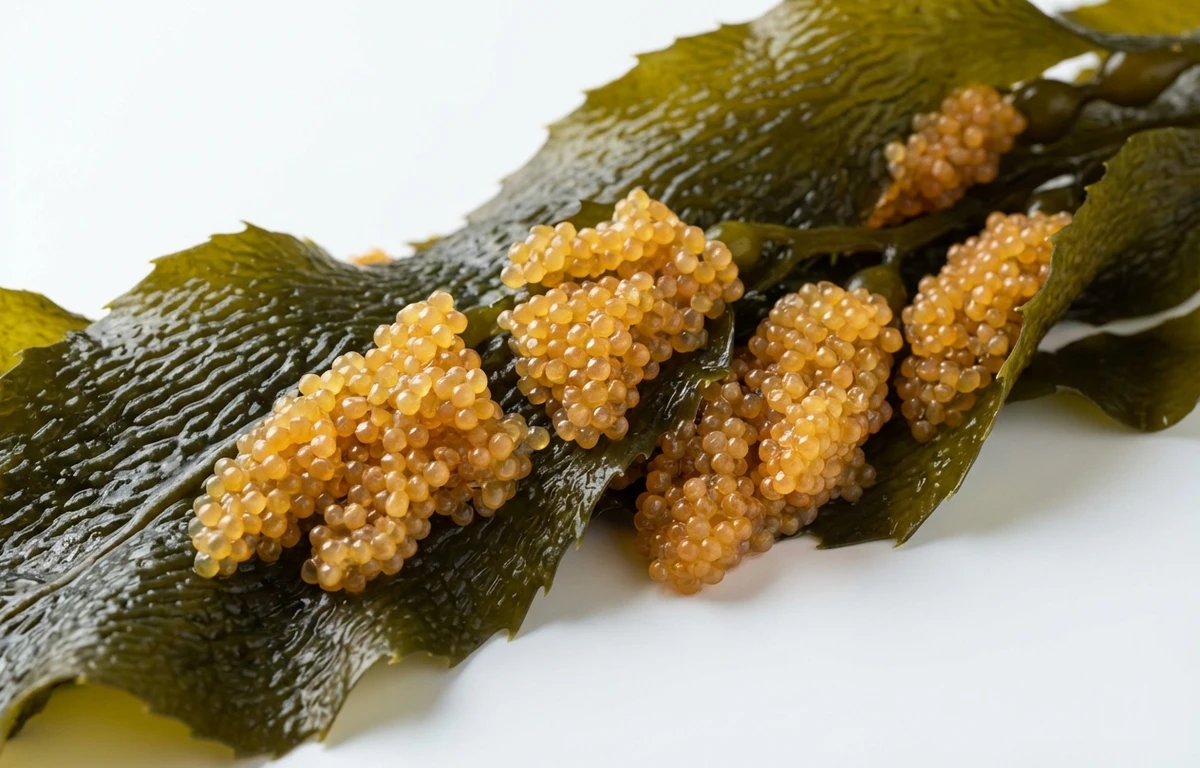
herring eggs on giant kelp.
VegetarianVeganGluten-freeDairy-freeNut-freePeanut-freeSoy-freeEgg-freeShellfish-freeHoney-freeAlcohol-freeHalalKosher
SERVING
CALORIES
135
PROTEIN
14.2g
CARBS
3.1g
FAT
7.4g
FIBER
1.2g
NUTRITION PROFILE · per 100 g
Everything in this ingredient.
MACRONUTRIENTS
Calories135kcal—
Protein14.2g28%
Carbohydrates3.1g1%
Fiber1.2g4%
Sugar0g0%
Total fat7.4g9%
Saturated fat1.5g8%
Trans fat0g—
Cholesterol280mg93%
Water72.5g—
MINERALS
Sodium650mg28%
Potassium210mg4%
Calcium85mg7%
Iron1.8mg10%
Magnesium45mg11%
Phosphorus240mg19%
Zinc1.2mg11%
Copper0.15mg17%
Manganese0.10mg4%
Selenium35µg64%
VITAMINS
Vitamin A45µg5%
Vitamin C2.5mg3%
Vitamin D4.2µg21%
Vitamin E1.8mg12%
Vitamin K12µg10%
Thiamin (B1)0.12mg10%
Riboflavin (B2)0.25mg19%
Niacin (B3)2.8mg18%
Pantothenic acid (B5)0.80mg16%
Vitamin B60.15mg9%
Folate (B9)18µg5%
Vitamin B1212.5µg521%
%DV based on a 2,000 cal diet. Source: USDA FoodData Central. A dash in the %DV column means there’s no established Daily Value for that nutrient.
MEASUREMENT CONVERSIONS
How much is what.
1 cup248.4g
1 tablespoon15.5g
1 teaspoon5.2g
1 oz28.4g
1 lb453.6g
1 ml1.1g
1 liter1050g
HEALTH BENEFITS
Why eat it.
- ✓Excellent source of Omega-3 fatty acids (EPA and DHA), which support brain health and reduce inflammation.
- ✓Rich in Vitamin D and Vitamin B12, essential for bone health, immune function, and nerve cell maintenance.
- ✓The kelp component provides a high concentration of iodine, crucial for healthy thyroid function.
- ✓Provides high-quality complete protein, containing all essential amino acids for muscle repair and bodily functions.
COOKING TIPS
In the kitchen.
- 1This product is typically eaten raw or cured and served chilled. Do not cook with heat as it will destroy the delicate texture.
- 2Slice thinly against the grain to create an appealing cross-section of the roe and kelp layers.
- 3Serve as sashimi or as part of a Japanese appetizer platter (osechi), often with a light soy sauce or dashi-based dipping sauce.
- 4The characteristic crunchy texture of the roe is highly prized. Pair with simple flavors that won't overpower its unique briny taste.
STORAGE
Keep it fresh.
- Keep refrigerated in its brine or an airtight container at or below 40°F (4°C). Consume within 3-5 days after opening.
- For longer storage, freeze by wrapping tightly in plastic wrap and placing in a freezer bag. It can be stored for up to 3 months. Thaw overnight in the refrigerator before serving.
FAQ
Frequently asked questions.
Is herring eggs on giant kelp healthy?
Yes, herring eggs on giant kelp are highly nutritious. They are an excellent source of Omega-3 fatty acids, essential vitamins like D and B12, and iodine from the kelp. These nutrients support brain health, bone strength, immune function, and healthy thyroid function.
What are the key nutritional benefits of herring eggs on giant kelp?
This ingredient is rich in Omega-3s (EPA and DHA) which are vital for brain and heart health, and have anti-inflammatory benefits. It provides Vitamin D and B12 for bone health, immunity, and nerve function. The kelp contributes significant iodine, crucial for thyroid health, and it's a source of high-quality complete protein.
How much protein and calories are in herring eggs on giant kelp?
Per 100 grams, herring eggs on giant kelp contain approximately 135 calories and 14.2 grams of high-quality protein. It also provides 7.4 grams of fat, primarily healthy unsaturated fats, and 3.1 grams of carbohydrates.
Is herring eggs on giant kelp gluten-free?
Yes, herring eggs on giant kelp are naturally gluten-free. They consist solely of fish roe and seaweed, neither of which contains gluten. However, always check product labels for any added ingredients or cross-contamination if you have severe gluten sensitivity.
Is herring eggs on giant kelp suitable for a keto or low-carb diet?
Yes, with only 3.1 grams of carbohydrates per 100 grams, herring eggs on giant kelp is considered low-carb and can fit well into a ketogenic diet. It provides healthy fats and protein, making it a nutrient-dense option for these dietary approaches.
How is herring eggs on giant kelp typically prepared and eaten?
It is often enjoyed raw or lightly cured. In traditional Indigenous cuisine, it's a delicacy often served fresh, sometimes dipped in oolichan grease or soy sauce. It can also be added to salads, sushi, or used as a garnish for various seafood dishes.
What does herring eggs on giant kelp taste like?
It has a unique briny, oceanic flavor with a delicate crunch from the individual eggs. The kelp provides a subtle earthy, umami taste, complementing the mild, slightly sweet notes of the roe. The texture is a satisfying pop of the eggs against the tender kelp.
How should I store herring eggs on giant kelp?
Fresh herring eggs on kelp should be stored in the coldest part of your refrigerator and consumed within 1-2 days. If brined or frozen, follow the package instructions; brined products last longer, and frozen can be stored for several months.
Is herring eggs on giant kelp a sustainable seafood choice?
Herring fisheries, particularly those for roe, are generally well-managed in many regions, making them a relatively sustainable choice. However, sustainability can vary by specific fishery and location, so it's advisable to check local guidelines or certifications like those from the Marine Stewardship Council.
Can individuals with thyroid conditions consume herring eggs on giant kelp?
Herring eggs on giant kelp are very high in iodine due to the kelp component. While iodine is essential for thyroid function, excessive intake can be problematic for individuals with certain thyroid conditions, such as hyperthyroidism or Hashimoto's. Consult a healthcare professional before consuming if you have a thyroid disorder.



















