
Nut Seed
high-fat sesame flour.
VegetarianVeganGluten-freeDairy-freeNut-freePeanut-freeSoy-freeEgg-freeShellfish-freeHoney-freeAlcohol-free
ALSO KNOWN AS
full-fat sesame flourground whole sesame seedshigh-fat til flourwhole sesame meal
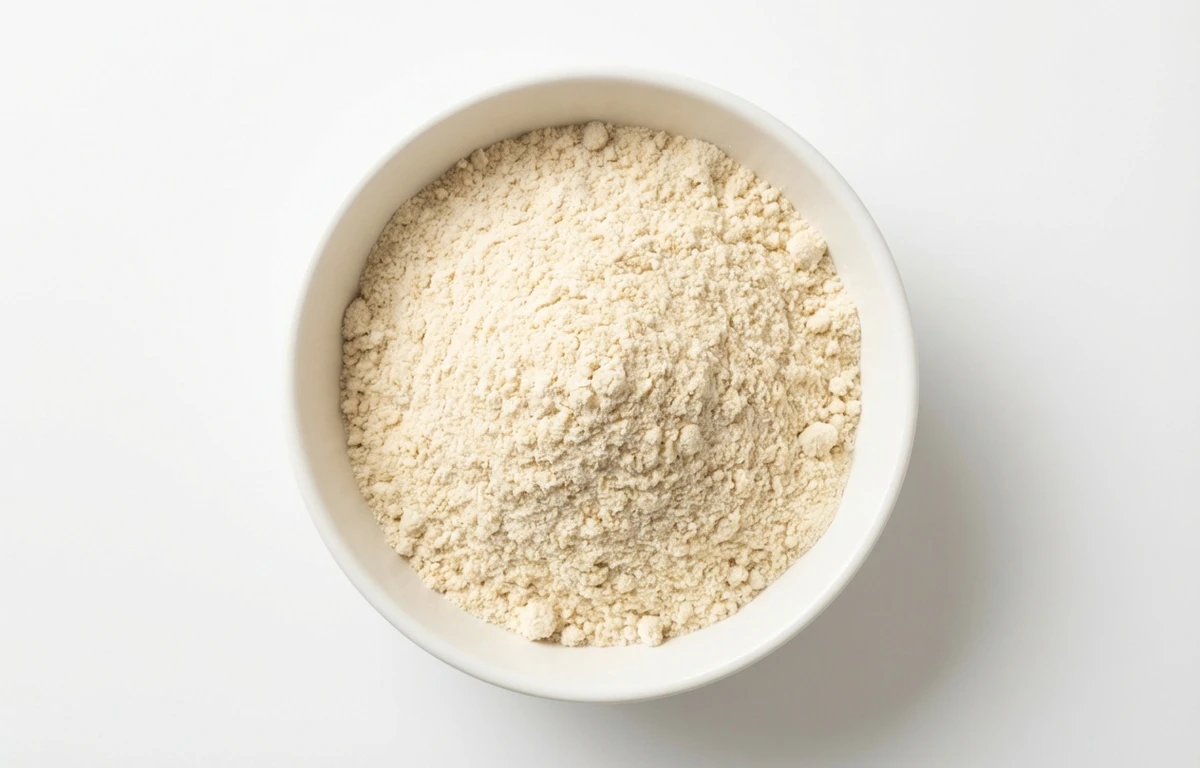
SERVING
CALORIES
598
PROTEIN
18.1g
CARBS
23.4g
FAT
49.7g
FIBER
11.8g
NUTRITION PROFILE · per 100 g
Everything in this ingredient.
MACRONUTRIENTS
Calories598kcal—
Protein18.1g36%
Carbohydrates23.4g9%
Fiber11.8g42%
Sugar0.30g1%
Total fat49.7g64%
Saturated fat7.0g35%
Trans fat0g—
Cholesterol0mg0%
Water4.7g—
MINERALS
Sodium11mg0%
Potassium468mg10%
Calcium975mg75%
Iron14.6mg81%
Magnesium351mg84%
Phosphorus629mg50%
Zinc7.8mg71%
Copper4.1mg456%
Manganese2.5mg109%
Selenium34.4µg63%
VITAMINS
Vitamin A1.0µg0%
Vitamin C0mg0%
Vitamin D0µg0%
Vitamin E0.25mg2%
Vitamin K0µg0%
Thiamin (B1)0.79mg66%
Riboflavin (B2)0.25mg19%
Niacin (B3)4.5mg28%
Pantothenic acid (B5)0.05mg1%
Vitamin B60.79mg46%
Folate (B9)97µg24%
Vitamin B120µg0%
%DV based on a 2,000 cal diet. Source: USDA FoodData Central. A dash in the %DV column means there’s no established Daily Value for that nutrient.
MEASUREMENT CONVERSIONS
How much is what.
1 cup115g
1 tablespoon7.2g
1 teaspoon2.4g
1 oz28.4g
1 lb453.6g
1 ml0.5g
1 liter480g
HEALTH BENEFITS
Why eat it.
- ✓Excellent source of calcium for bone health
- ✓High in healthy monounsaturated and polyunsaturated fats
- ✓Rich in magnesium which supports blood pressure regulation
- ✓Provides significant plant-based iron and zinc
- ✓Contains sesamin and sesamolin which may help lower cholesterol
COOKING TIPS
In the kitchen.
- 1Use as a gluten-free breading for chicken or fish for a nutty crust
- 2Substitute up to 25% of wheat flour in baking recipes to add moisture and nutrition
- 3Works well as a thickener for sauces and gravies while adding a rich flavor
STORAGE
Keep it fresh.
- Store in an airtight container in the refrigerator to prevent the high fat content from turning rancid
- Keep away from direct sunlight and heat sources
- Can be frozen for up to 6 months to extend shelf life
FAQ
Frequently asked questions.
How long does high-fat sesame flour last?
Due to its high oil content, it lasts about 3 months in a cool pantry, but up to 6-9 months if stored in the refrigerator or freezer.
Is high-fat sesame flour keto-friendly?
Yes, it is very keto-friendly as it is high in healthy fats and relatively low in net carbohydrates compared to grain flours.
What is the difference between high-fat and defatted sesame flour?
High-fat sesame flour contains the natural oils of the seed, making it more moist and calorie-dense, whereas defatted flour has had most oil removed, resulting in higher protein concentration and a drier texture.
Can I use this as a direct substitute for almond flour?
Yes, it is an excellent 1:1 substitute for almond flour in most recipes, especially for those with nut allergies.
How can I tell if my sesame flour has gone bad?
It will develop a sharp, bitter, or soapy smell and taste, indicating the natural oils have oxidized and turned rancid.
Does it contain gluten?
No, high-fat sesame flour is naturally gluten-free, though you should check for cross-contamination if you have Celiac disease.
What does high-fat sesame flour taste like?
It has a rich, toasted, and distinctly nutty flavor that is more intense than almond flour but milder than peanut flour.
Is it suitable for a Jain diet?
Yes, it is made from seeds and is not a root vegetable, making it suitable for most Jain dietary practices.
How should I prep it for baking?
Sift the flour before use as the high fat content can cause it to clump more easily than refined grain flours.



















