Other
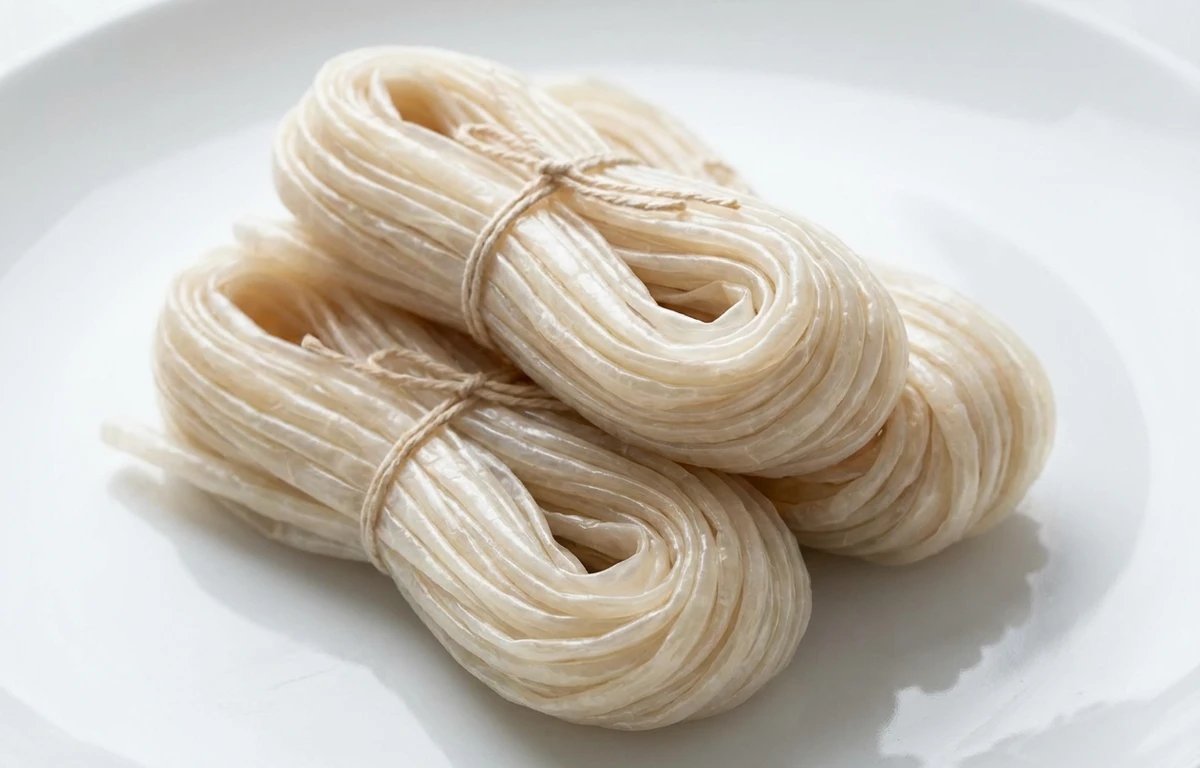
hog casings.
VegetarianVeganGluten-freeDairy-freeNut-freePeanut-freeSoy-freeEgg-freeShellfish-freeHoney-freeAlcohol-freeHalalKosher
ALSO KNOWN AS
sausage casingsnatural casings
SERVING
CALORIES
100
PROTEIN
24.8g
CARBS
0g
FAT
0.20g
FIBER
0g
NUTRITION PROFILE · per 100 g
Everything in this ingredient.
MACRONUTRIENTS
Calories100kcal—
Protein24.8g50%
Carbohydrates0g0%
Fiber0g0%
Sugar0g0%
Total fat0.20g0%
Saturated fat0.10g1%
Cholesterol0mg0%
MINERALS
Sodium100mg4%
Potassium10mg0%
Calcium10mg1%
Iron0.10mg1%
Magnesium4.0mg1%
Phosphorus25mg2%
Zinc0.20mg2%
%DV based on a 2,000 cal diet. Source: USDA FoodData Central. A dash in the %DV column means there’s no established Daily Value for that nutrient.
MEASUREMENT CONVERSIONS
How much is what.
1 piece5g
HEALTH BENEFITS
Why eat it.
- ✓Rich source of collagen, a protein essential for skin elasticity, joint health, and connective tissue strength.
- ✓Provides a natural, edible, and permeable membrane for sausages, allowing for excellent smoke and flavor penetration during cooking.
- ✓Naturally low in carbohydrates and fat, contributing minimally to the overall caloric content of the final product.
- ✓A traditional, digestible alternative to synthetic or collagen casings, free from artificial additives.
COOKING TIPS
In the kitchen.
- 1Before use, thoroughly rinse the casings under cool running water to remove excess salt, then soak in warm water for at least 30 minutes to soften them.
- 2To check for leaks and ensure they are clean, flush the inside of the casing by holding one end over a faucet and letting water run through it.
- 3When stuffing, lubricate the stuffing horn with water or a small amount of neutral oil to help the casing slide on and off smoothly.
- 4Avoid overstuffing the casings to prevent them from bursting during linking or cooking. They should be firm but have some give.
STORAGE
Keep it fresh.
- Store casings packed in salt in an airtight container in the refrigerator for up to one year. Ensure they remain covered in salt to prevent spoilage.
- If purchased in a brine solution, keep them submerged in the brine in a sealed container in the refrigerator for 6-12 months.
- After rinsing for use, any unused portions can be drained, generously re-salted, and returned to refrigerated storage.
FAQ
Frequently asked questions.
Are hog casings healthy?
Hog casings are a natural and edible component of sausages, primarily composed of collagen. They are naturally low in fat and carbohydrates, contributing minimally to the overall caloric content of the final product. Their main health benefit comes from collagen, which supports skin elasticity, joint health, and connective tissues.
What is the nutritional content of hog casings?
Per 100g, hog casings contain approximately 100 calories, 24.8g of protein, 0g of carbohydrates, and 0.2g of fat. They are almost entirely protein, specifically collagen, with negligible amounts of other macronutrients.
Are hog casings gluten-free?
Yes, hog casings are naturally gluten-free. They are derived solely from the intestines of pigs and do not contain any wheat, barley, rye, or other gluten-containing ingredients. This makes them suitable for individuals with celiac disease or gluten sensitivity.
Are hog casings keto-friendly?
Yes, hog casings are very keto-friendly. With 0g of carbohydrates per 100g, they fit perfectly into a ketogenic diet, which emphasizes very low carb intake. They provide a natural, protein-rich membrane for sausages without adding any carbs.
Are hog casings vegan or vegetarian?
No, hog casings are neither vegan nor vegetarian. They are an animal product, specifically derived from the intestines of pigs. Vegetarians and vegans would need to use plant-based or synthetic alternatives for sausage making.
How do you prepare hog casings for stuffing?
Before use, hog casings typically need to be rinsed thoroughly under cold running water to remove excess salt (if salt-packed). After rinsing, soak them in lukewarm water for at least 30 minutes to an hour to make them pliable and easier to work with. Change the water a few times if needed.
What types of sausages are typically made with hog casings?
Hog casings are versatile and commonly used for a wide range of fresh and smoked sausages. They are ideal for medium to large diameter sausages like bratwurst, Italian sausage, kielbasa, chorizo, and frankfurters, providing a satisfying 'snap' when bitten.
How should hog casings be stored?
Salt-packed hog casings should be stored in a cool, dark place or refrigerated in an airtight container, ensuring they remain covered in salt. If pre-tubed and brined, keep them refrigerated in their original packaging. Once opened, any unused casings should be re-salted and refrigerated.
How long do hog casings last?
When properly stored in salt and refrigerated, hog casings can last for up to a year or even longer. Brined or pre-tubed casings typically have a shorter shelf life, usually several months, as indicated by the manufacturer's best-by date. Always check for any off-smells or sliminess before use.
What do hog casings contribute to a sausage?
Hog casings provide a natural, edible, and permeable membrane that gives sausages their characteristic shape and texture. They offer a satisfying 'snap' when cooked and bitten into, allow for excellent smoke penetration, and help retain moisture and flavor during the cooking process.