
Loading...
Also known as: Tulsi, Ocimum tenuiflorum, Shyama Tulsi, Rama Tulsi
Per 100g
Nutrition data source: USDA FoodData Central
Common measurement equivalents in grams
When refrigerated properly in a damp paper towel, it typically lasts 3 to 5 days. At room temperature in water, it may last 2 to 3 days.
Yes, you can freeze them by chopping the leaves and placing them in ice cube trays with a little water or olive oil.
Thai Basil is the closest substitute, though it is sweeter. If unavailable, Italian Sweet Basil with a pinch of black pepper can work in a pinch.
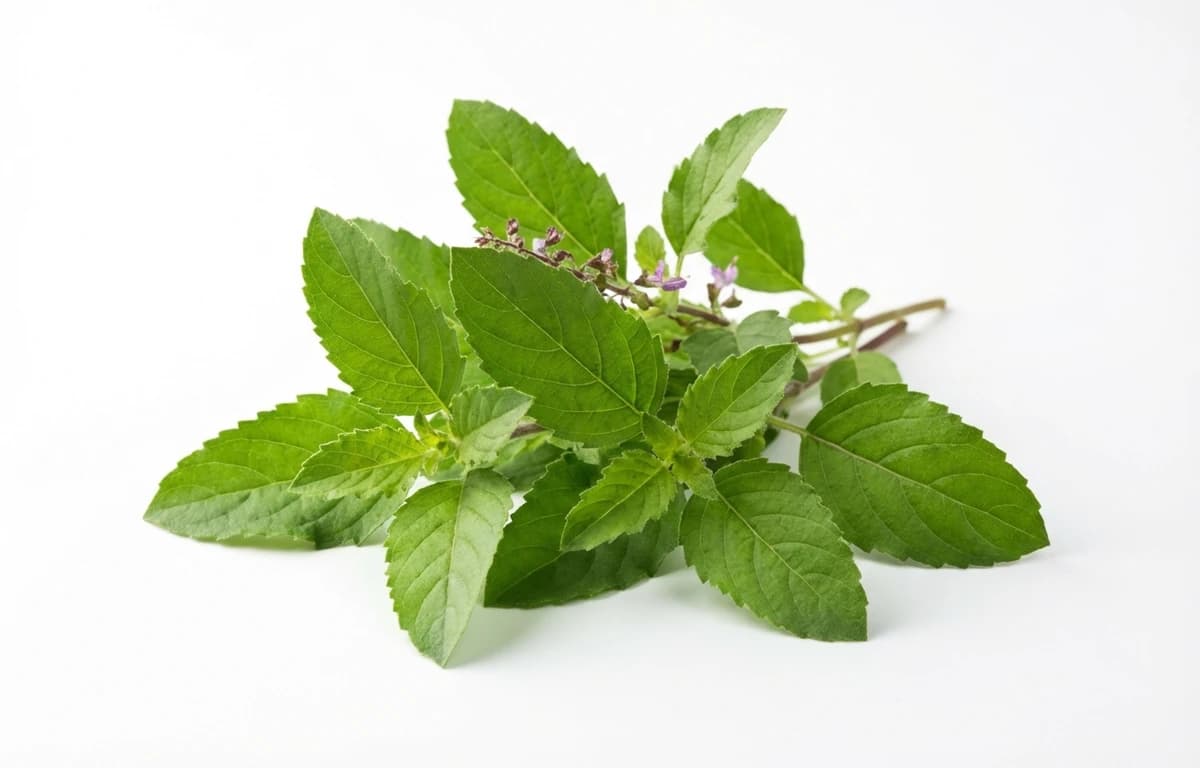
Look for vibrant green or purple-tinged leaves that are firm and not wilted, with no black spots or slimy residue.
No, Holy Basil (Tulsi) has a more peppery, clove-like flavor and is used more for medicinal and specific Asian culinary purposes than Sweet Basil.
Gently rinse the leaves under cold running water and pat them dry with a paper towel just before use.
Yes, it is commonly consumed raw in salads, as a garnish, or chewed directly for its medicinal benefits.
It is widely used in Thai stir-fries, herbal teas (Tulsi tea), and as a flavoring agent in various Southeast Asian soups.
Holy Basil Leaves is a versatile ingredient found in cuisines around the world. With 28.96 calories per 100g and 3.15 grams of protein, it's a nutritious addition to many dishes.
Explore more ingredients in the herb category with complete nutrition information.
View all herb →Discover 1 recipes featuring holy basil leaves with step-by-step instructions.
Browse recipes →Explore more ingredients similar to Holy Basil Leaves.
The most-searched ingredients on CraftMyMeals.